Isabella Mueller (crime writer)
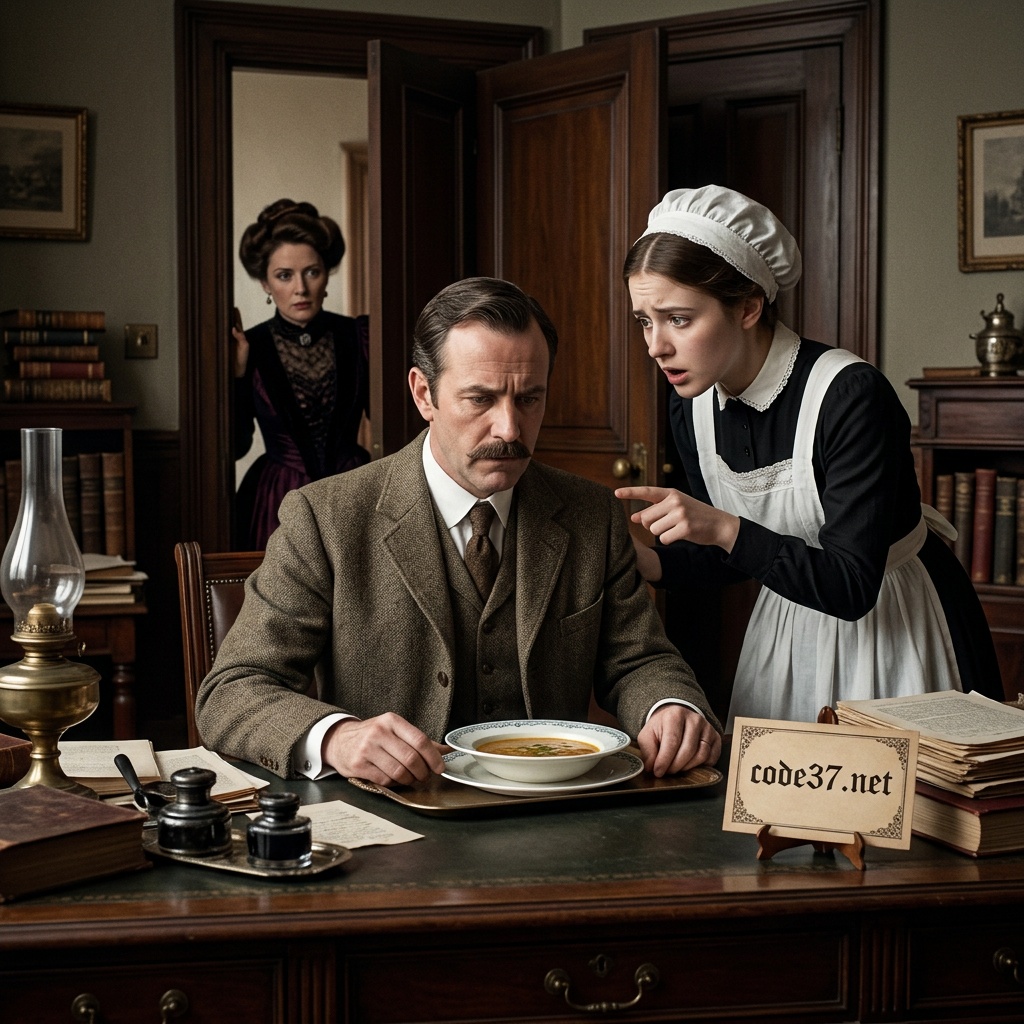
Marie-Louise Victorine Bessarabo, better known by her pseudonym Héra Mirtel, was a fascinating yet shocking figure in French literature and society. Born on 24 October 1868 in Lyon, she was not only a talented writer but also a passionate feminist and a controversial figure who pushed the boundaries of morality and ambition in a way that became the stuff of legend. The circumstances of her life and the murder of her second husband, Georges Bessarabo – whose body was found in a blood-stained suitcase – still raise questions today. Marie-Louise Grouès, the daughter of a wealthy French businessman, grew up at a time when women were often pushed into the background. Nevertheless, she campaigned tirelessly for women’s rights and published numerous works dealing with feminist issues. Her contribution to literature was remarkable. She wrote novels, poems and numerous articles for various newspapers and magazines. Her work was shaped by her own experiences as a woman in a patriarchal society. In 1892, Marie-Louise travelled to Mexico, where she had numerous romantic relationships with various men until, in 1897, she married Pierre Paul Antoine Jacques, a wealthy silk merchant with a thriving business who was twice her age. After the wedding, the newlyweds moved to Paris, where their two daughters, Paule and Louise, were born. The marriage was turbulent, as Marie-Louise was unfaithful to her husband and often harassed him. In January 1914, she asked a maid to take a bowl of soup to her husband in his study. The maid warned her employer, as she had seen Marie-Louise stir a white powder into it. Pierre did not eat the soup and had its contents analysed by a chemist. It did indeed contain a lethal poison. However, Pierre did not report this to the police; he loved his wife far too much. On 3 May 1914, he was found dead in his bedroom. He had shot himself in the right temple with a revolver. The police concluded it was suicide. Marie-Louise subsequently returned to Mexico, where she married Ishmael Jacob Providence Weissmann in 1915. He was a Romanian with a dubious criminal past who called himself Georges Bessarabo. After their marriage, the couple lived in Paris. During her second marriage, Mirtel not only took drugs but also had numerous affairs with other men. She enjoyed dominating Georges. Then, on 31 July 1920, the unthinkable happened: Marie-Louise, alias Héra Mirtel, shot her second husband, Georges Bessarabo, in her flat in Paris. Her daughter Paule was in the house at the time and heard the shot. What followed turned into one of the most spectacular criminal cases in France. Mirtel stuffed her husband’s body into a suitcase and had it transported from Paris to Nancy, where it was eventually discovered at a railway station. The evidence against Mirtel was overwhelming. In the station’s luggage handling area, an official had seen blood seeping through the suitcase. The police noted that the body had been carefully folded up, as if it were an everyday task, which suggested a degree of planning. On 15 February 1921, the trial of Mirtel took place; she had been brought to court alongside her daughter Paule on charges of the murder of Georges Bessarabo. Her daughter Paule denied any guilt and blamed the murder on her mother. Héra Mirtel defended herself vehemently: “I am a creator; I cannot destroy!” These words reveal her inner conflict and the paradoxical beliefs she held about her identity, whilst at the same time committing the most cruel of acts. Madame Bessarabo’s trial caused a great stir and was covered by numerous newspapers. According to reports, journalists flocked to the court hearings in droves to report on the theatrical nature of the events. Mirtel was portrayed as a femme fatale whose life seemed more like a novel than reality. A particularly scandalous aspect of the trial was the claim that Mirtel may have been under the influence of an occult power when she committed the crime. She conducted spiritual séances with various prominent figures and had a penchant for the mystical practices that took place in her Parisian salon. The notion that a spirit might have led her to commit her crime was both absurd and fascinating. There is ongoing speculation about the motives that drove Mirtel to commit her horrific act. Financial difficulties may have played a part, as her husband had just earned a large sum from oil deals in Mexico. It was reported that, on the morning of his murder, he had deposited a considerable sum of money at the bank. Mirtel may have seen an opportunity to free herself from financial constraints through her husband’s death. Yet the question remains: was it really just about money? Mirtel’s life was characterised by a constant quest for power and control. She was not only a literary icon, but also a woman who struggled with the expectations and constraints of her time. Perhaps the act was a desperate gesture to free herself from a relationship she found suffocating. Mirtel was ultimately sentenced to 20 years’ hard labour, despite being defended by her high-profile lawyer Vincent de Moro-Giafferi, whilst her daughter Paule was acquitted. After years in prison, a new application for a retrial was made in 1929, following an admission by Mirtel’s daughter Paule that she had lied. Héra Mirtel was on the verge of being released on parole when she died in prison on 21 March 1931. She was buried alongside her first husband in Saint-Paul-sur-Ubaye, and the story she left behind lived on only in fragments. The case of Madame Bessarabo is not merely a story of murder and deceit, but also a reflection on the life of an extraordinary woman who, despite her dark deeds, never entirely disappeared from the public eye. Her writings and her commitment to feminist causes remain a significant part of French literary history, whilst the tragedy of her life continues to raise questions that go far beyond the shocking murder. In many ways, Héra Mirtel symbolises the complexity of female identity, the challenge to social norms and the possibilities of self-determination in a world that often forces women into passive roles. The legacy she left behind is both tragic and inspiring, inviting us to reflect on the dark corners of human nature and the power of words.