Isabella Mueller (crime writer)
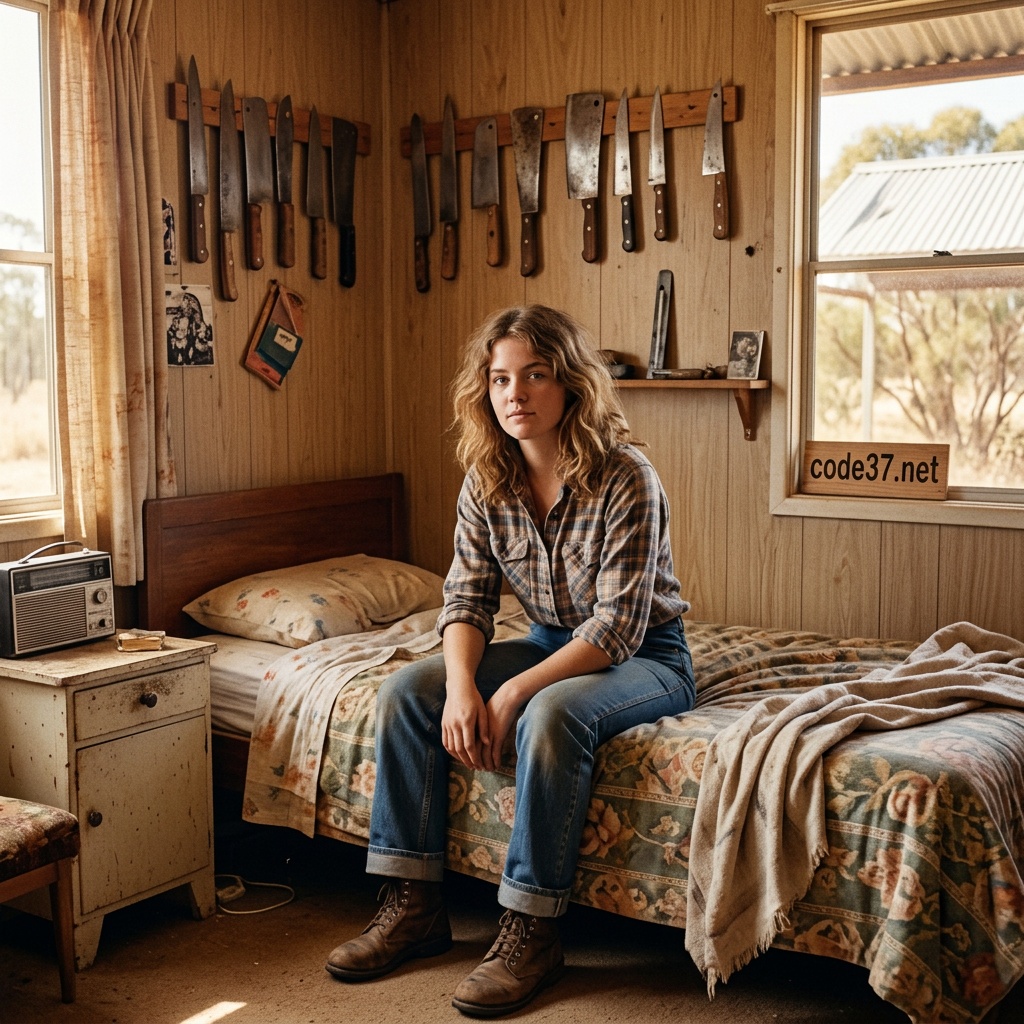
Katherine Mary Knight, who was born in Tenterfield on 24 October 1955, is regarded as the female Hannibal Lecter; she is the first woman in Australian history to have been sentenced to life imprisonment without the possibility of parole. Her crime, committed in February 2000 when she murdered her partner John Charles Thomas Price, continues to provoke both horror and fascination to this day. The case has not only shaped the landscape of criminology in Australia, but has also sparked public interest in the psychological and social aspects of crime. For the murder of her former partner was so brutal that it ranks among the most horrific crimes in Australian history. Katherine Knight was born into a dysfunctional family environment. Her mother, Barbara Roughan, had a difficult relationship with her husband John Roughan, who was of Scottish descent, with whom she had four sons. They lived in Aberdeen, but Barbara began an affair with Kenneth ‘Ken’ Charles Knight, a close friend and work colleague of John’s, which led to a local scandal. Eventually, Barbara moved to Morree with Ken – a violent alcoholic – without her sons. There, she gave birth to four more children, including twin sisters, one of whom was Katherine. When Katherine was four years old, John died, so the two older sons, who had previously lived with John, moved in with Barbara and Ken. This led to family tensions. Katherine grew up in an environment where violence and abuse were a daily occurrence. Until she was 11, Katherine was sexually abused by members of her family, with the exception of her father. From a young age, Katherine endured numerous traumatic experiences that left deep emotional scars. These shaped her later relationships as well as her behaviour in society. Her great-uncle Oscar was the only person in the family with whom she had a close bond. His suicide in 1969 affected her deeply and is said to have left its mark on her mental state right up until her imprisonment. During her school days in Muswellbrook, Katherine stood out above all for her aggressive and intimidating manner. Classmates described her as a bully who threatened smaller pupils and attacked them with weapons. Despite this aggressive behaviour, she was regarded as a model pupil when she behaved herself. After leaving school at the age of just 15, she worked in a garment factory before beginning her career in a slaughterhouse – a job she described as her ‘dream job’. Whilst working at the abattoir, she acquired her own collection of butcher’s knives, which she hung above her bed as a symbol of her control and preparation for potential conflicts. These knives were later to prove tragically significant. Katherine married David Stanford Kellett in 1974. The marriage was marked by violence and abuse. Katherine proved to be extremely jealous and manipulative, and their relationship eventually ended when Kellett fled to escape his abusive partner. A few days after he fled, Katherine caused a serious crisis by placing her newborn daughter on the railway tracks and threatening her with an axe. This pattern of violence and mental health issues continued in her subsequent relationships. Her years with David Saunders and then with John Price were characterised by a similar pattern of jealousy, violence and manipulation. Katherine even slit the throats of Saunders’ dingo puppies to make it clear to him what might be in store for him if he were to have an affair. The murder of John Price represented the culmination of Katherine’s violent behaviour and her mental health issues. Price was a well-respected man who had previously been married and had three children. Price even allowed Katherine to move into his home, despite being aware of her history of violence. The relationship quickly developed into a toxic dynamic, characterised by ups and downs, with the arguments becoming increasingly violent. When Katherine had reported Price to his employer for taking items out of spite, because he did not want to marry her, Price was dismissed as a result after 17 years. This led to a final row in February 2000. It ended with Katherine stabbing Price in the chest, whereupon Price obtained a restraining order against Katherine on 28 February 2000. Nevertheless, Price could not break free from Katherine, which is why they had another tryst, one that proved fatal for him. For whilst Price was asleep after they had had sex, she stabbed him 37 times with her butcher’s knife. She then flayed his skin in one piece before hanging him from a butcher’s hook in the living room. She then cut off his head. She placed it in a saucepan along with some vegetables to make a tasty stew. From his torso, she cut large slices for juicy steaks. She also cut off parts of his body to cook them with potatoes and all sorts of vegetables in a delicious gravy. She then set the table and intended to serve the meal to Price’s children. But it never came to that. For Katherine, who had in the meantime withdrawn a further $1,000 from Price’s account before returning to his house to take an overdose of tablets, was caught. Concerned neighbours had alerted the police, who forced the door open and found Price’s body and an unconscious Katherine inside. The sheer brutality of the crime sent shivers down the spines of even the most hardened investigators. Following the murder, Katherine Knight was dubbed a ‘psycho’ and ‘Australia’s female Hannibal Lecter’ in the media, and her case caused a worldwide sensation. During the trial, her defence team argued that she was mentally unstable and attempted to mitigate her responsibility for her actions. Despite these efforts, she was convicted of murder and sentenced to life imprisonment without the possibility of parole. The terror she had spread could not be denied. At Silverwater Women’s Correctional Centre, Katherine Knight has taken on a leadership role amongst the inmates and is regarded as a mediator in conflicts. According to reports, she has committed no further acts of violence whilst in prison and appears stable. This raises questions about how mental health conditions develop in prisoners and whether rehabilitation is possible. Katherine Mary Knight’s life and crimes are not only a harrowing account of violence and abuse, but also an example of how social and psychological factors can interact to provoke extreme behaviour. Her case remains not only etched in the memory of Australians, but also serves as a lesson for psychologists, prison officers and society at large. Whilst she serves her sentence, the question remains as to whether the person behind the crime can ever be fully understood, let alone rehabilitated. The story of Katherine Mary Knight is a dark chapter in Australian criminal history, reminding us just how deeply rooted violence and trauma can be in our society.