Isabella Mueller (crime writer)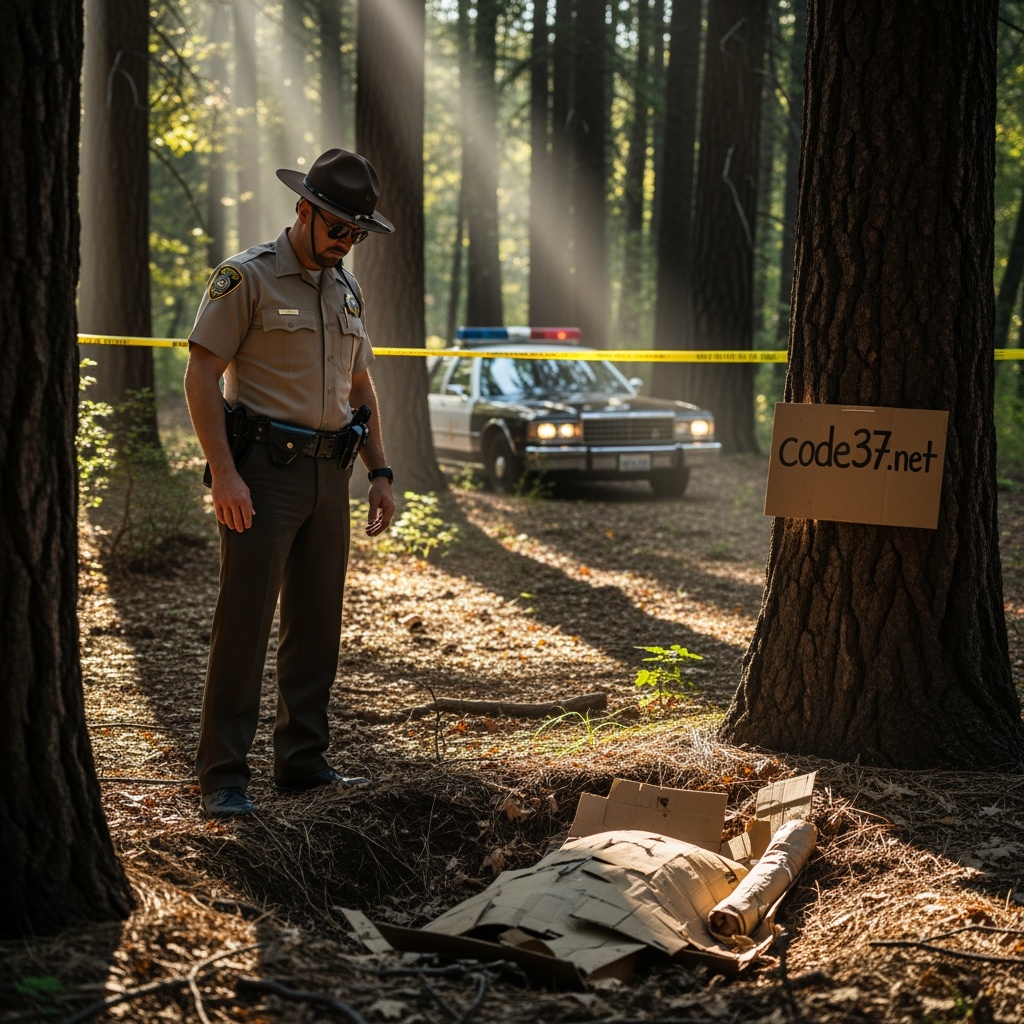
Between 1985 and 1987, a serial killer was on the loose in the idyllic countryside of Shasta County, California, brutally murdering three women. The serial killer was Robert Edward Maury, aka the Tipster Killer. Robert got this name because after each murder, he anonymously called a hotline for confidential witnesses to provide investigators with crucial, but sometimes misleading, information about the locations of the bodies. His motive was not only to confuse the authorities, but also to collect the reward money. But who is the man who is still languishing on death row at San Quentin State Prison, awaiting execution? Robert Edward Maury was born on February 24, 1958, in Crescent City, California. Maury’s early years were marked by instability and alleged abuse. Shortly after his birth, the family moved to Anderson, where he grew up under the strict regime of his violent father. After graduating from high school, he joined the army but was dishonorably discharged in 1985 after being caught with marijuana. He then settled in Cottonwood and worked sporadically as a landscaper, dried flower arranger, on a golf course, and as a marijuana dealer. The ominous saga began in late May 1985 when 48-year-old Averill Deanna Weeden, Maury’s landlady, disappeared without a trace. Maury initially denied any involvement when questioned by police. But on June 19, an anonymous call was made to the Shasta County confidential witness program hotline, in which the male caller made vague references to the whereabouts of the missing Averill Deanna Weeden and explicitly asked for a reward. The Shasta County confidential witness program hotline had been established by a private organization to assist the police in solving crimes. In a flyer, the organization not only promised a reward for important clues and information that contributed to solving the crime, but also assured witnesses that they could remain completely anonymous when calling. It was not until August 8, after an exchange with the operator, Shirley Landreth, who answered the calls, that the caller gave precise instructions on the location of Weeden’s body in a wooded area near Redding. In fact, Weeden’s body was found partially buried and wrapped in cardboard in a wooded area along Bechelli Lane in Redding. The autopsy revealed that Weeden’s body had skull fractures and a broken cervical vertebra. This indicated that Weeden had been strangled. Although the anonymous tipster suggested that the killer’s name might be Robert or Bob, Maury remained at large for the time being. Just under a year later, Maury called the hotline again to report a burglary. But this time, Maury gave his name. The operator was once again Shirley Landreth, who immediately recognized Maury’s voice as that of the person who had called the previous year about the Weeden murder. Another year passed before the tipster killer struck again. On June 29, 1987, 30-year-old Belinda Jo Stark failed to appear at a court hearing in Nevada City. Her boyfriend Gary Evans did not initially report Belinda missing, as she sometimes simply disappeared for a few days. But on August 8, an anonymous caller reported the discovery of a body, demanding the reward for its exact location. Nine days later, the anonymous caller called again, identifying the body as a woman named Gretchen Olston. The body was found in a grassy area not far from Palm Avenue. However, it was later identified as the missing Belinda Jo Stark based on her tattoos. The discovery of Dawn Marie Berryhill’s body on September 22, 1987, intensified the investigation. She had last been seen on June 22 before disappearing without a trace. Due to advanced decomposition, her identity could only be confirmed by dental records. Here, too, an anonymous tip pointed to Maury’s involvement. The proximity of the locations where Stark and Berryhill were found and the fact that both women had been strangled suggested that the same person was responsible for both murders. When Maury collected the reward money, he was photographed by the police. He came under the investigators’ scrutiny in September 1987 after it was discovered that he had received a total of $2,000 in rewards, which he used to buy a Honda motorcycle, among other things. Undercover firefighter Roy Del Carlo, posing as the chairman of the secret witness organization, met with Maury several times and recorded their conversations. The conversations revealed striking similarities between his voice and that of the anonymous caller. Maury’s fingerprints were found on both an envelope containing the reward money and in Stark’s handbag, further strengthening the police’s suspicions. On November 7, 1987, Maury was arrested. He was charged with three counts of premeditated murder, as well as related bodily harm and robbery. Maury insisted on his innocence, claiming that he had merely stumbled upon the bodies by chance and reported them. During the trial, the defense argued that Maury had discovered and reported the bodies because he considered himself a dutiful citizen. Nevertheless, he was found guilty of all murders by a jury and sentenced to death. Maury himself asked the court to impose the death penalty if they found him guilty. Despite numerous appeals, in which he claimed, among other things, that his rights had been violated, the verdict stood. The California Supreme Court rejected his appeal on the grounds that the hotline was not a government institution and was therefore not bound by the Fourth Amendment. Maury remains on death row at San Quentin State Prison, where he is awaiting execution, even though no executions have been carried out in California since 2006. Maury is also linked to two other unsolved murder cases: Lora Stewart, whose naked body was found in Battle Creek in 1983, and Helen Faye Generes, a businesswoman who was found dead in her office that same year. In both cases, the cause of death was strangulation, but there was insufficient evidence to charge Maury. The “Tipster Killer” remains a chilling example of the depths of human behavior and the challenges faced by the justice system in solving such complex cases. The fact is that Robert Edward Maury is a grim memorial to the horrors he unleashed more than three decades ago.