Isabella Mueller (crime writer)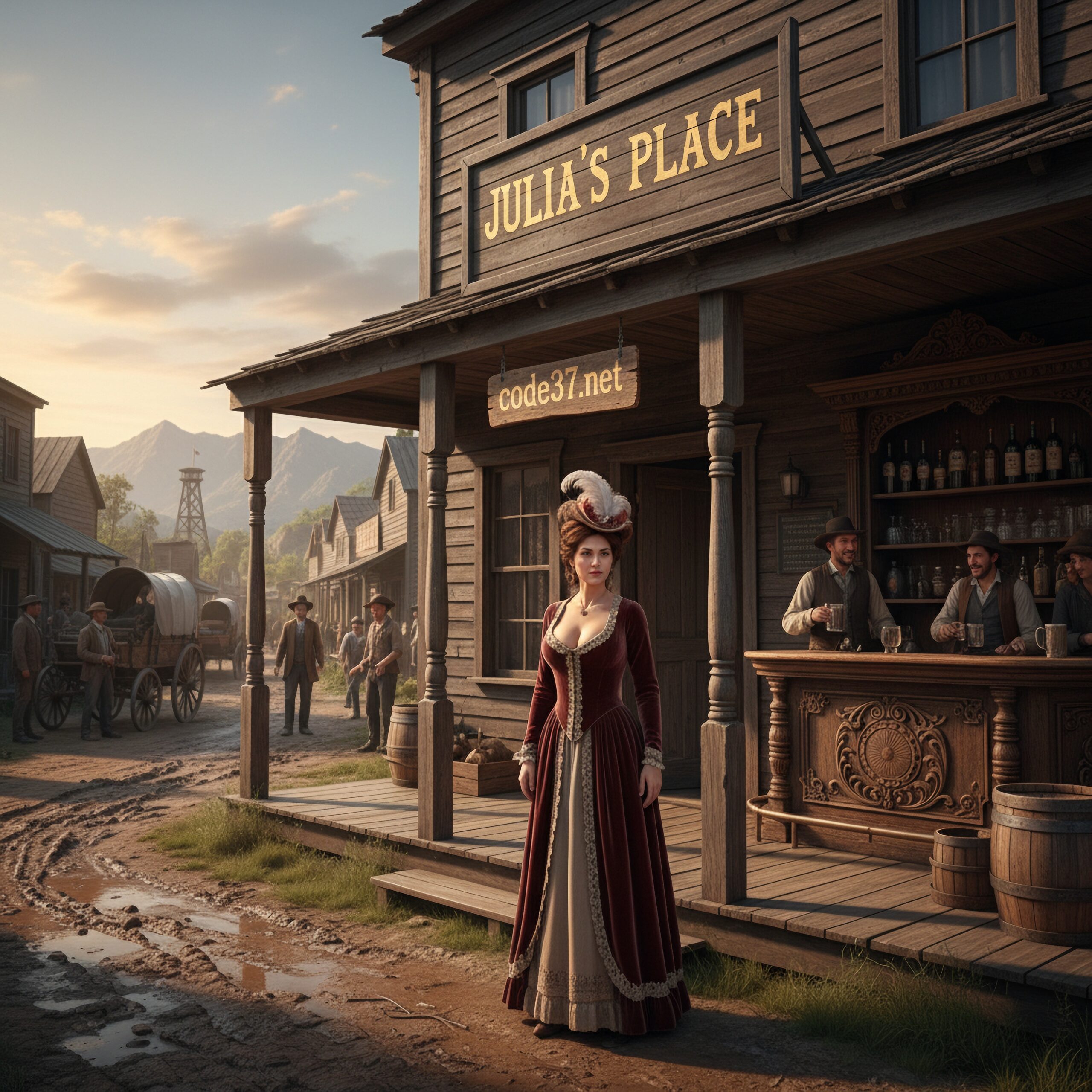
In the 1860s, the glittering lights and foggy alleys of Virginia City in the US state of Nevada concealed not only the fortune seekers hoping to strike it rich with the Comstock Lode silver discovery, but also dark secrets. One of these revolves around the notorious Julia Bulette, a woman of dubious reputation and remarkable fame, whose gruesome murder continues to stir emotions to this day. Julia Bulette, born around 1832 in London or Mississippi – historians still argue about this – came to America in the early 1850s, where she allegedly married a man named Smith, but the marriage broke down shortly after the wedding. Since then, Julia had been struggling through life on her own, moving to California in 1852 after a brief interlude in New Orleans. Julia financed her life by working as a prostitute in mining regions throughout California until she finally settled in Virginia City, Nevada, at the age of 27. This town was marked by the gold rush, and Julia Bulette quickly became a famous figure in this rough settlement. With her beauty, fascinating personality, and a dash of daring, Julia quickly won a place in the hearts of many of the town’s men. She welcomed them into her small wooden house at 4 North D Street, which she not only tastefully furnished, but which was also known for its excellent bar stocked with whiskey, port, rum, and Bordeaux, quickly making it the most famous brothel in town, frequented by influential men. Julia quickly rose to become the queen of the red-light district, supporting the city’s fire department in particular, which is why she was publicly awarded honorary membership of the Virginia Fire Company No. 1 during the Independence Day parade on July 4, 1861, which was unprecedented for a woman in her line of work. The firefighters saw her as more than just a prostitute; she was a friend, a supporter, and a symbol of the untamed spirit of this gold rush town. After a huge silver vein, known as the Comstock Lode, was discovered in 1859, it triggered a veritable silver rush that gave rise to the boom town of Virginia City. But Julia Bulette’s glamorous life came to an abrupt end on January 20, 1867. Just the day before, Julia had attended a performance at Piper’s Opera House, where she was supposed to sit in a separate box with the curtains drawn so that the “decent” women would not have to see the sex worker. However, Julia found this repugnant and refused to sit there, which is why she was escorted out of the theater. Outraged, Julia went home and ate dinner. When her neighbor Gertrude Holmes came to bring her Sunday breakfast the next morning, she found Julia lifeless in her home. The sight was horrific: Julia’s body was partially naked, her skin was pale, and bruises were visible on her throat. According to witness reports, she had been struck with a pistol grip, beaten bloody with firewood, and then strangled. There was no trace of her belongings, which initially pointed to a robbery-murder, but the cruelty of the crime suggested that there must be more to it than that. The news of her death spread like wildfire. Within hours, the whole town was in turmoil. Local newspapers reported extensively on the murder and speculated about the possible perpetrators and motives. The Territorial Enterprise, one of the region’s leading newspapers, published detailed reports that further cemented Julia Bulette’s image as a legendary figure. Julia Bulette made her last grand appearance at her own funeral, which took place on January 21, 1867, at Fire Station No. 1. Despite her scandalous profession, the turnout was huge. Hundreds of mourners listened to the eulogy delivered by Reverend William Martin. Afterwards, the Metropolitan Brass Band, 60 members of the fire department on foot, and 16 carriages escorted her elegantly designed, silver-plated coffin to Flowery Hill Cemetery. But Julia was buried 800 meters east of the city, her grave marked by simple wooden planks with only the name “Julia” carved into them. As the mourners returned to the city, the firefighters sang “The Girl I Left Behind.” Out of respect, all saloons remained closed for the first time since the assassination of President Abraham Lincoln. But despite this public mourning, the question of her murderer remained unanswered for a long time. It took over a year before a certain John Millain, a French baker and vagrant, came under suspicion. He was arrested after attempting to sell a dress that had once belonged to Julia. A search of his home uncovered other items that clearly belonged to Julia Bulette, including jewelry and a chest. The evidence was overwhelming, and Millain was eventually convicted of murder. On April 24, 1868, just over a year after Julia’s death, John Millain was hanged. He maintained his innocence until his execution. Mark Twain, the well-known author and journalist, is said to have watched the gruesome spectacle of the execution and later described it in his works. The myth surrounding Julia Bulette lived on. Her story was immortalized in literature and television. The Virginia and Truckee Railroad dedicated one of its luxury cars to the memory of Julia. Her portrait adorned countless saloons in Virginia City, and she is immortalized as Cherry Malotte in Rex Beach’s novel “The Spoilers.” Even the renowned television series “Bonanza” dedicated an episode to her, in which Julia was portrayed by Jane Greer. But Julia Bulette’s real life was far less glamorous than the legends suggest. In reality, she was ill and in debt when she was murdered. Nevertheless, her story continues to fascinate to this day: the tragic figure of a woman who sought and found recognition in a man’s world, only to be brutally torn from life. In the eyes of the public, she was not only a prostitute, but also a symbol of the hopes and dreams that could blossom and wither in the dusty streets of Virginia City. Her death reminded residents that behind every glittering success lurked a dark side, ready to strike when you least expected it. Beyond all the myths and legends, the cruel truth remains: Julia Bulette was an extraordinary woman whose life and death are the grim reflection of an era marked by extremes. Her memory is shrouded in both sadness and fascination, and her fate remains one of the most gruesome and fascinating stories of the American West.