Isabella Mueller (crime writer)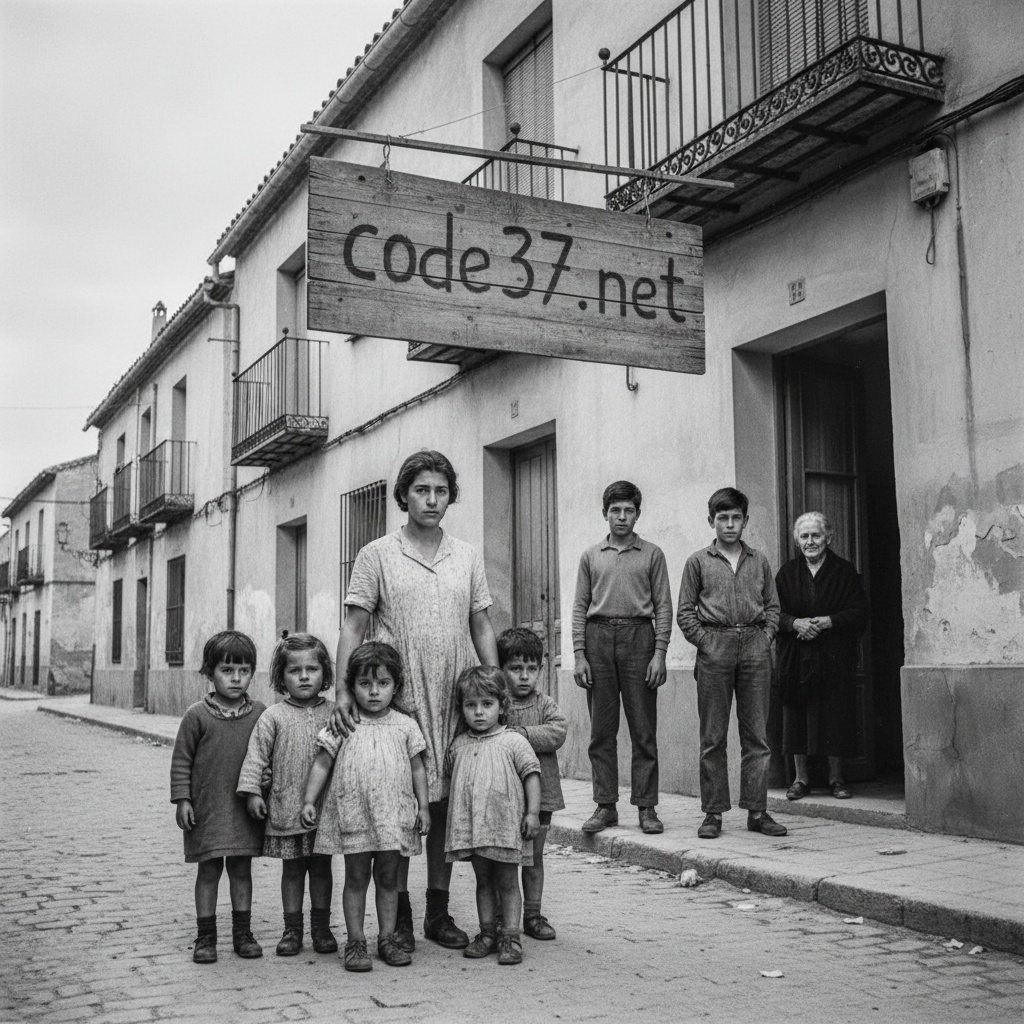
In 1965, a tragedy occurred in the idyllic region of Murcia, Spain, that forever changed the image of a peaceful community. The scene was a modest apartment on Carril de la Farola in the capital city of Murcia, home to Andrés Martínez del Águila and Antonia Pérez and their ten children. Piedad, who was just 12 years old, was the third among the siblings and the eldest daughter in the family. Her role was to look after her seven younger siblings, while her two older brothers, 16-year-old José Antonio and 14-year-old Manuel, worked in construction and as mechanics. They had dropped out of school to support their parents financially through their work. The family was very poor. The story begins with a shocking event: within a month, four of the youngest members of the family lost their lives. First, on December 4, 1965, the baby-faced innocent lamb, 9-month-old María del Carmen, died of suspected meningitis. No one asked any questions at the time. But more deaths quickly followed: five days later, two-year-old Mariano died, and just five days after that, little four-year-old Fuensanta. This time, however, the family doctor did not issue the death certificate citing meningitis, but instead alerted the juvenile court and the health department. These successive deaths soon attracted national attention, and the infamous “family of horror,” as they were soon called, suddenly found themselves in the public spotlight. Initially, an epidemic was suspected, which is why neighbors began to avoid contact with the family for fear of infection, which had never been proven. The press speculated about everything from unknown viruses to food poisoning. The family was admitted to the provincial hospital in Murcia for examination. However, all family members were healthy, so the family was discharged from the hospital before Christmas, allowing them to celebrate Christmas at home with their heavily pregnant mother. But then, on January 4, 1966, disaster struck again when Andrés, the fourth brother cared for by Piedad, was also found dead. The family was then taken back to the hospital for examination. The shock and grief were palpable, as was the media interest, which continued to grow. And while the mystery surrounding the causes of death remained unsolved, intensive work was done to find possible explanations. When the forensic investigations were completed, it turned out that the four children had been poisoned. Both DDT and potassium nitrate were found in their bodies—substances that were used as insecticides. The children’s parents became the main suspects in the prosecutor’s investigation. But soon the focus of the investigation shifted to little Piedad. She was the one who took care of her younger siblings when her parents and two brothers were at work. The decisive clue came when a shrewd police officer discovered that Piedad knew about a deadly poison used to clean metal parts for motorcycles. She polished these in her spare time to earn extra money. The police officer made a clever move with Piedad by seemingly entertaining the absurd idea of mixing one of these poison balls into her drink himself. Piedad immediately pointed out that it was a deadly poison. What made the already terrible story even more gruesome were the details of Piedad’s horrific plan. She had dissolved the deadly chlorine from pills used for metal cleaning in her siblings’ milk. In addition, she administered rat poison to them. A strikingly similar case, which may have influenced Piedad, had occurred three years earlier: Palmira Valledor, also working as a “big sister,” poisoned her younger siblings. Palmira was the eldest of three sisters. The middle sister escaped the poison by leaving home to start her own family. The youngest, however, died from Palmira’s dose of strychnine, a commonly used pesticide. Following the court ruling at the time, Palmira was sent to a convent, where she reportedly became a nun. During the investigation, Piedad claimed that her mother Antonia had incited her to commit the poison murders, but investigators ruled this out. As a result of these events, Piedad disappeared from public view; rumors suggest that she was placed in a convent. Pérez Abellán calls the forces that drove Piedad to her actions “burnout syndrome.” No one recognized the enormous pressure that young Piedad had to endure. In her desperation, she found a terrible way out of the burden she could no longer bear. It was a case of tragic misunderstandings and family tensions that shook not only her immediate family but also the entire community. The exact circumstances that led to these fatal poisonings would never be fully clarified. Piedad was a minor at the time of the crimes and therefore not legally liable, which is why she was sent to a convent. After the dramatic events, Piedad virtually disappeared from public view. There are stories circulating about her escape from the convent and even that she had a child, but there is no further confirmation of this rumor. Piedad’s story is a cruel insight into the depths of human depravity and the confusing complexity of an overwhelmed childhood. This harrowing story reminds us that dark secrets sometimes lurk behind the innocent facade of a community. It also shows how the burden of responsibility can disrupt the fragile balance of a young soul when support is lacking. Piedad’s legacy remains a sad reminder of human fragility and the urgency of the care that children need in order to grow up healthy. To this day, the story of the Martínez del Águila family remains one of the most tragic and mysterious tales in Spanish criminal history of the 1960s.