Isabella Mueller (crime writer)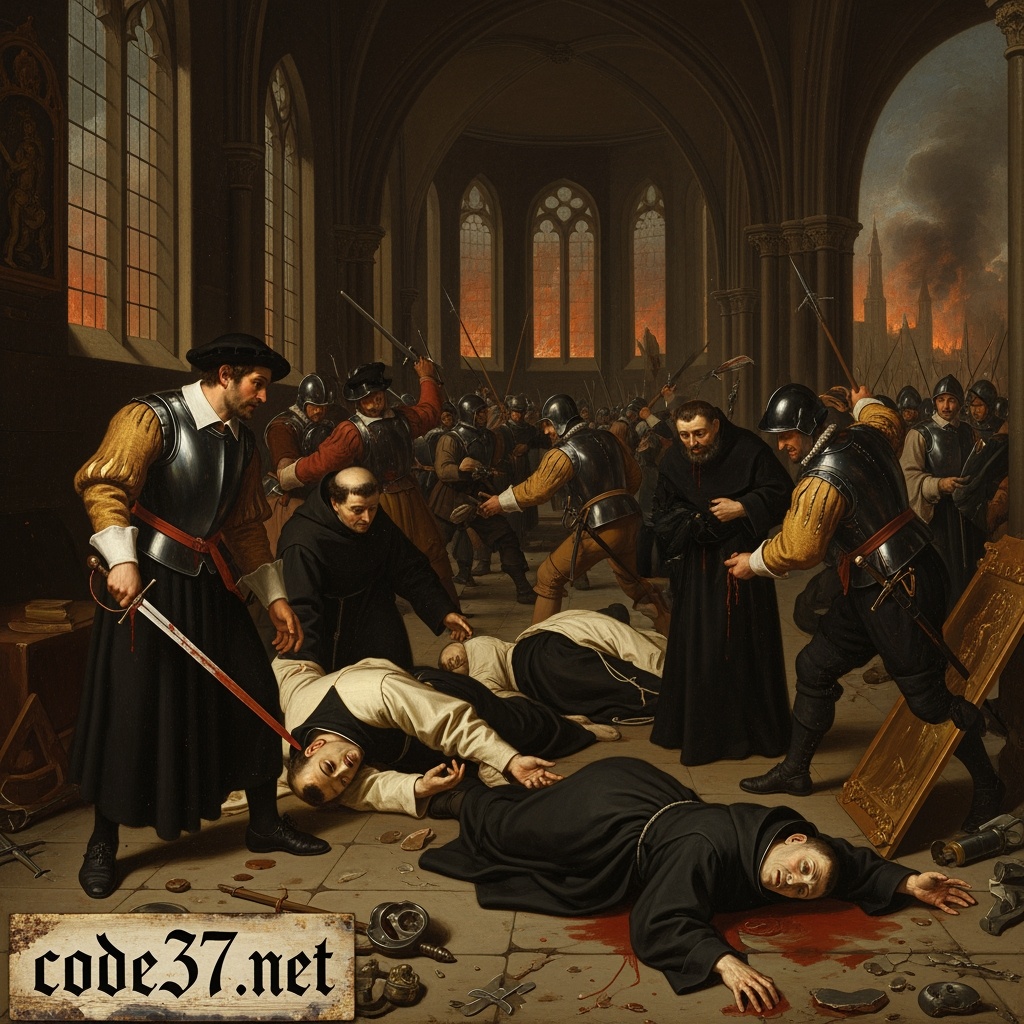
The city of Roermond, located in the Dutch province of Limburg on the border with Germany and close to Belgium, was once the scene of a bloody massacre in which 13 priests and monks were slaughtered on July 27, 1572, during the Eighty Years’ War, also known as the Spanish-Dutch War. On that day, Prince William of Orange and his army captured the city, which they then mercilessly plundered, and his Protestant soldiers attacked the Catholic churches and monasteries that had refused them entry into the city. This massacre was recorded by the Carthusian monk Arnoldus Havensius in his book “Historica relatio duodecim Martyrum Cartusianorum,” which became an absolute bestseller. To this day, the remains of the martyrs of Roermond can be viewed in the Carolus Chapel. Prince William of Orange was once the governor of the Spanish Crown in the Netherlands, who led the freedom movement from 1568 and was therefore considered Spain’s public enemy number one. This was because the Netherlands, like Belgium, Luxembourg, and part of northern France, belonged to the Holy Roman Empire, which was ruled by the Spanish branch of the Habsburgs. In the course of the Reformation in the mid-16th century, Calvinism spread, and its followers, the Calvinists, protested against the Spanish government. When the provinces of Zeeland and Holland were conquered by them in 1572, William I of Orange was elected governor of the liberated provinces, which is why King Philip II was determined to get rid of him. He put a bounty of 25,000 gold crowns on his head and guaranteed a general amnesty and a knighthood. On July 10, 1584, after many failed assassination attempts, William of Orange was killed at the age of 51 in the stairwell of the Prince’s Court in Delft. His murderer was Balthazar Gérard, who executed him with three shots. During his escape, he was thrown from his horse and arrested. Under torture, Balthazar Gérard, who was a fanatical Catholic, confessed to murdering his arch-enemy, William of Orange. After his confession, Gérard was sentenced to death. First, his hand was burned with a red-hot iron. He was then tied to the wheel, where the executioners broke his larger bones with blows before tying him to the wheel. Finally, four horses tore his body to pieces. The reward for the murder went to his parents, who were given money and a title of nobility. The murder of William of Orange is considered one of the most famous in Dutch criminal history.