Isabella Mueller (crime writer)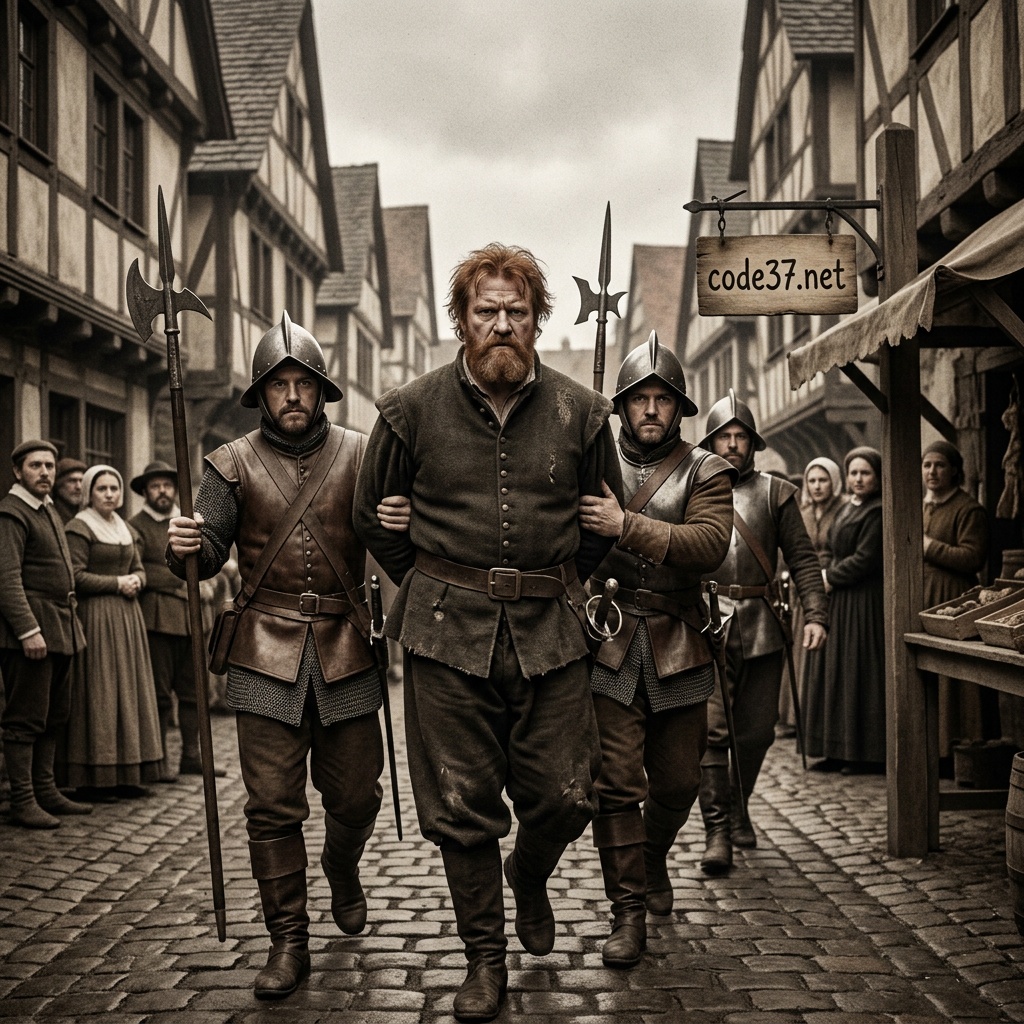
Over 400 years ago, social tensions arose in Frankfurt am Main between the citizens and the city’s rulers, an event that went down in history as the Fettmilch Uprising. The name derives from one of the leaders of the rebels, Vinzenz Fettmilch. Vinzenz Fettmilch, a tall, stocky, red-haired man in his late forties, was originally from Büdesheim and became a citizen of Frankfurt through his marriage to Catharina Schiele, a native of Frankfurt. The former soldier had intended to work as a clerk at the Hospital of the Holy Spirit, but due to financial considerations, he decided to earn a living for himself and his ten children as a gingerbread baker. He joined the Fat Merchants’ Guild and purchased the house “Zum Hasen” in 1607. Fettmilch, who belonged to the middle class, disapproved of the city’s politics, which were led by the wealthy citizens. Since the High Middle Ages, Frankfurt had been a free imperial city whose citizens were subjects of the emperor. On special occasions, their privileges were read aloud to them so that everyone knew their rights. One such occasion took place in May 1612, when Matthias was elected emperor. The citizens demanded that the city council announce their privileges, establish a public grain market to regulate grain prices, and reduce the number of Jews residing in the city. Furthermore, the interest rate was to be lowered from 12 to 8 percent, and all Jews who did not possess 15,000 talers were to be banished from the city. Vinzenz Fettmilch seized the opportunity to dismantle the old power structures. He hated the patricians and princes who regularly took out loans in the Jewish Quarter and bled the city treasury dry. He even suspected a conspiracy between the Jews and the wealthy lords. He incited the city’s influential artisans, who banded together and began pressuring the city council. Indeed, they succeeded in having a civic charter signed on December 21, 1612, and 18 new representatives from the guilds were appointed as councilors. Since then, fiscal policy had been controlled by a committee of nine. But this was not enough for the citizens’ committee. Vinzenz Fettmilch became the voice of the rebels, who were joined by 700 citizens in a short time. He forced the patricians to leave the council and locked them up for days. A new council was established under Fettmilch. For over two years, fierce clashes raged in Frankfurt between the city council and the guilds, accompanied by riots against the Jews. Vinzenz Fettmilch was even arrested from May 5 to 8, 1614, in the Frankfurt Council Chamber for his role as leader of the revolt. Once released, he stormed the Judengasse on August 22, 1614. He and his followers looted, robbed, and murdered until armed citizens put an end to the riots. A total of 1,380 Jews were driven to the Jewish cemetery and banished from Frankfurt the following day. This storming of the Judengasse and the subsequent rule of Fettmilch and his followers led Emperor Matthias to impose the imperial ban in September 1614 on the three main ringleaders: Vinzenz Fettmilch, the scribe Konrad Gerngroß, and the tailor Konrad Schopp. Anyone who helped these men, who had now been stripped of protection and rights, lost all rights just like them. As a result, the uprising collapsed. Vinzenz Fettmilch was arrested by soldiers on December 2, 1614, and imprisoned in the Aschaffenburg dungeon. He waited there for 14 months for his sentence, which was pronounced and carried out on February 28, 1616. Around 7 a.m., the three leaders—Vinzenz Fettmilch, Konrad Gerngroß, and Konrad Schopp—were led to the executioner at the Roßmarkt, who first cut off two index fingers of their right hands with his sword, then beheaded and quartered them. Afterward, Vinzenz Fettmilch’s body parts were hung in all four cardinal directions of the city. A squad of mercenaries went to Fettmilch’s house on Töngesgasse and tore it down to its foundations. A pillory was erected there on August 22, 1617. His wife, their 10 children, and Fettmilch’s brother were banished from Frankfurt am Main. The heads of the three leaders were impaled and hung on the old bridge tower, where crows pecked out their eyes. They remained there until the bridge tower was demolished in 1801. Thus ended the life of Vinzenz Fettmilch, who rebelled against the city’s powerful rulers and their policies.