Isabella Mueller (crime writer)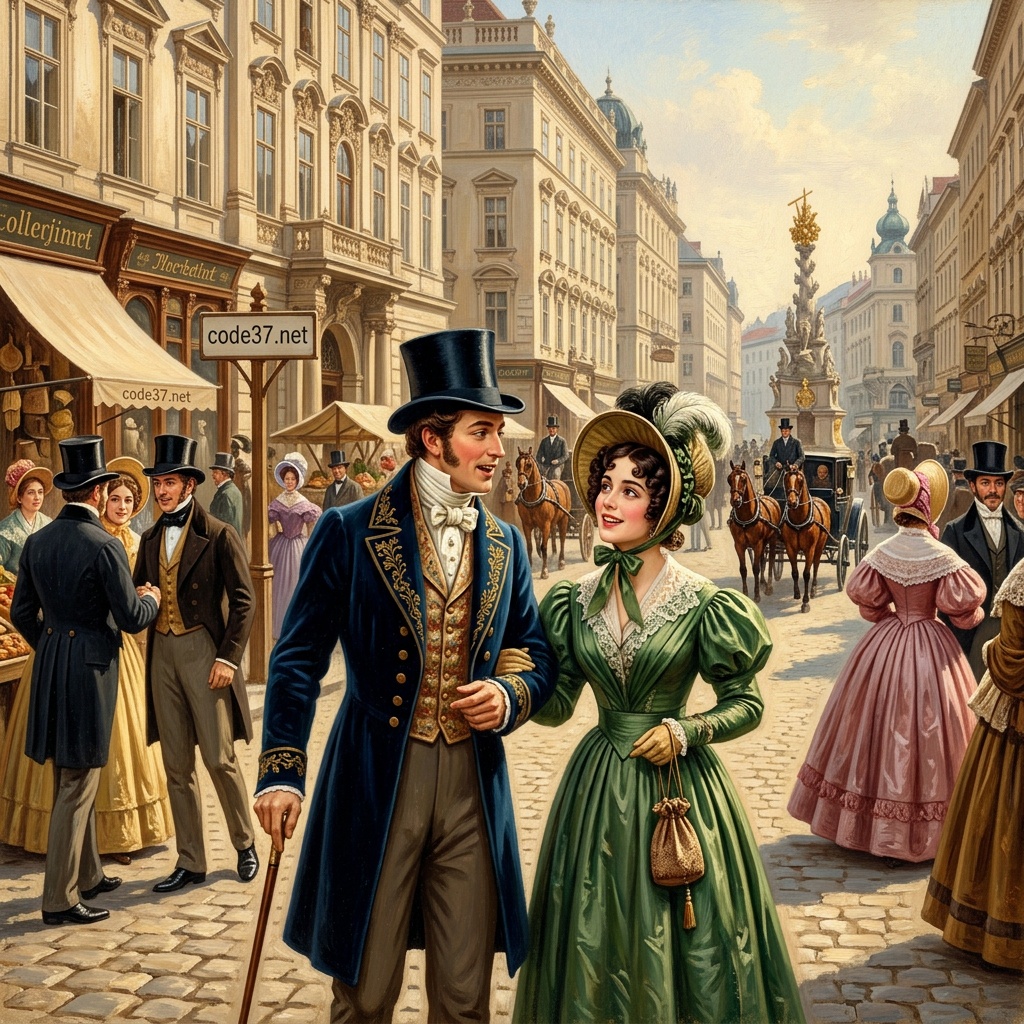
The Polish nobleman Severin von Jaroszynski was a bon vivant par excellence. He was born on December 20, 1789, into a wealthy family in Podolia. Since education was very important to the family, Severin attended a boarding school in Warsaw for five years starting at the age of 13. At the age of 18, he began studying at the renowned Pleban Academy in Vienna. He was taught by mathematics professor Conrad Blank and the painter Johann Schindler. When Severin was 23, he returned to his homeland. After his father’s death, both Severin and his brother inherited a substantial estate. From then on, both took care of their father’s estate. Severin married and had three children with his wife. He was not only the district marshal of Mohyliv but also a Knight of the Order of St. Anne and the Order of Malta. Everything seemed perfect except for the fact that Severin was wildly extravagant with his money, which led to his debts mounting to more than a million Polish guilders, which his brother took over. Severin, however, continued to live a lavish lifestyle and soon embezzled a large sum in his capacity as district marshal of Mohilow, which landed him in legal trouble. To avoid this, he pretended to go to Baden and Vienna for spa treatments for health reasons. Before doing so, he separated from his wife. In 1826, Severin was back in his beloved Vienna, where he ruled the roost as a count with the title “Le Comte Sévérin Jaroszynsky, Marechal de Mohilow.” Severin, who was gifted with a way with words and spoke Italian and French fluently, charmed women left and right with his charming manner and the belief that he was filthy rich. On the Graben, Vienna’s luxurious promenade, Severin approached the 25-year-old theater actress Therese Krones, who immediately fell for his charm and from then on danced through life with him. Severin enjoyed life to the fullest and loved the lavish parties where champagne flowed by the liter. This expensive lifestyle once again left him deeply in debt, so Grand Duke Konstantin forced him to return to his homeland. Severin needed money. Then he remembered his old mathematics professor, Blank, who possessed a considerable fortune in securities. He sought him out under the pretext of helping him buy stocks. Fearing he might be cheated, he wanted to see Blank’s originals; but since Blank showed him only the least valuable ones, he spared him at first. Yet when, around noon on February 13, 1827, in his apartment at 19 Johannesgasse, Blank laid eight bonds worth 6,100 guilders on the table, Severin’s greed proved too great. He struck Blank on the head with a club. Then he took a kitchen knife and stabbed him frantically. He subsequently stole the bonds to sell them. He received 5,400 guilders for them, which he used to pay off his debts, buy a ring, and pay for his farewell banquet. Since Blank had not shown up for class—which was completely out of character for him—the police broke down the door to his apartment, where they discovered Blank’s badly beaten, lifeless body on the kitchen floor. The trail quickly led to Severin, as the stockbroker Wendel had found the sale of the securities suspicious, which is why he had notified the police. The police struck on Severin’s farewell evening of all times, and just as his lover was about to sing the classic “Brüderlein fein” for him. Severin was arrested in front of his guests. Representatives from the Russian Embassy were also present at the party and urged Severin to return home immediately, but it was too late. During interrogation, he vehemently denied the crime. However, he had confided to a fellow prisoner that a woman had seen him as he left Blank’s apartment. The prisoner passed this information on to the police, who were able to track down a newspaper delivery woman. She testified that she had seen a man in a distinctive blue coat at the time of the crime on the day of the murder. During a lineup, she identified Severin. Severin von Jaroszynski was hanged on August 30, 1827, at the execution site known as the “New Vienna Gallows” on the Wiener Berg, in front of 200,000 onlookers. The Viennese public blamed his young lover, Therese Krones, for his death. The sensationalist press bore a large share of the blame, seeing the young actress as the root of the evil, as she had so thoroughly turned Severin’s head that he committed murder. From then on, Therese Krones was booed and insulted at theater performances, which is why she gave up her acting career. Four years later, on December 26, 1830, she died at the “Gasthaus zur Weintraube” on Praterstraße from complications of appendicitis.