Isabella Mueller (crime writer)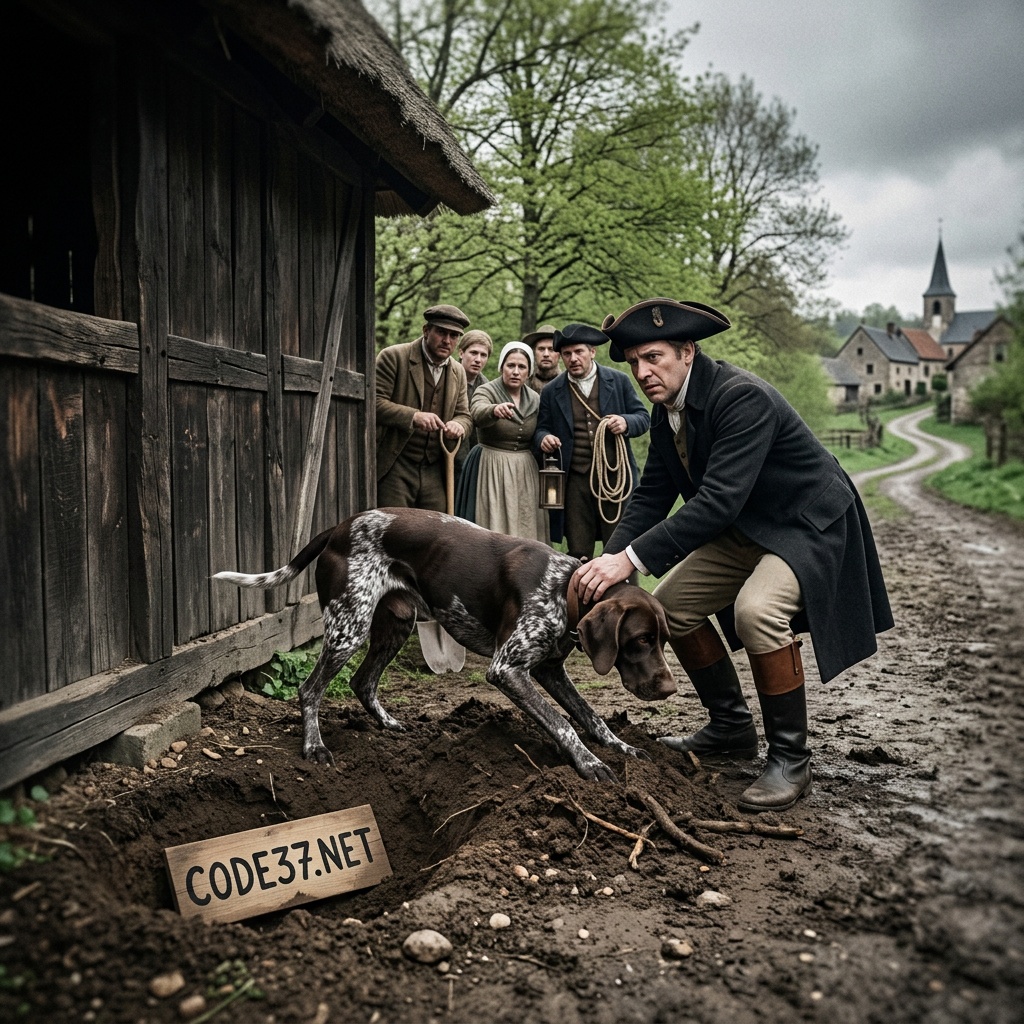
Andreas Bichel, from the Bavarian village of Regendorf, was a serial killer who lured young women into his woodshed between 1806 and 1808, killed them there and then dismembered their bodies into small pieces; he went down in German criminal history as the ‘Girl Slaughterer’. The unbelievable motive for his heinous murders was the girls’ beautiful dresses, by which he was positively obsessed. It all began in the summer of 1806 when Barbara Reisinger, the daughter of the day labourer Peter Reisinger from Loisenrieth, vanished without a trace or a word. She had left home to work as a maid for a family. Since then, there had been no trace of her. Two years had passed when, on 15 February 1808, another young girl went missing in Bavaria. This was Katharina Seidel from Regendorf, who had last been seen alive when she had visited Andreas Bichel to have her future predicted from his crystal ball. Katharina had excitedly told her sisters about it and taken all her pretty dresses with her, which Bichel wanted as payment for his fortune-telling. When Katharina did not return home from there, her sisters asked Andreas Bichel about their sister’s whereabouts; according to Bichel, she had left with a young man. No one suspected Andreas Bichel, even though his wife was selling items of clothing belonging to the missing Katharina. But then a stroke of luck came to Katharina’s sisters’ aid. As a result, a judicial inquiry was ordered. For by chance, Katharina’s younger sister Walburga had visited a tailor’s workshop in Regendorf. There she discovered several pieces of coarse cloth from her sister’s skirt, from which the tailor was to make a waistcoat for Andreas Bichel. Walburga reported this on 19 May 1808 to the Burglengenfeld District Court, where she gave an account of her sister Katharina’s disappearance. A rumour was now circulating in Regendorf that another woman had vanished into thin air after visiting Andreas Bichel. The very next day, the court bailiff set off for Regendorf to search Andreas Bichel’s house and question him. During questioning, Bichel denied any close acquaintance with Katharina and her sisters. He stated that Katharina had been picked up by a young man after her visit to him. Although a chest containing various items of women’s clothing was found in Bichel’s house, there was no clear evidence to suggest a crime had been committed. There were no bodies, nor were any bloodstains discovered in Bichel’s house. It was only the bailiff’s dog that provided the decisive clue to a violent crime. The dog kept barking at the woodshed and wanted to dig there. As this seemed suspicious to the bailiff, he had the woodshed searched and the floor dug up. Indeed, the half-decomposed head of the missing Barbara Reisinger was found there in a pit. Some distance away lay a human body, its lower torso severed from the upper torso. The feet had been mutilated and the breasts cut open. This horribly dismembered corpse was identified as Katharina Seidel. In another pit, further body parts were discovered, which had been brutally hacked off and cut open. Andreas Bichel was interrogated again. Bichel continued to spin tales to the court clerk until he finally confessed to having killed, hacked up and subsequently buried Katharina and Barbara because he wanted to possess their clothes. He had slaughtered the two young women like an animal. On 4 February 1809, Andreas Bichel was sentenced to death by breaking on the wheel by the Royal Court of Appeal in Neuburg. This sentence was commuted to beheading out of consideration for the moral dignity of the state, which did not wish to compete, as it were, with the cruelty of a criminal’s abominable deeds through the cruelty of the punishment. Thus, the 48-year-old Andreas Bichel had been lucky once again. For decapitation was considered a swift death, whereas breaking on the wheel would have meant a slow death accompanied by hellish pain for him.