Isabella Mueller (crime writer)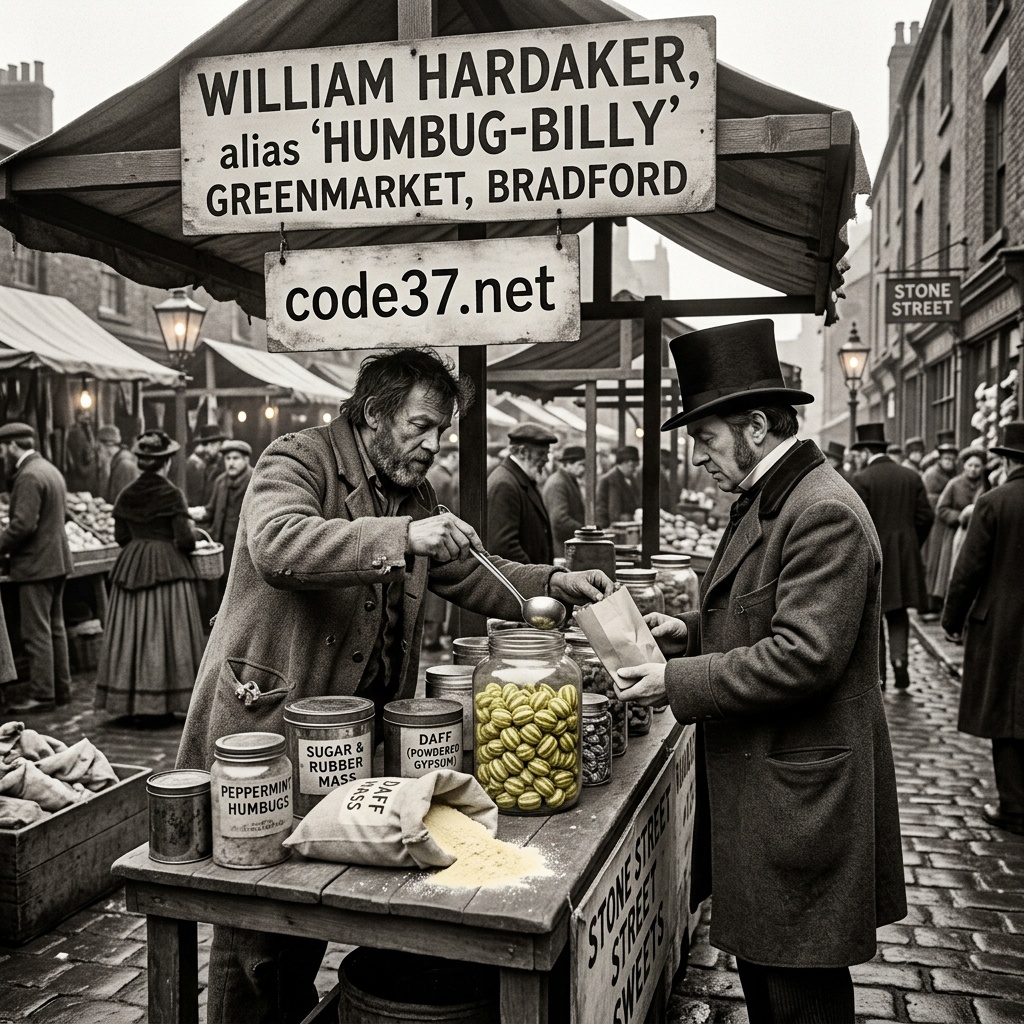
One of the largest arsenic poisonings in human history, affecting more than 200 people, took place in Britain in 1858. But how on earth did it come about? It all took place in the quiet town of Bradford in the English county of West Yorkshire in the United Kingdom. There, William Hardaker, alias ‘Humbug Billy’, sold his much sought-after peppermint sweets from his market stall on Greenmarket in the heart of Bradford. William sourced these from Joseph Neal, who manufactured the so-called peppermint humbugs on Stone Street in Bradford. These consisted of a mixture of sugar and gum, into which peppermint oil was blended. As sugar was expensive at the time and Joseph Neal was a shrewd businessman, he replaced the sugar with powdered gypsum, known as ‘daff’. This was a common practice at the time, yielding a tidy profit. Neal obtained the daff from the chemist Charles Hodgson. As Neal was busy, on 30 October 1858 he sent his lodger, James Archer, to Hodgson’s chemist’s shop at Baildon Bridge in Shipley. However, Hodgson was ill that day, so his assistant, William Goddard, dealt with the order. He knew from Hodgson that the daff was stored in a barrel in the corner of the attic. But instead of bottling the Daff, Goddard made a mistake and bottled the poison arsenic trioxide. He sold 5.4 kilograms of it to James Archer. Archer took the supposed Daff to Neal, who gave it to his experienced employee James Appleton. Appleton used it to make the highly sought-after peppermint humbugs. As arsenic trioxide closely resembles sugar in appearance and consistency and is tasteless and odourless, Appleton did not notice the mix-up. Although the peppermint humbugs looked different and Appleton had been suffering from nausea and pain in his hands and arms since making them, he did not think anything of it. William received his usual 18 kilograms of peppermint sweets, and was even able to negotiate a discount with Neal due to their unusual appearance. William also fell ill after eating the peppermint humbugs. However, he saw no connection between his symptoms and the sweets. Unaware of the danger, he sold his popular peppermint humbugs at the market with a clear conscience. In total, William had sold 2.3 kilograms of them. As a result, 200 people fell ill with arsenic poisoning, and 21 people died. After two children died, it was initially assumed to be cholera poisoning, which was common at the time. However, as the death toll rose dramatically, it quickly became clear that the peppermint sweets from William’s stall were to blame. The confectioner Joseph Neal, the chemist Charles Hodgson and his assistant William Goddard were arrested and put on trial for manslaughter. The charges against Joseph Neal and William Goddard were dropped and Charles Hodgson was acquitted, as it had been a tragic accident. This tragedy led to the passing of the Pharmacy Act on 31 July 1868, which guaranteed the safe use of medicines. This law is regarded as a milestone in the history of pharmacy. It was intended to prevent a repeat of a disaster such as the accidental mass poisoning in Bradford.