Isabella Mueller (crime writer)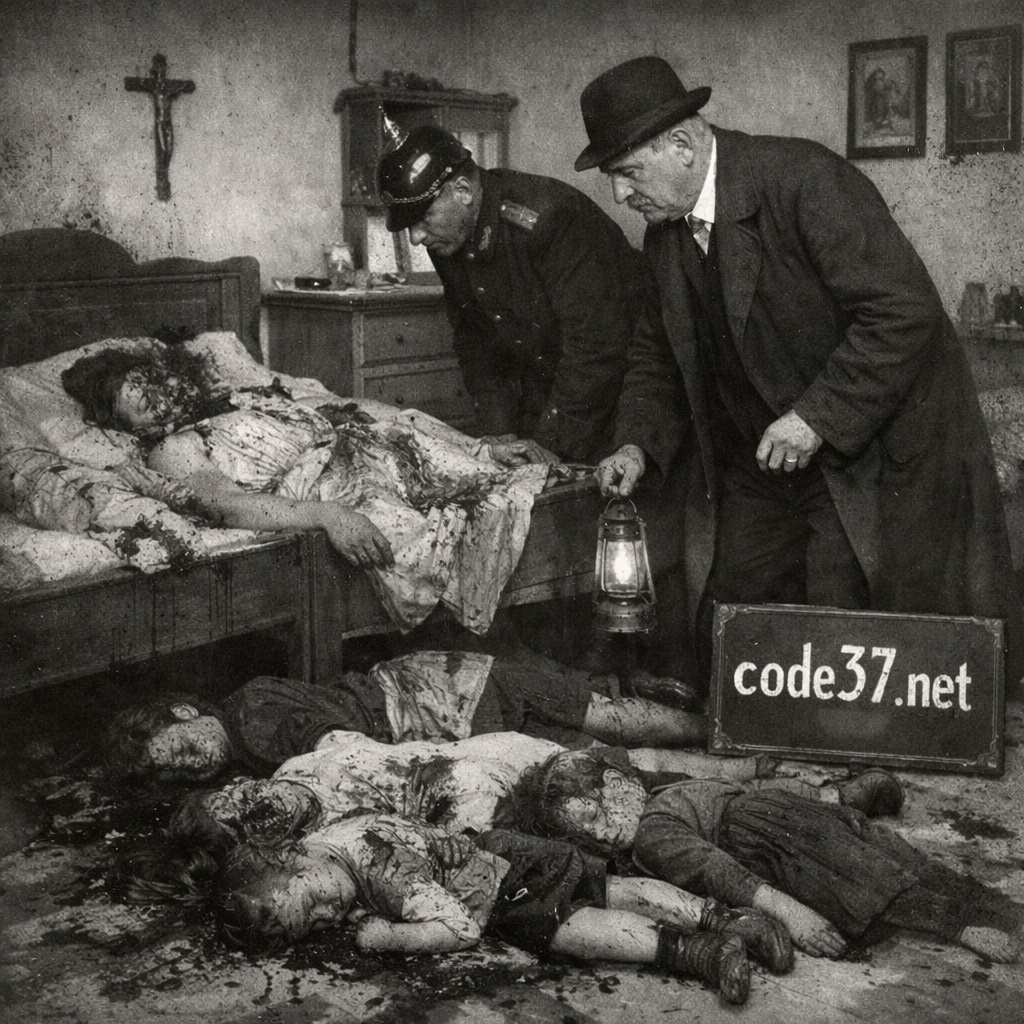
In the fog of the cruel past, a cruel memory emerges that makes your blood run cold. It was a cold morning in September 1913 when Ernst August Wagner, a respected village school principal from Degerloch, a district on the southern edge of downtown Stuttgart, became a monster. The tragedy that unfolded that day went down in the annals of German criminal history not only because of its bloody details, but also because of its gruesome consequences.
It is early in the morning of September 4 when Wagner does the unspeakable. Armed with a deadly weapon, he struck down his wife Anna and cruelly ended her life with knife wounds to her neck, heart, and lungs. But that was not enough—he then turned his bloody rage on his own children. His two sons, Robert and Richard, and his daughters, Klara and Elsa, fell victim to his frenzy.
While the shock of the events still reverberates, he packs three loaded pistols and 500 rounds of ammunition into his backpack. In an almost surreal manner, he leaves his unsuspecting neighbor an order for three liters of milk, along with 35 pfennigs as payment. He rides his bike into town, from where he takes the train to Bietigheim. During the journey, he writes letters to his relatives and the editorial office of the newspaper “Neues Tageblatt” in Stuttgart, without the slightest sign of remorse or human compassion.
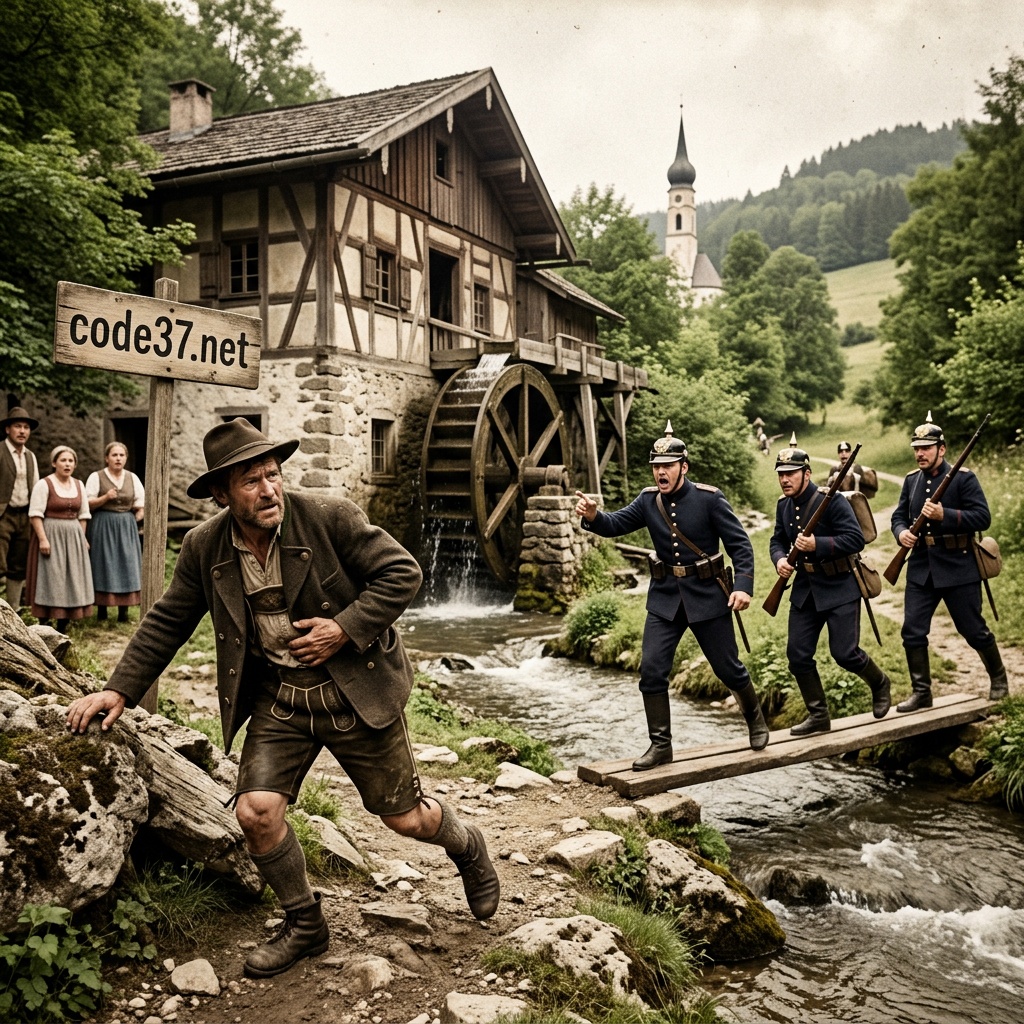
Upon arriving in Bietigheim, Wagner continues his eerie journey and cycles to Mühlhausen an der Enz. With frightening calm, he waits until midnight to set fire to four houses. The panicked villagers rush out of their burning homes, believing that the fire is their greatest threat. But they are mistaken. Wagner lies in wait and opens fire. Nine people are killed and eleven more are seriously injured. Three men finally muster the courage to overpower Wagner and put an end to his rampage, but they too pay a high price. Wagner breaks his left forearm in the process, which later has to be amputated.
After his arrest and hospital stay, Wagner is taken to Heilbronn prison. A search of his house reveals the full extent of his atrocities. The bodies of his family are found, as well as his detailed diary in which he had meticulously written down his plans. Had he not been stopped, he would have continued killing.
His next targets were the residents of Egolsheim, including his sister and her family, as well as Ludwigsburg Palace, which he planned to set on fire before committing suicide in Duke Carl Eugen’s bed.
At the trial in Heilbronn, an expert opinion by Robert Wollenberg from Strasbourg and Robert Gaupp from Tübingen concluded that Ernst August Wagner suffered from paranoia. This pathological paranoia was the cause of his rampages and led to the proceedings being discontinued on grounds of insanity – a first in the history of the Württemberg judiciary.
On February 4, 1914, Wagner was therefore admitted to the Winnenthal mental hospital near Winnenden.
But even within the closed walls of the institution, Wagner’s disturbed genius found no peace. Obsessed with the need to capture his delusional visions artistically, he wrote several plays.
However, his plays, which always revolved around the theme of delusion, were never to be performed on the big stage. In countless letters, he tried in vain to convince renowned personalities and theater directors of his talent.
Wagner met a cruel end in 1938 when he died of tuberculosis in the Winnenthal psychiatric clinic. His name remained a cruel reminder to the world—not only because of his actions, but also because of his literary legacy. The German-Swiss author Hermann Hesse immortalized Wagner as the model for the murderer in his novella “Klein und Wagner,” published in 1919.
This abhorrent episode in history remains a grim reminder of how deep the abyss of the human soul can be. Despite the decades that have passed, the cries of his victims still echo through the streets of Degerloch and Mühlhausen – an unforgettable warning of the demons that lurk beneath the surface.