Isabella Mueller (crime writer)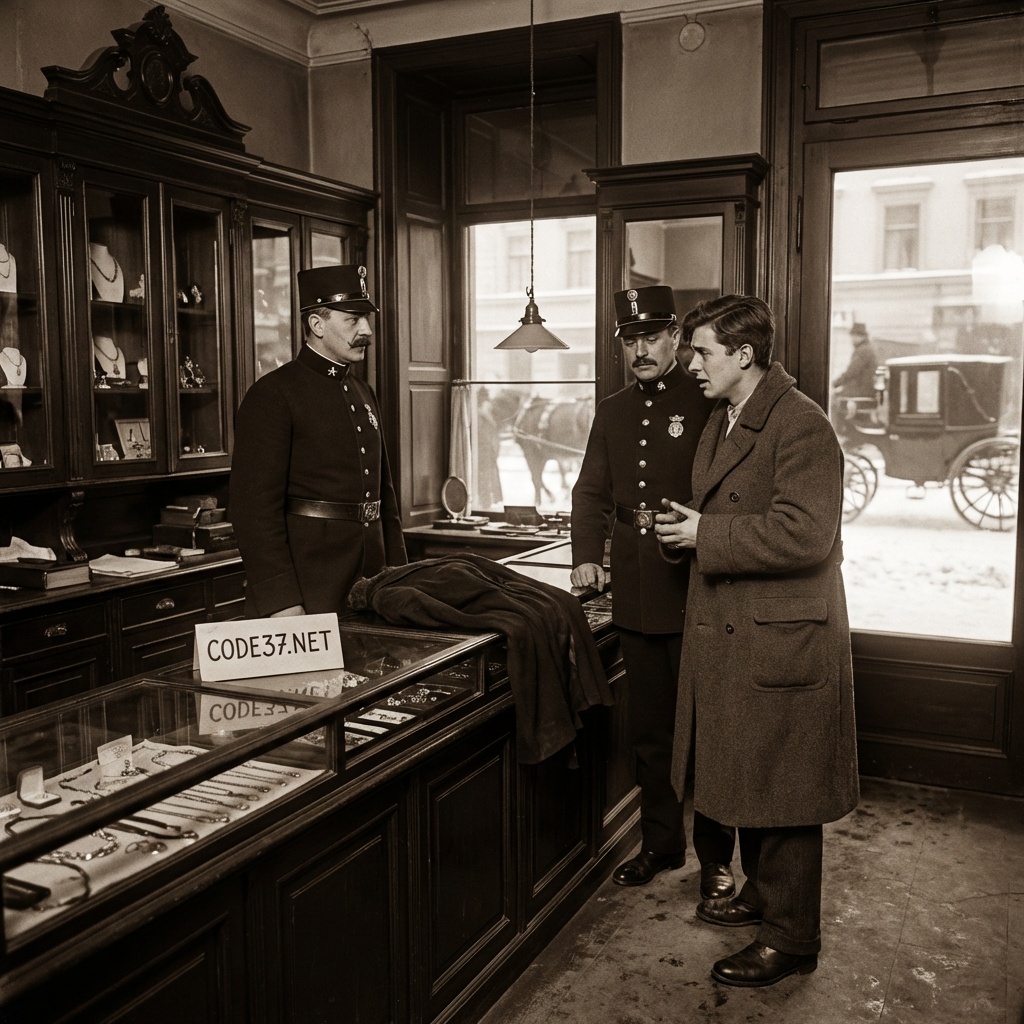
Even Marilyn Monroe knew that “diamonds are a girl’s best friend.” A young man took this to heart and, out of love, committed a fatal act of stupidity that changed his whole life. On December 8, 1908, the son of Viennese jeweler Julius Frankfurter entered his father’s store to spend his lunch break with him. To his horror, however, he found his father lying dead behind the counter. He immediately alerted the police, who, despite the lack of a murder weapon, immediately assumed it was suicide due to the gunshot wound to the head. Moreover, nothing of value appeared to be missing from the store. But why would his father, who owned a thriving jewelry store in the heart of Vienna and had been happily married for years, kill himself? This puzzled his son. After the forensic autopsy, it was clear that Julius Frankfurter could not have inflicted the gunshot wound to his head himself. The bullet that was recovered allowed conclusions to be drawn about the weapon, which was not available in Austria. A thorough examination of the evidence revealed that both the victim’s wallet and a few pieces of jewelry were missing. Since there were no witnesses and with the information about the foreign weapon, the Vienna police contacted foreign police authorities with pictures of the missing jewelry and information about the weapon. Soon, a lead pointed to an international con artist named Duidenius. He had traveled to Vienna shortly before the robbery and murder. Since he had no alibi for the time of the crime and also possessed a foreign weapon, he quickly became a suspect. The police arrested him just as he was trying to leave his Vienna hotel in a hurry. When searching his suitcase, the police found jewelry that Duidenius could not explain the origin of. Only when the noose around his neck tightened did he admit that he had stolen the jewelry from a wealthy woman in Italy, but he could not remember exactly where. The Vienna police did not believe this, as several witnesses identified the jewelry as belonging to the jeweler Julius Frankfurter. Duidenius was clearly the perpetrator. Then the tide turned for the impostor, who had always protested his innocence. Surprisingly, the Vienna police had received a message from Germany. On December 16, 1908, 22-year-old Richard Henkel had been arrested in Berlin while attempting to sell jewelry at a pawn shop. The jewelry matched the descriptions given by jeweler Julius Frankfurter. During questioning at the Berlin police station, Richard Henkel confessed to the robbery and murder of jeweler Frankfurter. He had committed the murder out of love. He wanted to impress his new girlfriend with the jewelry. Duidenius was released from custody in the meantime. Richard Henkel’s trial began on March 24, 1909, before the criminal division of the Regional Court I in Berlin. He pleaded guilty. When he described the crime, he remained unemotional, which the jury considered cold-hearted. The crime scene was reconstructed to scale on a model by the Vienna police. On the second day of the trial, Henkel’s girlfriend was questioned and denied a romantic relationship, even though he had given her a gold watch and two diamond rings after the crime. Richard Henkel was ultimately sentenced to death by beheading. His defense attorney’s plea for clemency to the king was rejected. Shortly before his execution, Richard Henkel was transferred to the death row cell in Plötzensee. Only then did he realize what he had done, which he deeply regretted. His only visitor was the preacher Hirsch. On the afternoon of August 24, 1909, the executioner Gröbler from Magdeburg arrived with his assistants to prepare for the execution in the prison courtyard. Richard Henkel’s shackles were then removed in his cell so that he could spend his last night without restriction of movement. Shortly before 6 a.m. on August 25, 1909, he was taken from his cell and led to the scaffold. The presiding judge, 12 witnesses, court officials, police officers, the executioner, and his assistants were already waiting there. The prosecutor read out the sentence to Richard Henkel. He was then handed over to the executioner, who, with the help of his assistants, strapped him to the board. Executioner Gröbler then released the guillotine. Richard Henkel’s dead body was placed in a black coffin together with his head and transported in a one-horse carriage to the grave in the prison cemetery. At around 9 a.m., the execution was made public on the notice boards. With that, the life of young Richard Henkel was finally history.