Isabella Mueller (crime writer)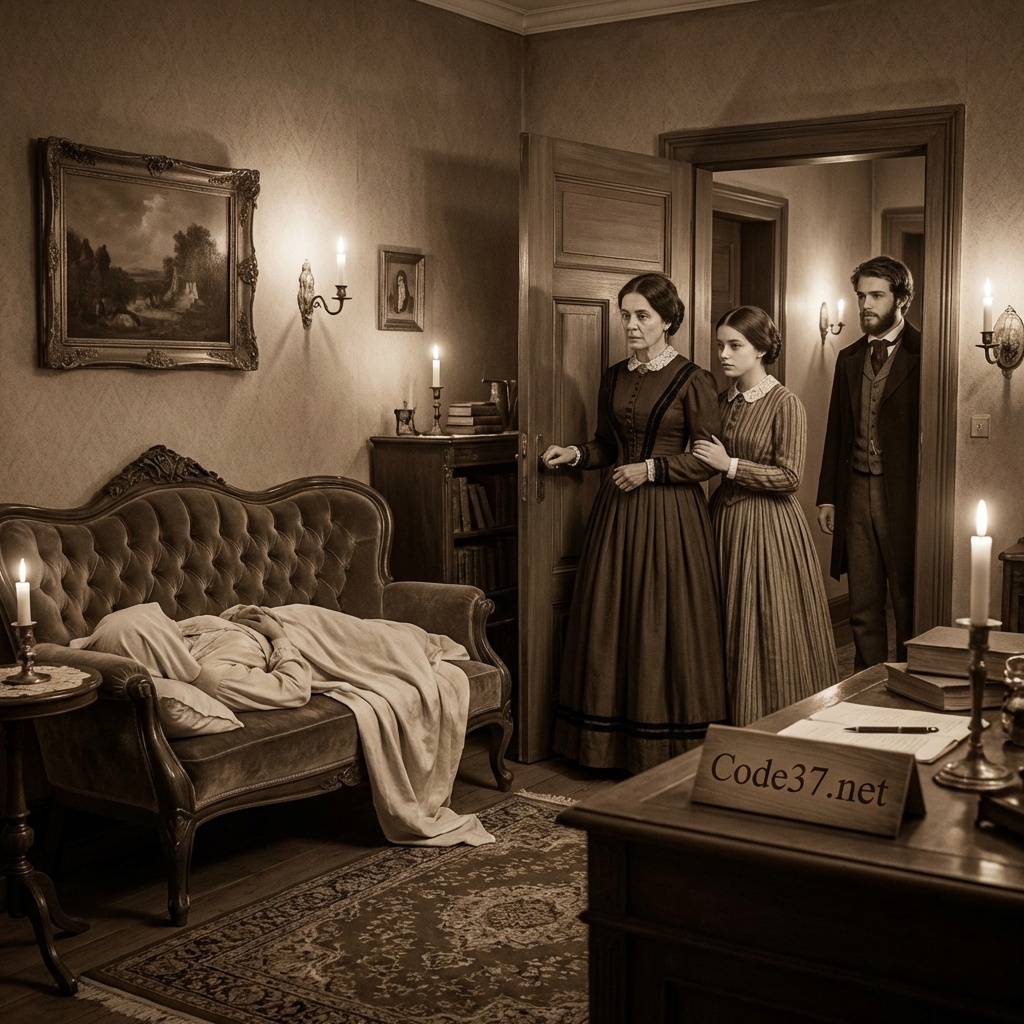
The Chorinsky case was a sensational crime that kept the international press in suspense for months and occurred during a highly volatile political period in which the old feudal system clashed with the new liberal spirit of the times. Since early October 1867, 34-year-old Mathilde Baroness von Ledsky had been living in a room at the home of the widow Elise Hartmann on Amalienstraße in Munich. Elise lived modestly and socialized only with the student Albert Mikulitsch until, on November 20, 1867, she paid a visit twice that morning to a young lady from Vienna who was staying at the Hotel “Vier Jahreszeiten.” The next day, the young lady visited the baroness again, and they took a short walk together. Upon their return, the Baroness asked her landlady Hartmann to lend her her opera glasses, as she planned to go to the theater with the young lady that evening. Around 6:30 p.m., the young lady had come to the Baroness’s room. She called for landlady Hartmann and asked her to fetch a carriage, but refused to let her look into the room. Elise Hartmann had found a coachman within five minutes. However, when she went to inform the two ladies, she found the baroness’s door locked. Elise Hartmann canceled the carriage, assuming the young ladies had likely walked to the theater after all. Yet even the next day, Elise Hartmann heard nothing from the baroness, who had stayed out overnight—something highly unusual for her. Perhaps she had stayed at her friend’s hotel. Yet even the next day, there was no sign of the baroness. The worried Elise Hartmann went to the hotel to inquire about the two ladies’ whereabouts. There she discovered that the young stranger had already left on November 21, the day before. However, no other young lady had been seen. Elise Hartmann grew even more worried and told everything to her neighbor, the student Struve. He suggested that Elise Hartmann check the missing baroness’s room. Together with her daughter Fanni, Elise Hartmann unlocked a side door to the room. Inside, she found the baroness’s body, her legs lying on the floor beneath a table, while her head rested on the sofa. Since the body was already very cold, her death must have occurred several days earlier. Because a tea set was on the table, both the landlady and later the police assumed that she had shared a cup of tea with someone shortly before her death. However, the teapot was missing, and the tea had been poured into a water jug. The room key and the dresser key were also missing. Elise Hartmann alerted the police. When the police physician saw the body and the scene, he immediately suspected that the baroness had been poisoned. This initial suspicion was confirmed by the forensic examination conducted by the medical examiners Prof. Dr. Martin and Dr. Riedinger. Baroness von Ledske had been poisoned with cyanide. Since no valuables were missing, robbery-murder could be ruled out. The police also ruled out suicide, as the baroness was considered a woman who loved life. During the search of the apartment, the police found interesting documents that revealed the baroness’s true identity. She was Mathilde Countess Chorinsky, Baroness von Ledske. Her divorced husband was Gustav Count Chorinsky, Baron von Ledske, who came from one of the oldest and most influential families in Austria. He was the son of the Imperial and Royal Governor of Lower Austria, Gustav Ignaz Count Chorinsky, the Emperor’s deputy. The Munich police were thus dealing with a murder in the highest circles, which the press pounced upon. For this reason, Munich Police Director Karl Alexander von Burchtorff personally led the investigation. The police focused their attention on the countess’s last guest. This was the young lady who had checked into the Hotel “Vier Jahreszeiten” under the name “Maria Baroness Vay,” accompanied by a young man, at 5:45 a.m. on November 20, 1867. Although the very elegantly dressed couple took separate rooms, they dined together and also attended a theater performance together. The next morning, however, the young gentleman left already. The young lady stayed and had her valet, Deininger, pour a bottle of Muscat Lunel and a red wine into two crystal bottles, which she intended to drink that evening. Afterward, she planned to take a sightseeing tour of Munich. In total, the young lady intended to spend two more days in Munich. But completely unexpectedly and in great haste, the young lady returned to the hotel around 7 p.m. to check out. Allegedly, her husband had sent her a telegram asking her to travel to Paris immediately. Although the telegram had never arrived at the hotel, the staff naturally complied with the lady’s request, and she left extremely generous tips upon her departure. In the meantime, the police had informed the divorced husband of the countess’s death. He traveled to Munich for the funeral together with his father. Police Director von Burchtorff had learned via telegram from the Vienna police that the young count had incurred heavy debts, had numerous affairs, and harbored an incredibly deep hatred toward his former wife, whom he had had spied on. Mr. von Burchtorff obtained an arrest warrant for the count on the grounds of strong suspicion. During the subsequent body search, the police found photographs of a young woman. Both the landlady, Elise Hartmann, and the hotel staff identified her as the countess’s last visitor, who had introduced herself as Baroness Maria Vay. The young lady in question was the 25-year-old Hungarian aristocrat and lady-in-waiting Julie Malvine Gabriele Ebergenyi von Telekes, who lived at Krugerstraße 15 in Vienna’s 1st district. That very evening, on November 26, Police Commissioner Karl Breitenfeld was sent to Julie Ebergenyi von Telekes’s apartment, where he arrested her. Julie, who initially confessed, admitted to the poisoning, then accused her lover of having incited her to commit the crime. Shortly thereafter, she attempted to convince the court that the countess had taken her own life before her eyes due to disputes with her divorced husband and the fact that she was the new woman at her ex-husband’s side. On April 25, 1868, Julie Ebergenyi von Telkes was sentenced to 20 years in prison. On May 4, 1972, due to her unstable mental state, she was transferred from the Wiener Neudorf Penitentiary to the Lower Austrian State Institution “Brünnlfeld,” where she died of cholera on April 8, 1873. Her former lover, Gustav Count Chorinsky, whose trial began on June 22, 1868, in Munich, was also sentenced to 20 years in prison. He died a few years later, having, like his former lover, lost his mind by the time of his death.