Isabella Mueller (crime writer)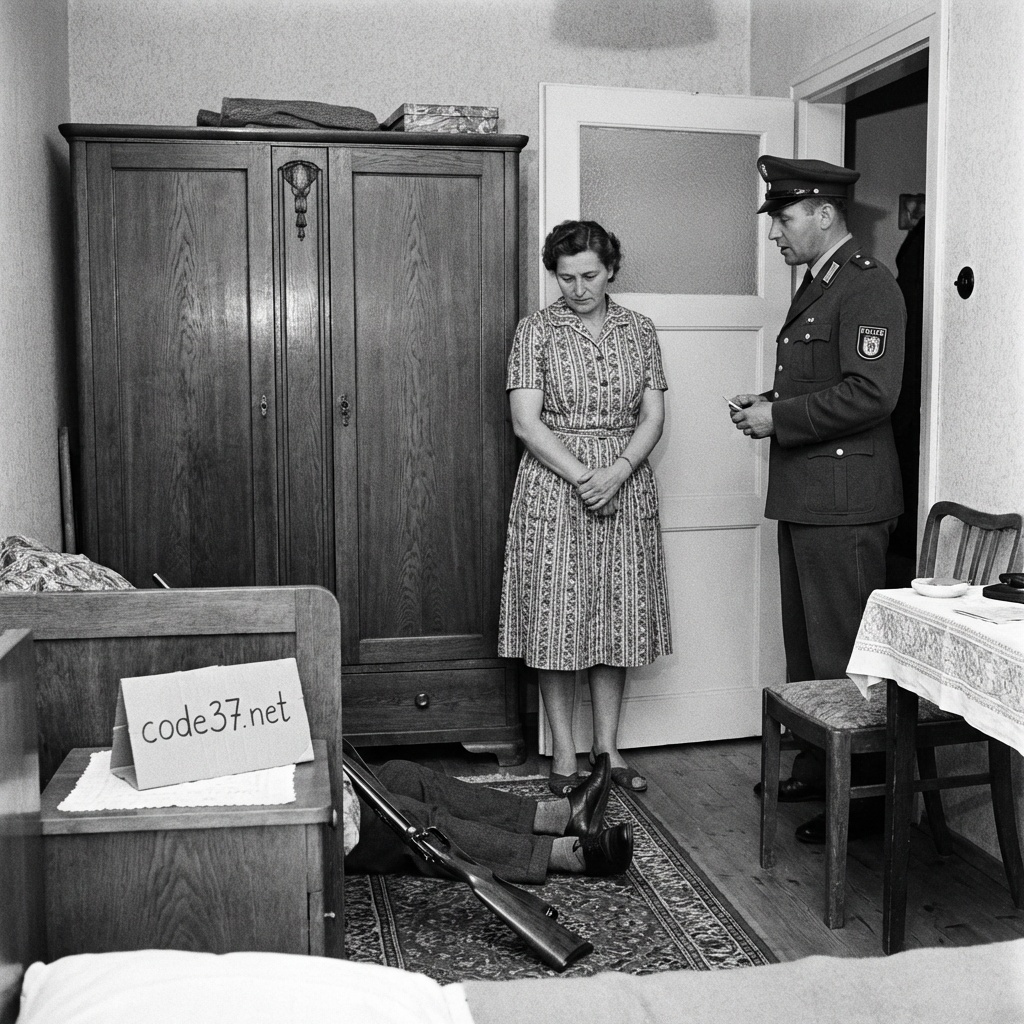
Suicide or murder, that was the question in the Paul Blomert case, which dominated the media landscape throughout Germany in 1961. But what had happened? On August 25, 1961, around noon, Ursula Blomert found her husband Paul Blomert lying bleeding on the floor of their bedroom with his hunting rifle in his hand. Ursula Blomert immediately alerted the doctor, Prof. Koch, who was unavailable. She then called her friends, Gustav and Helene Krabbe. They rushed to Ursula Blomert’s house and notified her doctor, Dr. Theodor Twisina. When he arrived at the Blomerts’ house, Paul Blomert was still alive. He asked Gustav Krabbe to take the rifle from Paul Blomert’s hand. He then organized an ambulance. However, Paul Blomert died on the way to the hospital. Dr. Tiwisina did not mark the death certificate as suicide, but as a “private accident.” Since Paul Blomert had left farewell letters, the police assumed it was suicide. At the time of his death, Paul Blomert was 43 years old, married, and the father of three children. He was the law partner of Dr. Busso Peus, the mayor of Münster, who was in the middle of a campaign for the Bundestag election. Shortly before his death, Peus had warned him to resolve his marital difficulties or he would be fired from the law firm. He had given him a deadline of four weeks. This was because his wife was allegedly having an affair with Gustav Krabbe, for whom she ran the business after her husband’s death, while Krabbe’s wife was having an affair with former dentist Dr. Freiberg. Paul Blomert fired a total of three shots. Unusually, the passionate hunter fired twice into the ceiling before the third bullet hit him. However, the nature of the gunshot wound and the suicide notes left no doubt in the minds of the criminal investigation department and the chief public prosecutor that Paul Blomert had committed suicide. The public prosecutor’s office therefore released the body for burial on August 26, 1961. The public prosecutor’s office did not request an autopsy. However, Paul Blomert’s 81-year-old father Franz and his sons Clemens and Ludger doubted the suicide theory due to their brother’s head injuries. They requested the exhumation of their brother’s body in order to determine the exact cause of death. This request was rejected by the Münster public prosecutor’s office on May 8, 1962. In August 1962, the Blomerts asked 38-year-old social lawyer and economist Dr. Günter Weigand for help. He turned to the public with flyers to shed light on the murder of Paul Blomert, which was allegedly disguised as suicide. Due to public pressure, the Münster public prosecutor’s office finally ordered the exhumation of the body. The investigating judge and district court judge Gall was responsible for the autopsy. On January 21, he issued arrest warrants against Gustav Krabbe on suspicion of jointly murdering lawyer Paul Blomert and against his wife Helene on suspicion of participating in the murder. The next day, he also had Ursula Blomert, the wife, arrested on suspicion of complicity in the murder of her husband Paul Blomert, and former dentist Dr. Freiberg, who had confirmed that on the morning of Blomert’s suicide, Blomert had told him of his intentions to kill himself. The arrested persons filed a complaint with the public prosecutor’s office and the 4th Chamber revoked the arrest warrants because the suspicions were not sufficient to justify a strong suspicion of guilt. While they were released, an arrest warrant was issued on October 14, 1963, against Günter Weigand for his attacks in the Paul Blomert case. Weigand was arrested in Berlin on April 2, 1964, then sent to the prison in Münster and transferred to the Eickelborn institution near Soest on September 22. The trial against Weigand began on October 27 and ended on April 25, 1966. Weigand was found guilty on 25 counts, including insult and defamation. He was sentenced to two years in prison, fined 1,100 marks, and ordered to pay the costs of the trial. When the verdict was announced, Paul Blomert’s cause of death was also determined to be suicide. This finally closed the Paul Blomert case. In December 1968, after Weigand had spent 11 months in prison, he was released early. In 1979, Weigand received 13,200 marks in compensation for pain and suffering and damages for his unjustified admission to a psychiatric hospital.