Isabella Mueller (crime writer)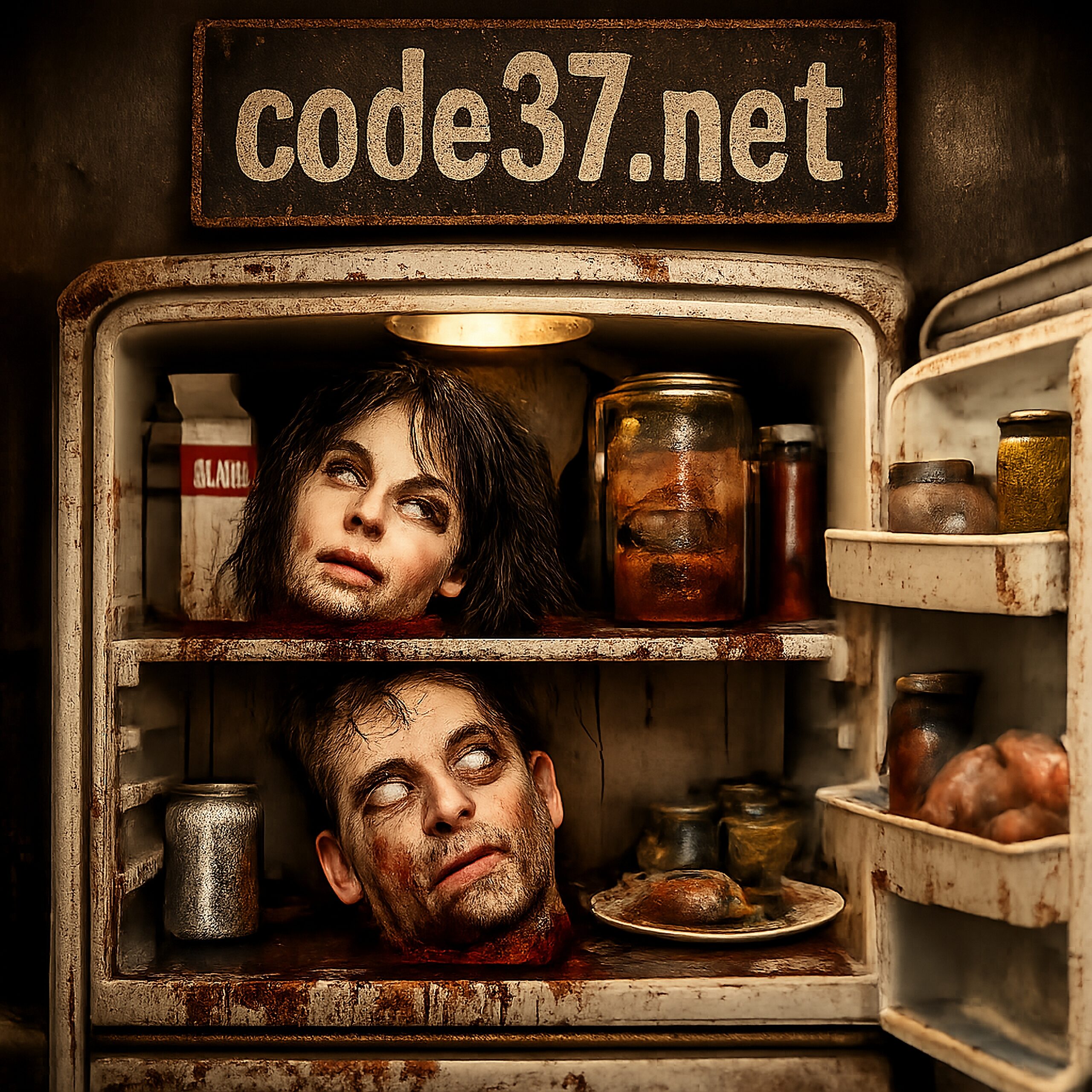
One of the most sinister criminal cases in the history of Houston, the fourth largest city in America in the state of Texas, is the murder of Fred and Edwina Rogers. It was June 23, 1965, when Marvin Marlin, Edwina and Fred’s nephew, called the police after not hearing from them for three days. When he drove to their house and found it locked with the blinds down, he knew something was wrong. When the police arrived at the house and no one answered the door, they forced their way in. With Marvin in tow, the police searched the house. When they reached the kitchen, they were hit by a putrid smell that seemed to be coming from the refrigerator. When the officers opened the refrigerator, they found several packages of chopped meat in the freezer compartment. The police officers didn’t think anything of it until they looked in the vegetable compartment, where they found the heads of 81-year-old Fred and his 79-year-old wife Edwina. A cold shiver ran down their spines, because it was now clear that the meat packages were their dismembered bodies. The autopsy revealed that Fred’s head had been smashed in with a carpenter’s hammer. His eyes had been gouged out and his genitals had been removed. His wife Edwina had also been beaten before being executed with a single shot to the head. Afterwards, their killer had dragged both bodies into the bathroom, drained their blood, and cut them into small pieces with a saw. The killer had cut the body parts precisely, apparently with anatomical knowledge. He then stored them in the refrigerator, which is why the media referred to the shocking case as the refrigerator murders. The couple’s organs were later discovered in a sewer. Their killer had chopped them up and then flushed them down the toilet. Afterwards, the killer had thoroughly cleaned the house. Blood was only found on the keyhole of the bedroom door in the attic, where the 43-year-old son Charles Frederick Rogers lived. A bloodstained saw was also discovered in his room. Charles disappeared without a trace after the murder, which is why he quickly became the prime suspect. Charles Frederick Rogers was born on December 30, 1921, in Houston. He was extremely intelligent but considered an eccentric. Charles was not only a linguistic genius who spoke seven languages, but also a passionate amateur radio operator. After earning his Bachelor of Science degree in nuclear physics from the University of Houston, he served as a pilot in the United States Navy during World War II and also worked for the Office of Naval Intelligence. After the war, he worked as a seismologist for Shell Oil for nine years until he suddenly resigned without explanation in 1957. His friends and colleagues described Rogers as extremely talented at locating resources such as gas, oil, and gold for various companies. In the mid-1950s, Rogers joined the Civil Air Patrol, where he allegedly met David Ferrie, a suspected conspirator in the assassination of President John F. Kennedy. After his surprising resignation, Charles moved in with his parents without a job. He lived in the attic, where he communicated with his parents only through notes that he slipped under the door. He was considered reclusive, and his neighbors knew nothing about his living with his parents, as Rogers usually left the house before sunrise and did not return until after sunset. The subsequent investigation revealed that Fred and Edwina had been murdered on June 20, Father’s Day. A search for Rogers was launched and an arrest warrant was issued for him as a key witness, but he disappeared without a trace. Rogers’ life was documented in 1992 in the book “The Man on the Grassy Knoll” by John R. Craig and Philip A. Rogers. The authors theorized that Rogers was a CIA agent who, along with Charles Harrelson and Chauncey Holt, were the “three vagrants” arrested at Dealey Plaza after the assassination of US President John F. Kennedy. The authors claim that Rogers murdered his parents because his mother was listening in on his CIA phone calls and documenting them. Therefore, his parents had to be eliminated because they knew too much. Charles fled to Guatemala after the double murder of his parents. In 1975, a judge in Houston officially declared Charles Rogers dead so that his estate could be settled. The case remains unsolved to this day, with Charles Rogers remaining the only suspect. Forensic accountant Hugh Gardener and his wife Martha continued their own investigations and concluded that Rogers murdered his parents and was later killed in Honduras. They reject Craig and Rogers’ CIA theory as there is no evidence to support it, but admit that Rogers, as a seismologist, had contact with CIA contractors. The Gardeniers believe that Rogers planned the murder of his parents for years, as his father was abusive and both parents were considered crooks. Fred was a bookmaker who is said to have committed numerous criminal acts. According to their theory, Fred also abused his son as an adult and stole large sums of money from him. This would explain why he killed his father on Father’s Day and cut off his genitals. They further suspect that Rogers fled to Mexico after the murder and was supported by powerful friends he had met through his hobby and work. Ultimately, Rogers is said to have been killed in Honduras over a wage dispute with miners. In October 2003, Redbud Publishing released “The Ice Box Murders,” a novel by the Gardeniers that depicts the case. The book is considered fact-based fiction and features numerous unnamed characters, including politicians and lawyers, as well as an eyewitness who claims to have seen Rogers in Honduras after 1965. The house where the murders took place was located at 1815 Driscoll Street. It remained vacant after the murders and was eventually demolished in 1972. It was not until 2000 that the property was rebuilt. The gruesome crime in the refrigerator remains a mystery that fuels the imagination of investigators, authors, and conspiracy theorists. Charles Frederick Rogers’ story continues to be examined from many angles, but the truth about the refrigerator murders will probably remain hidden forever.