Isabella Mueller (crime writer)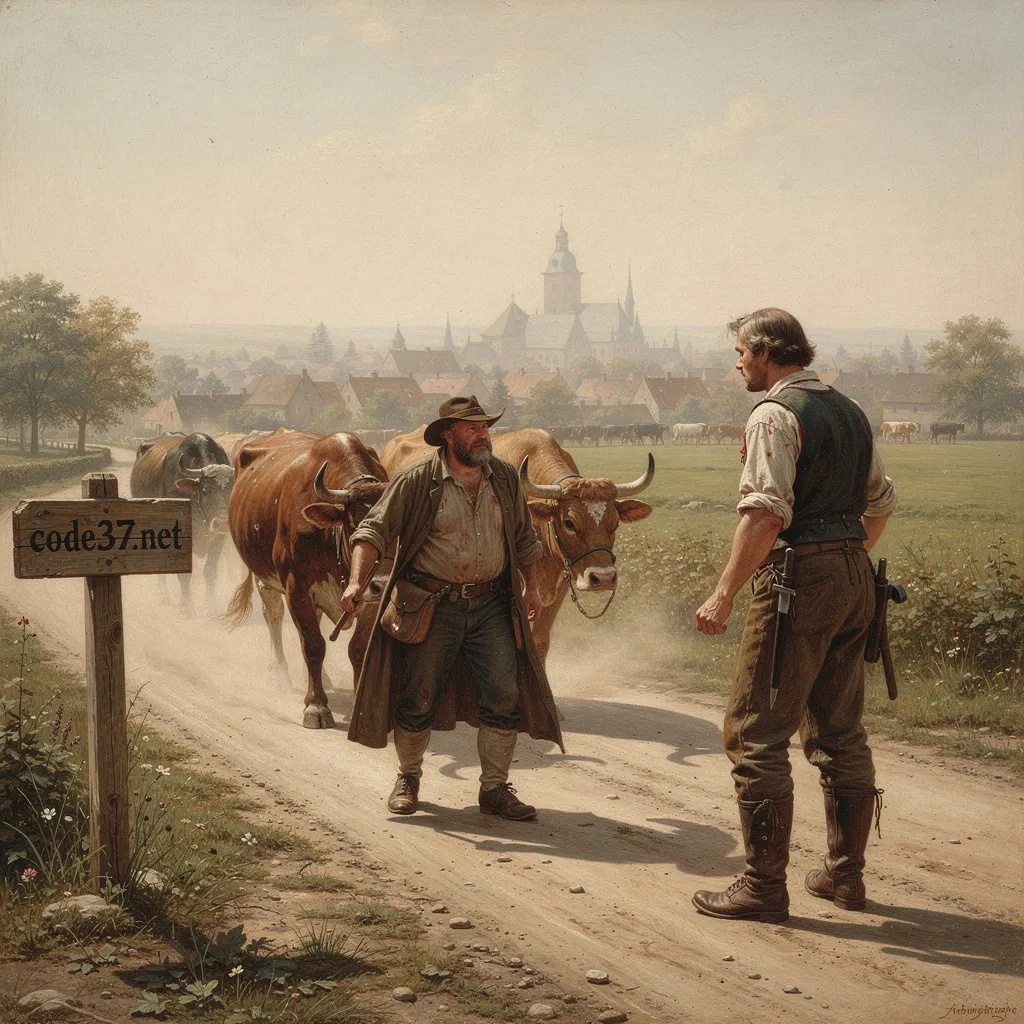
On a hot summer day in June 1847, the butcher’s apprentice Wilhelm Heinrich Armbruster was working in a field on Neckarweihinger Straße in Ludwigsburg. From a distance, he saw the cattle dealer Johann Gottlieb Winter, who was on his way to the Ludwigsburg cattle market with a few oxen to sell them there at a profit. Armbruster, who was often in financial straits, knew that the state-owned oxen would fetch a high price. He hatched a plan to steal the cattle dealer’s money bag on his way back. When the cattle dealer, who had received the large sum of 327 guilders for his oxen, passed by Neckarweihinger Straße again, Armbruster waited for him. He engaged the cattle dealer in conversation and pretended that he wanted to buy a cow in Maubach. Since this was on cattle dealer Winter’s way home, they both went there together. Then they parted ways and Armbruster inquired about a cow in Maubach, but he had no real intention of buying one. He simply did not want to arouse suspicion. He quickly set off again in pursuit of the cattle dealer Winter until he saw his chance at the Ungeheuerhof, an impassable area, and wanted to rob Winter of his money bag. However, Winter fought back fiercely. The butcher’s apprentice had not expected such strong resistance, so he reached for his knife and stabbed the cattle driver Winter until he fell to the ground. To ensure there were no witnesses, he quickly cut his throat. He took the money bag and fled. What had initially been planned as a robbery had turned into a brutal murder. A short time later, the cattle dealer was found by hikers. Next to the body lay a blue butcher’s apron. Winter Armbruster had torn it off during the struggle, which Armbruster had not noticed in his panic. This clue made it clear that the murderer came from the butchers’ guild. The trail quickly led to Armbruster, as a servant of the prince’s court had seen him covered in blood coming from the direction of the crime scene on the day of the murder. Thanks to his money, Armbruster always found a place to hide. After five days, he was even so brazen as to drink a beer in broad daylight at the “Zum grünen Baum” inn in Bietigheim, unaware that it would be the last of his life. The innkeeper had recognized Armbruster, who was wanted by the police, and alerted them. Armbruster, who was convicted on the basis of the butcher’s apron, confessed to the murder before the district court in Backnang. He was charged on August 5, 1847. On December 14, Armbruster was sentenced to death by the sword. The public execution, which was also the last public execution in the district of Backnang, took place on January 8, 1848. It resembled a folk festival, with 8,000 spectators attending to revel in the execution of the butcher’s apprentice Armbruster, whose head was cut off with a sword by the executioner. The Armbruster case proved once again that man’s greed is his own hell.