Isabella Mueller (crime writer)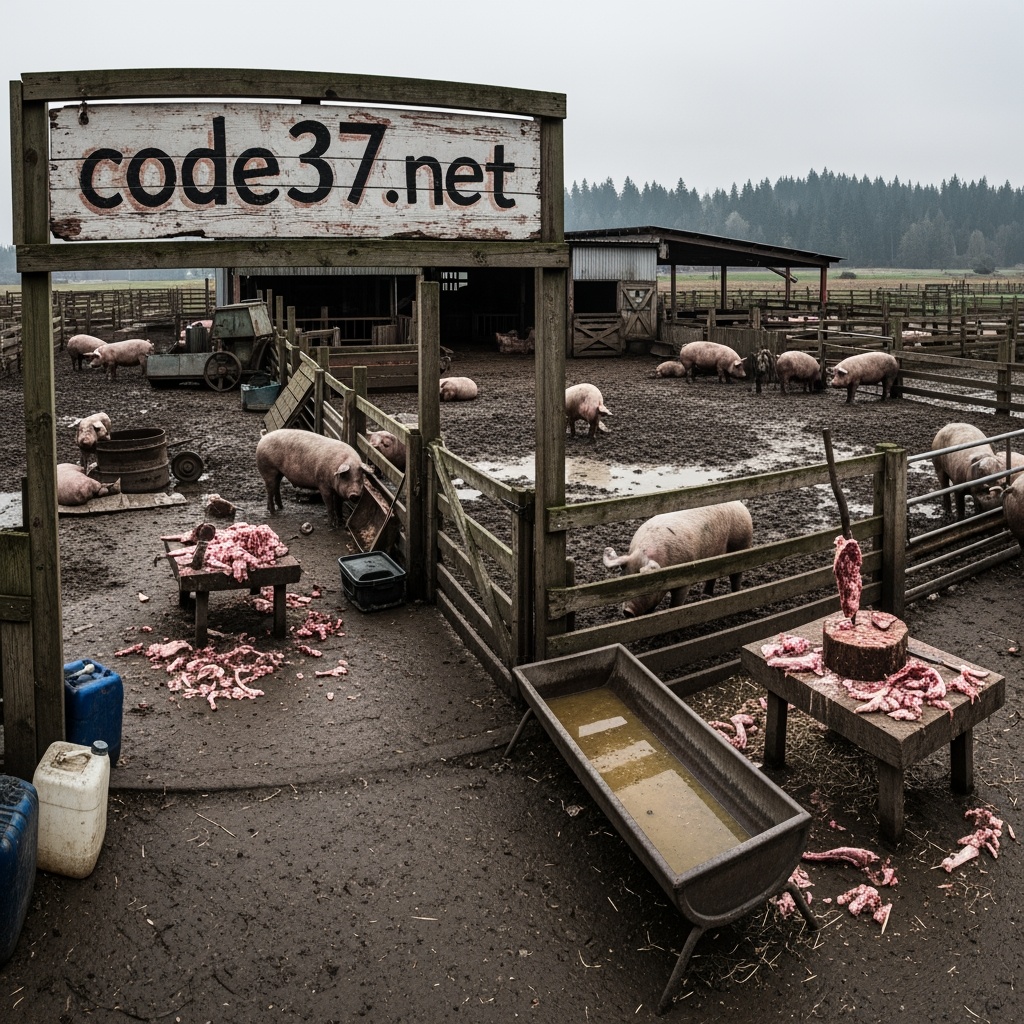
One of the most brutal serial killers in Canadian history is undoubtedly Robert Pickton. He ran a pig farm in Port Coquitlam and killed his victims, mostly prostitutes, shredded them with a grinder, and then either fed them to his pigs or processed them into his pork products. The brutal series of murders began when at least 65 women disappeared without a trace between 1978 and 2001 in the heart of Vancouver’s Downtown Eastside. After years of investigation, Robert Pickton was finally charged with the murder of 26 of these women. He is considered Canada’s most brutal serial killer and was ultimately convicted of six murders and sentenced to life imprisonment without the possibility of parole. In a conversation with an undercover investigator in prison, Pickton bragged about having killed a total of 49 women. These gruesome crimes led to the largest serial killer investigation in Canadian history and made the Pickton farm the country’s largest crime scene. The case brought the issue of missing and murdered Indigenous women and girls in Canada to public attention. A provincial government investigation in 2012 concluded that “glaring failures” by the police—including sloppy forensic work and prejudice against sex workers and Indigenous women—had led to a “tragedy of epic proportions.” But who was this cruel serial killer? Robert William “Willie” Pickton was born on October 24, 1949, in Port Coquitlam, the son of Leonard and Louise Pickton. He was the second of three children. His sister Linda was born in 1948 and his brother David in 1950. He grew up on a family-run pig farm in Port Coquitlam. While his father took care of the farm, Pickton’s mother Linda was responsible for the household, but she was completely overwhelmed with raising the three children. Pickton was considered an outsider at school and took over the management of his parents’ farm after their death. Pickton and his siblings sold most of the property for urban development and reduced the farm to 6.5 hectares. Pickton continued to run a small livestock business and was involved in various real estate deals. He was also a partner in a scrap metal company with his brother David. Pickton was considered socially awkward and often exhibited strange behavior. He lived alone in a trailer on the farm. He satisfied his sexual needs with prostitutes. He picked them up on his trips to the animal rendering plant to dispose of animal waste. He often passed Low Track, a neighborhood where prostitutes offered their services. It was precisely at this time, when Pickton was visiting prostitutes in the Downtown Eastside, that these women began to mysteriously disappear. In 1996, the Pickton brothers founded the Piggy’s Palace Good Times Society. It was registered as a charitable organization and was supposed to raise funds for charitable purposes through events such as dance parties and shows. Neighbors complained about debauchery, drug use, excessive drinking, and noise pollution. The parties were attended by up to 1,700 people, including bikers and sex workers from the Downtown Eastside, which is known for its high poverty rate, homelessness, open drug use, and prostitution. In 2000, the city of Port Coquitlam closed Piggy’s Palace. Pickton was first linked to the disappearance of prostitutes from the Downtown Eastside in March 1997. On March 22, 1997, a woman whom Pickton had taken to his farm fought back when he tried to handcuff her. She grabbed a kitchen knife and in the ensuing struggle, both suffered serious stab wounds. The woman ran into the street and flagged down a passing car, whose occupants called an ambulance. She was taken to Royal Columbian Hospital in New Westminster. While the woman underwent emergency surgery, Pickton received treatment for his injuries at the same hospital. A nurse found a key in Pickton’s pocket that matched the woman’s handcuffs. Pickton was arrested and charged with attempted murder, assault with a weapon, and unlawful confinement. The charges were stayed and eventually dropped because the woman — whose name was protected by a publication ban — was not considered a competent witness due to her drug addiction. Pickton claimed she was a hitchhiker who had attacked him. In the spring of 1999, an informant told Vancouver police that Lynn Ellingsen, a drug-addicted single mother, had seen a female corpse in Pickton’s slaughterhouse. During her initial interview with police, Ellingsen denied the story. She later admitted that she had indeed seen the body on March 20, but had not reported it because she was afraid of Pickton and received money from him for drugs. In early 1999, Bill Hiscox, who worked for the Picktons, informed the police that Lisa Yelds, a close friend of Pickton’s, had told him she had seen women’s clothing, handbags, and ID cards on the pig farm. Hiscox believed these belonged to the missing women. The police questioned Yelds, but she was uncooperative. The police then searched the farm, but found no incriminating evidence against Pickton, so he was off the hook again. In 2002, Pickton was once again suspected of having something to do with the disappearance of women in the Downtown Eastside. In early February 2002, Scott Chubb, a former driver for the Pickton family, informed the Port Coquitlam police that he had seen illegal weapons in Pickton’s trailer. This information met the official requirements for a search warrant. On February 5, officers from the task force, which had been established in 2001, searched the pig farm. In addition to several illegal and unregistered weapons, they found items that linked the missing women to the property. One find in particular piqued the investigators’ interest. It was an inhaler that belonged to Sereena Abotsway, a prostitute from Downtown Eastside who had been missing for a year. The farm was then examined more closely. What the police discovered shook them to their core. Investigators found DNA traces and the remains of 26 missing women, two severed and sawed-off heads in a freezer, and human bones and body parts. Pickton had lured the women to his farm under the pretext of sexual acts, where he killed and mutilated them and fed them to his pigs or made them into sausage. The missing women led marginalized lives and often had no fixed abode. As a result, their disappearances often went unnoticed. Over the years, as the number of missing persons reports increased, rumors began to circulate about a serial killer in the Downtown Eastside. Sex workers now walked in groups and wrote down the license plate numbers of cars that picked up women. Nevertheless, the disappearances continued. In 1991, the families of missing women and advocates for sex workers initiated an annual memorial march on Valentine’s Day to remember the murdered and missing victims. They demanded a thorough investigation, but police work was slow. The Vancouver police refused to acknowledge that a serial killer was at work or even consider that the missing women were dead. There were no bodies to justify an investigation that would strain police resources. It seemed reasonable for the police to assume that some of the women had moved away and others had died of drug overdoses. There were complaints about police indifference, particularly from the Vancouver Sun newspaper, which accused the police of giving low priority to crimes against sex workers. The Vancouver Police Department was also hampered by its refusal to adopt emerging investigative techniques such as psychological profiling and geolocation profiling. Many of the missing women were also Indigenous. As the Pickton case unfolded—with its many Indigenous victims—it drew public attention to the broader issue of missing and murdered Indigenous women and girls in Canada. This led to a national government inquiry into the issue beginning in 2016. On February 22, 2002, Pickton was arrested and charged with two murders. A total of 26 murder charges were brought against him. While Pickton was being held in a Surrey jail, he shared a cell with an undercover investigator whom he believed to be another inmate. During their conversation, Pickton said that he had murdered 49 women and would have liked to reach 50. Meanwhile, the pig farm became the largest crime scene in Canadian history. Investigators collected 200,000 DNA samples and seized 600,000 exhibits. Archaeologists and forensic scientists needed heavy equipment to sift through 383,000 cubic meters of soil in search of human remains. The cost of the investigation was estimated at nearly $70 million. Pickton’s preliminary hearing to determine whether there was sufficient evidence for a trial lasted from January to July 2003. Due to the unprecedented scope and complexity of the legal issues to be resolved, his trial on the first six counts did not begin until January 22, 2007, in New Westminster. On December 9, 2007, a jury found Pickton guilty of six counts of second-degree murder. He was sentenced to life imprisonment in a federal penitentiary without the possibility of parole for 25 years. This sentence was upheld by the Supreme Court of Canada in 2010. Although Pickton claimed to have murdered 49 women, he was only charged with the murders of 26 women who could be identified from evidence found on the pig farm. Similarly, another unknown woman whose remains were found and who was given the name “Jane Doe” was not included because there was insufficient information about her identity and time of death. After Pickton was convicted in the first six cases, British Columbia prosecutors kept open the possibility of trying him at a later date for the other 20 charges. However, on August 4, 2010, prosecutors announced that they would not pursue the remaining 20 charges. They explained that a second trial, even if it resulted in further convictions, would not add to Pickton’s already maximum possible sentence. This decision angered some families of the 20 victims, while others were relieved that they were spared another long and difficult trial. On May 19, 2024, Pickton was seriously injured in an attack at the Port-Cartier maximum security prison in Quebec. Martin Charest, a 51-year-old fellow inmate, stabbed Pickton in the head with a broken broomstick or similar object. Pickton, 74, was placed in a medically induced coma and kept on life support. He died on May 31, 2024. Charest was charged with first-degree murder in Pickton’s death on July 3, 2025. Thus ended the story of Canada’s most brutal serial killer.