Isabella Mueller (crime writer)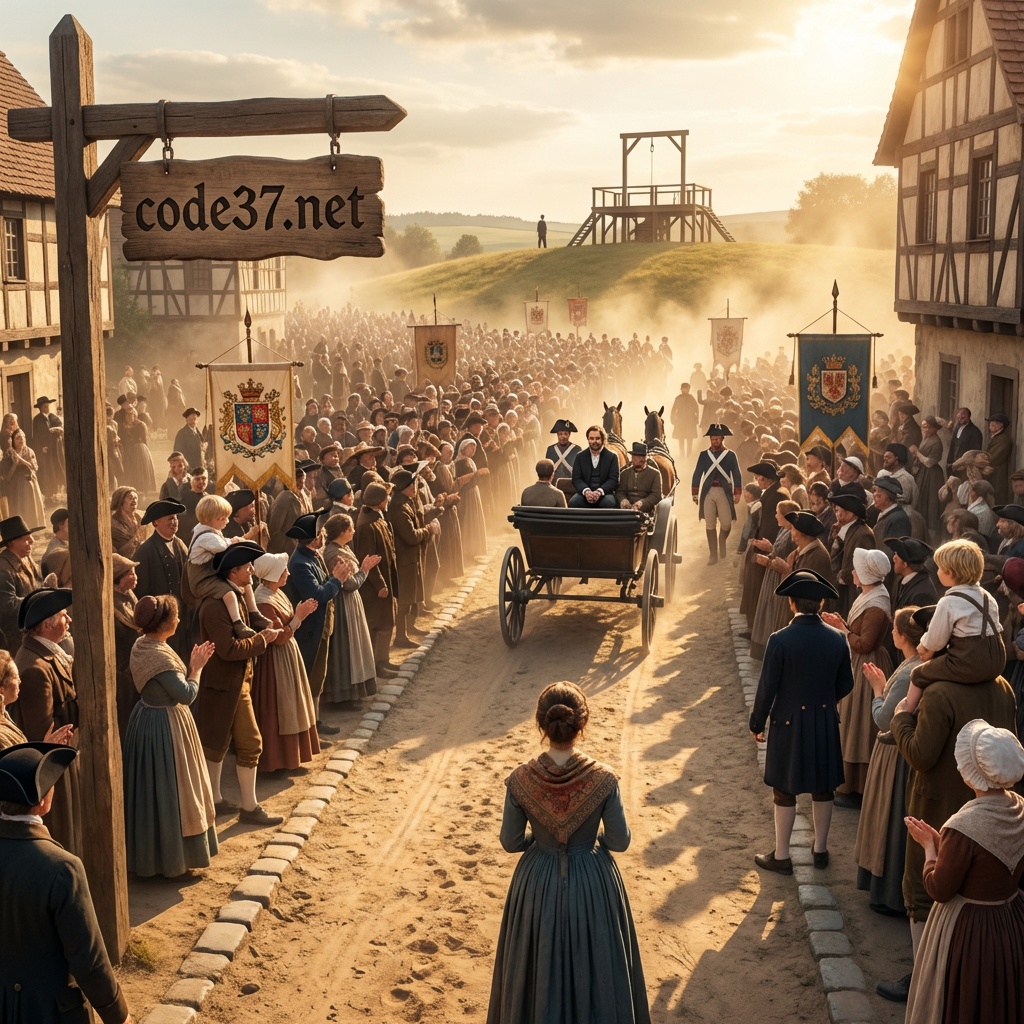
Like Rome, the Franconian city of Bamberg was built on seven hills, which is why it was nicknamed Franconian Rome. In 1832, the last public execution took place on the Rabenstein in Bamberg’s picturesque old town. The murderer and robber Johann Georg Pröschel was executed before the eyes of countless onlookers. The atmosphere was like a folk festival as Georg Pröschel was driven by carriage from the prison in Sandstraße to the Rabenstein execution site. But why was Georg Pröschel executed? Johann Georg Pröschel was a baker’s apprentice from Beerbach, the son of a day laborer with multiple convictions. He came from a humble background and was good friends with the tailor’s apprentice Klemens Maierholzer. During their travels, which they undertook to practice their craft in other places, the two met 18-year-old bookbinder’s apprentice Georg Gottlieb Klein in Erlangen on September 13, 1829. This young lad not only owned a valuable silver watch, but also a fully packed leather backpack with all kinds of belongings and money. Pröschel quickly decided to take the valuables for himself. He let his friend Maierholzer in on the plan to rob Klein together and, if necessary, even kill him. The next day, the three of them wanted to march to Bamberg, from where they planned to set off for Würzburg a day later. On their hiking route, they made a stop near the town of Gaustadt under a pretext. There was a beautiful rest area in the shade of the forest, the ideal place to carry out their plan to rob Klein. As soon as they arrived at the spot, Pröschel overpowered the completely bewildered Klein, whom he strangled with his neckerchief. He then took all of Klein’s valuables and ran after his buddy Maierholzer, who had fled during the attack on Klein. However, he did not meet up with him again until September 17 in Schweinfurt, where he shared his loot with him. In the meantime, on September 15, 1829, the body of Georg Gottlieb Klein was found in the bushes. The forensic examination revealed that he had been murdered. Due to the fact that all three journeymen had their travel books documented for their onward journey from Würzburg to Bamberg, Pröschel and Maierholzer were tracked down. Klein’s valuables were found in their possession. However, Pröschel denied the crime and, due to lack of evidence, was only sent to Plassenburg for forced labor. There he finally confessed to the robbery and murder of Klein. On December 14, 1831, he was sentenced to death. This sentence was carried out by the executioner on April 9, 1832, at the Rabenstein execution site in front of 18,000 to 20,000 people. This was the last public execution at Rabenstein. Rabenstein was demolished in 1860, as executions in Bavaria were now only carried out in closed prison rooms in front of selected witnesses.