Isabella Mueller (crime writer)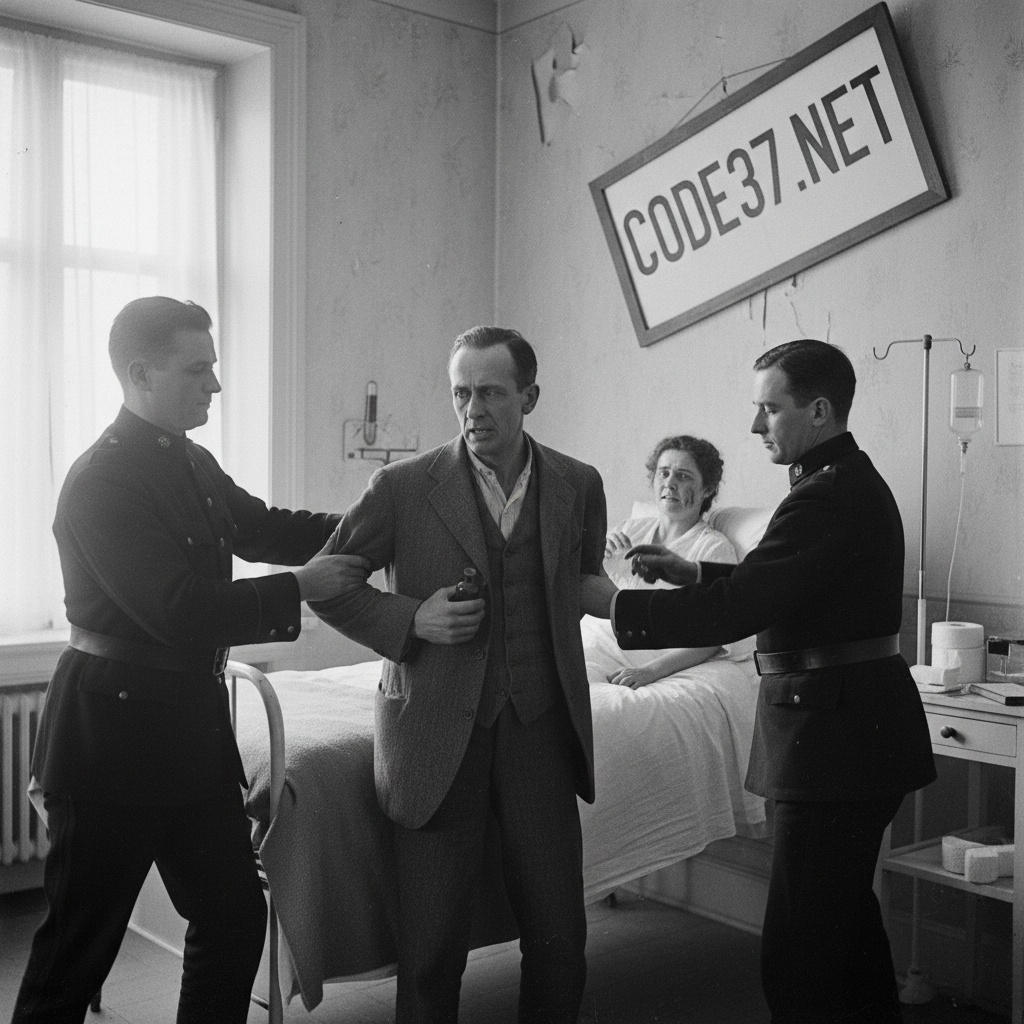
The charismatic Karl Hopf was a true devil in human form who invented a new scientific method of murder and went down in German criminal history as a serial killer. Karl Hopf was born on March 26, 1863, in Frankfurt am Main, the son of a wealthy merchant family. He attended the Musterschule, a high school in Frankfurt, which he left after the tenth grade. He then trained as a chemist in London. There, and later in Morocco, he learned foil and sabre fencing, which he mastered par excellence and even became world champion in sabre fencing in London. After his stay in Morocco, he traveled to India until he had to leave again due to malaria. Karl Hopf, who had always been drawn to the wider world, finally returned to Germany at the turn of the century, where he founded a company in Wörsdorf near Idstein in 1890. At this time, he began an affair with his housekeeper. She bore him an illegitimate son who, according to Karl Hopf, died of a tooth abscess less than a year after his birth. In 1898, he sold his company and opened a dog breeding business in Niederhöchstadt. Karl Hopf was a rogue who liked to live beyond his means at the expense of his father Paul, who repeatedly lent him large sums of money and died unexpectedly of a bladder condition after frequent visits from his son. In 1899, Karl Hopf married Josefa Henel. His dog breeding business flourished. He even sold a St. Bernard for 10,000 gold marks, but his lifestyle was extremely expensive, which is why he repeatedly ran up debts. In September 1902, he took out a joint life insurance policy with his wife Josefa for 20,000 marks. Two months later, on November 28, she died completely unexpectedly. After Josefa’s death, Hopf collected 19,400 marks from the insurance company. From this sum, he paid 1,348 marks to his father-in-law, to whom he owed money. Karl Hopf was not only a passionate dog breeder, but also an enthusiastic inventor. He developed an antidote for the viral disease canine distemper. For his experiments, he needed biological material, which he obtained from the bacteriological institute in Vienna, assuring them that it was for a bacteriological laboratory. However, it went to him as a private individual. He experimented with it incessantly. Two years after Josefa’s death, Karl Hopf married Auguste Christine Schneider, who was 20 years his junior, and with whom he had a daughter in 1906. But little Elsa died completely unexpectedly just five weeks after her birth. Shortly afterwards, Christine also fell ill and believed that her husband had poisoned her and, previously, her daughter. She separated from Karl Hopf. Rumors quickly spread that he had poisoned his wife and child. Even the press reported on it. But Karl Hopf nipped everything in the bud by suing everyone who made such claims for defamation. His now divorced wife remarried, but died the following year, presumably of consumption. Her parents sued Karl Hopf for the murder of their daughter by poisoning. However, the Wiesbaden public prosecutor’s office dropped the case. This time, he was unable to collect the insurance sum of 30,000 gold marks that he had taken out on Christine. In 1908, Karl Hopf sold his property in Niederhöchstadt and returned to his hometown of Frankfurt am Main. There he began a career as a variety artist under the stage name Athos. He performed at the Schumann Theater, where he thrilled audiences with his saber skills. One of his favorite acts was to cut an apple lying on his assistant’s throat in half with a stroke of his saber. Despite all his fame, Karl Hopf was chronically broke and even had to file for bankruptcy. A year later, after regular visits to his mother, she died completely unexpectedly. Karl Hopf inherited the tidy sum of 80,000 marks. The enterprising Karl Hopf then celebrated his wedding in London to Wally Siewiec, who was from Dresden, and immediately took out a mutual life insurance policy for 80,000 marks. Of course, Wally suddenly fell ill after the life insurance policy was taken out. She suffered from a severe gastrointestinal illness and Karl Hopf cared for her selflessly. Instead of taking her to the hospital, he hired nurses and the family doctor came every day. Until he was replaced by a colleague in early 1913. The new doctor recognized Wally’s symptoms as signs of poisoning and had her admitted to the Deaconess Hospital. Karl Hopf visited Wally there every day and brought her flowers, which were infected with germs, in order to finally kill her. But miraculously, Wally’s condition improved noticeably. When a lawyer who had represented the defendants in Niederhöchstadt heard about Wally’s state of health, he called in the public prosecutor’s office. This led to a search of Karl Hopf’s home, where not only a cupboard full of poison was found, but also a large amount of pornographic material. Karl Hopf regularly frequented prostitutes and engaged in perverse sex games with them. Letters revealed that he had been doing this even while he was engaged to Wally. On April 14, 1913, Karl Hopf was arrested in the hospital while visiting his wife. At the time of his arrest, he had a vial of cyanide with him, which he intended to use to kill himself, but the police got there first. After her stay in hospital, Wally returned to her hometown of Dresden in a state of complete shock. Following the arrest, the bodies of Karl Hopf’s parents, his two former wives and his two children were exhumed. The autopsy was performed by Frankfurt chemist Georg Popp, an authority on microscopic and scientific forensics, who was able to detect poison in all of the bodies. He was even able to detect arsenic in the mother’s ashes for the first time anywhere in the world. However, Karl Hopf had not only used arsenic to kill, but also bacteria such as glanders, cholera, and typhoid, which were difficult to detect at the time. This method of killing went down in criminal history as a “new scientific way of murdering.” On January 9, 1914, the sensational trial began before the Royal Prussian Regional Court in Frankfurt am Main. Karl Hopf, the once-celebrated variety show star, dog breeder, and entrepreneur, was sentenced to death there a week later on January 17. This sentence was carried out at around 7 a.m. on March 23, 1914, in the courtyard of Frankfurt Preungesheim Prison by executioner Carl Gröpler from Magdeburg using a hand axe. After the execution, no one wanted to bury Karl Hopf’s body, which was therefore bequeathed to the students of Marburg for teaching purposes. This marked the end of the story of serial killer Karl Hopf, who became a treacherous murderer out of greed for money and ultimately died alone. For, as Buddha said, “Just as the field is spoiled by weeds, so man is spoiled by his greed.”