Isabella Mueller (crime writer)
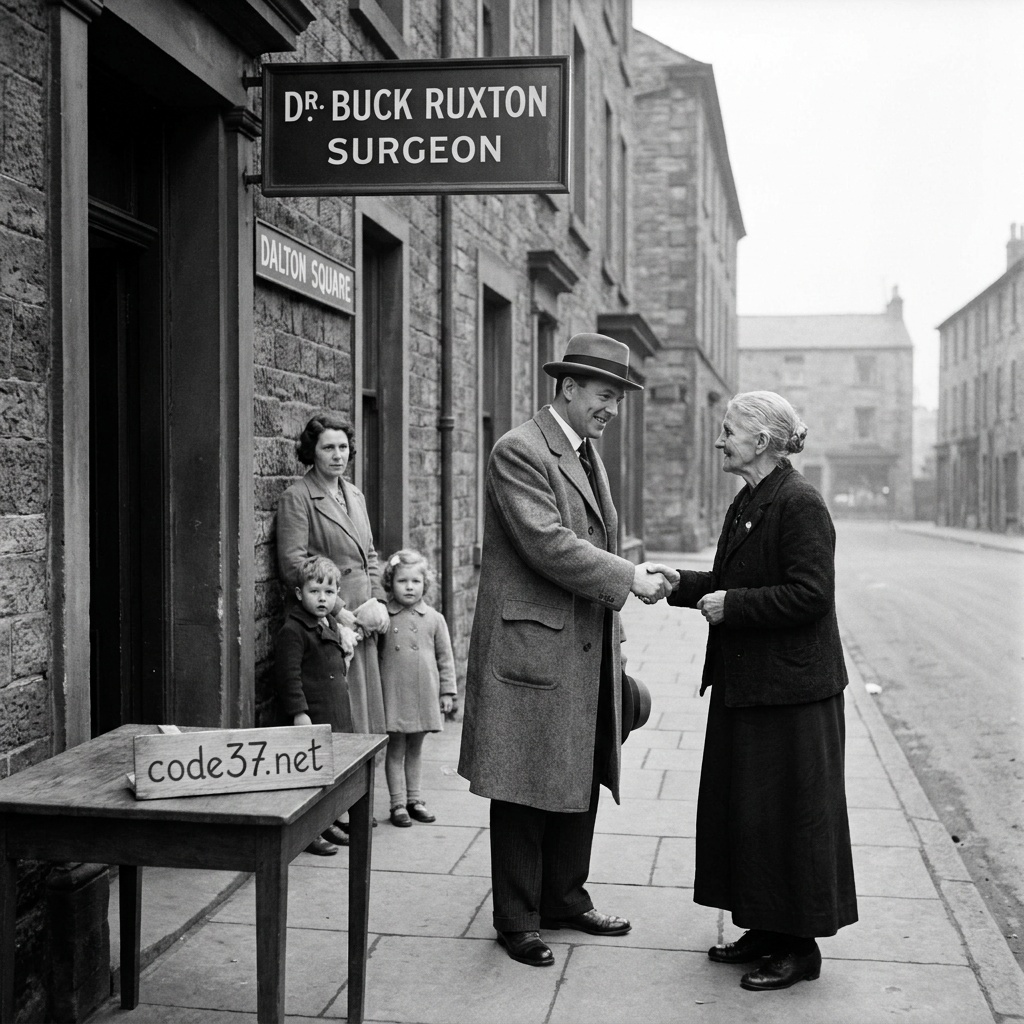
Murder stories aren’t necessarily the most pleasant tales, but some can be truly fascinating. One might think the following story comes straight from a crime novel, with Dr Buck Ruxton as its main character. He was born Bukhtyar Chompa Rustomji Hakim on 21 March 1899 in Bombay, the son of a wealthy family. After successfully completing his medical studies, specialising in surgery, he married in 1925. Yet after just one year, the marriage was already over. Without officially divorcing, Bukhtyar moved to Edinburgh a year later, where he met the married Isabella Kerr. The two became a couple and Bukhtyar had his name changed to Buck Ruxton. In 1928, the couple moved to London, where their first daughter was born. Two years later, they settled in Lancaster, where Buck Ruxton opened his own practice on Dalton Square. Buck was an extremely popular doctor who always had a sympathetic ear for his patients and was known for his friendly nature. Yet away from the surgery, Ruxton turned out to be a tyrant who was pathologically jealous. His wife Isabella, with whom he now had two children, was a regular target of his jealous outbursts. Ruxton accused her on several occasions of cheating on him behind his back. Isabella had already filed a complaint with the Lancaster police, alleging that her husband had abused her, but the officers paid little heed to her statements. The couple had a nanny named Mary Rogerson, who regularly witnessed the arguments between Isabella and Ruxton. In September 1935, she again witnessed a particularly violent row between Dr Ruxton and Isabella. The doctor once more accused his wife of having a lover, and in a fit of rage he grabbed her by the throat and strangled her in the living room. Mary watched the whole incident in horror before Ruxton also killed her. To cover up his bloody deeds, the doctor had to dispose of the bodies of both women. In a cold, calculated act, he carried the bodies into the bathroom, where, drawing on his medical knowledge, he dismembered them. He went about this with extreme meticulousness, removing all distinguishing features to make identification of the bodies impossible. He then wrapped the more than 70 body parts in newspaper from The Sunday Graphic before stowing his macabre packages in the boot of his car. Under cover of darkness, he set off to dispose of the body parts. He knew the Scottish Highlands well – a sparsely populated area – and drove to Gardenholme Linn, south of Edinburgh. He had often gone fishing there and knew of a ravine which he considered inaccessible. In stormy and rainy weather, he reached the ravine and began throwing the parcels into the depths. He then set off on his way home to Lancashire and devised an alibi. On the way back, he was passing through the town of Kendal when, unfortunately, he hit a cyclist. Fortunately, the cyclist was unharmed. However, Ruxton did not stop, which greatly annoyed the cyclist, who had nevertheless noted down the car’s number plate and informed the police, who subsequently set up a roadblock in Milnthorpe. As Ruxton drove into the village of Milnthorpe, he was stopped by a police officer. The officer informed him of the incident in Kendal and asked him to present his documents at the police station in Lancaster the following day. It was only a matter of time before the Lancaster police turned up at Ruxton’s house. This was because Mary Rogerson, the nanny, was quickly reported missing by her mother, who filed a report with the police. However, Ruxton lied to the police, claiming that Mary had not turned up for work for the past two days. The officers believed his story and went on their way. Two days later, however, they returned, as Isabella had also been reported missing by friends. He came up with another excuse, claiming that she had probably gone to Blackpool with her lover. Once again, he was believed. Meanwhile, a walker discovered several bundles wrapped in newspaper on a hillside near Moffat in southern Scotland. Upon closer inspection, she realised they contained human remains. She reported her discovery to the police, who subsequently found numerous packages containing decomposing flesh. Initially, the officers were convinced they were dealing with at least five body parts. A post-mortem examination carried out at the University of Edinburgh by Professors John Gleister and James Couper Brash ultimately revealed that the remains were those of two women. The piecing together of over 70 body parts gave rise to the name ‘Jigsaw Murders’. The Scottish police contacted a missing persons database, and the names of Mary Rogerson and Isabella Ruxton were soon reported. In Lancaster, the investigators turned their attention to Ruxton, who was now considered the prime suspect. However, the doctor had overlooked two crucial pieces of evidence. Firstly, he had wrapped the human remains in a local newspaper, and secondly, he had collided with the cyclist. During the house search, numerous traces of blood were found. The task now was to prove that the two female bodies were those of Isabella Ruxton and Mary Rogerson. To this end, photographs of Isabella’s skull taken whilst she was alive were superimposed onto those of her corpse. This technique was new at the time. To identify Mary Rogerson, a meticulous search for fingerprints was carried out in Ruxton’s house, as her fingers were still intact. All of the fingers had been removed from Isabella’s body to make identification impossible. In fact, Mary was identified as one of the victims by means of a handprint on a door. The double murder was one of the first cases in which forensic evidence was successfully used to secure a conviction. Nevertheless, Ruxton was convinced that, with the help of the country’s best lawyer, Norman Birkett, he could escape the gallows. He sold his story to a well-known newspaper for 3,000 pounds and hoped that this money would save his life. But even the country’s best criminal defence lawyer could not save him from the noose. On 2 March 1936, the criminal trial began; it lasted eleven days and ended with the death sentence for Dr Buck Ruxton. He was executed on 12 May 1936 at Strangeways Prison in Manchester. Dr Buck Ruxton’s name lives on not only as a reminder of his atrocities, but also as a warning that even the supposedly perfect criminals can make a mistake and that the truth can come to light.