Isabella Mueller (crime writer)
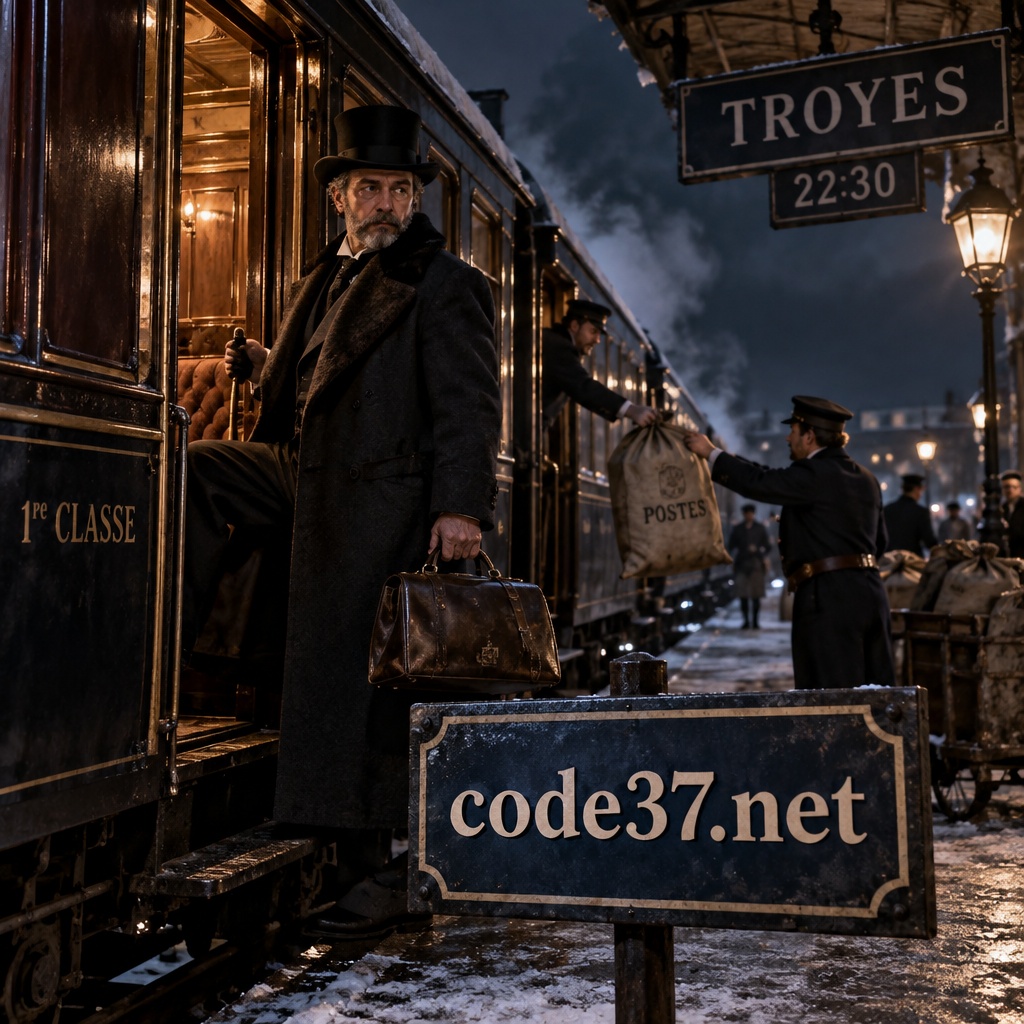
One murder that played a key role in improving safety on the railways was the so-called Poinsot murder. On the evening of 6 December 1860, Victor Poinsot, the distinguished President of the Fourth Chamber of the Imperial Court of Justice, boarded the train from Mulhouse to Paris. His destination was clear: to return from Champagne, where he had collected rent. Yet this journey was to be his last and would become one of the most notorious murder cases of the 19th century. Poinsot opted for first class: a private compartment that he had all to himself and which, in keeping with the customs of the time, was isolated from the rest of the carriage. A peaceful night-time journey through the frosty French countryside lay ahead of him. Yet what began as a relaxed train journey ended in a gruesome bloodbath. In Troyes, Poinsot boarded his train at around 10.30 pm, and it soon set off into the darkness. The express train did not stop at every station and continued its journey at reduced speed whilst mailbags were exchanged between the train and station staff. That night, a woman in the neighbouring compartment heard a piercing scream near Noisy-le-Sec station. When the train arrived at Gare de l’Est in Paris at around 5.00 am and the conductor collected the tickets, he found Victor Poinsot’s body on the floor of his compartment – lying in a pool of blood, lifeless and cold. The Public Prosecutor, the Emperor’s representative and the Paris Chief of Police rushed to the scene to inspect the shocking discovery and launch the investigation. It was clear that a heinous crime had taken place. Eyewitness accounts quickly filled the pages of the newspapers. Third-class passengers and the wife of a level crossing attendant recalled a man who had jumped off the train and injured himself in the process, before disappearing over a fence. Was this the murderer? Other reports speculated that the perpetrator had not made his escape until he reached the Gare de l’Est. The investigation progressed, and it was established that the murder must have taken place between the stations at Nogent-sur-Marne and Noisy-le-Sec. The forensic pathologist was certain: Poinsot’s death had been caused by a blow to the head. Yet the press speculated wildly. Some articles claimed there were three gunshot wounds, whilst others reported that Poinsot had been found with his throat slit. The truth remained unclear, entangled in a web of rumours and sensationalism. Charles Jud, a notorious criminal, came under the investigators’ scrutiny. His past was marred by similar offences, yet he evaded justice. Eventually, he was sentenced to death in absentia, a sentence that had to be carried out without the perpetrator present. The Poinsot case was not only a traumatic event but also a catalyst for discussions about safety on rail journeys. Passengers in the ‘upholstered classes’ were deeply unsettled. The isolation of the compartments, once a sign of privacy and comfort, came to be seen as a potential threat. The search for solutions was urgent, yet passengers resisted the idea of open-plan carriages, a concept that would jeopardise their individual comfort. A compromise was eventually reached in the form of a window between the compartments, which could either be left open or closed with a curtain. Murders such as that of Victor Poinsot sparked a Europe-wide debate about safety on trains, particularly in compartment carriages, and found their way into the cultural narrative of the time. The cruelty, the mystery and the apparent randomness of such crimes created an atmosphere of unease that inspired numerous stories. Then came the murder in England in 1864, the similarities of which gave rise to new fears. For on 9 July 1864, shortly after 10 pm, the 69-year-old banker Thomas Briggs was bludgeoned to death in his compartment on the North London Railway and thrown from the train north of London. This murder made history as it was the first murder to take place in a train compartment in Great Britain. The incident contributed to a rethink of railway policy. The challenge lay in reconciling the desire for privacy with the need for safety. Railway companies experimented with a wide range of technical innovations to provide the public with a reassuring solution. The story of Victor Poinsot’s murder remains a dark chapter in railway history, a mystery full of inconsistencies and contradictions. It highlights the vulnerability of the transport systems of the time to criminal activity and sheds light on the social tensions of that era. In the aftermath of these events, it became clear just how deeply murder and crime were ingrained in the public consciousness, defining an entire era of the Industrial Revolution. However, one thing remains clear: the Poinsot murder is not merely a case of historical interest, but also a reminder of the eternal tension between progress and safety – a theme that remains relevant to this day. For many, the Poinsot murder is a legend, a story that has been retold time and again throughout the ages. This is, of course, partly because Poinsot’s murderer was never caught, making it one of the most famous cold cases in French criminal history. It serves as a reminder that, even amidst technological marvels, there is always room for the depths of human depravity. Despite all the light shed on the case, the fascination with the dark side persists, as does the desire to find answers that reconcile us with a cruel reality that seems long past. The murder of Victor Poinsot evokes a whole range of human emotions: fear, curiosity, outrage and, ultimately, the quest for security in a world that seems to be constantly changing. The story reminds us that behind every advance there lurks a dark side that forces us to remain constantly vigilant.