Isabella Mueller (crime writer)
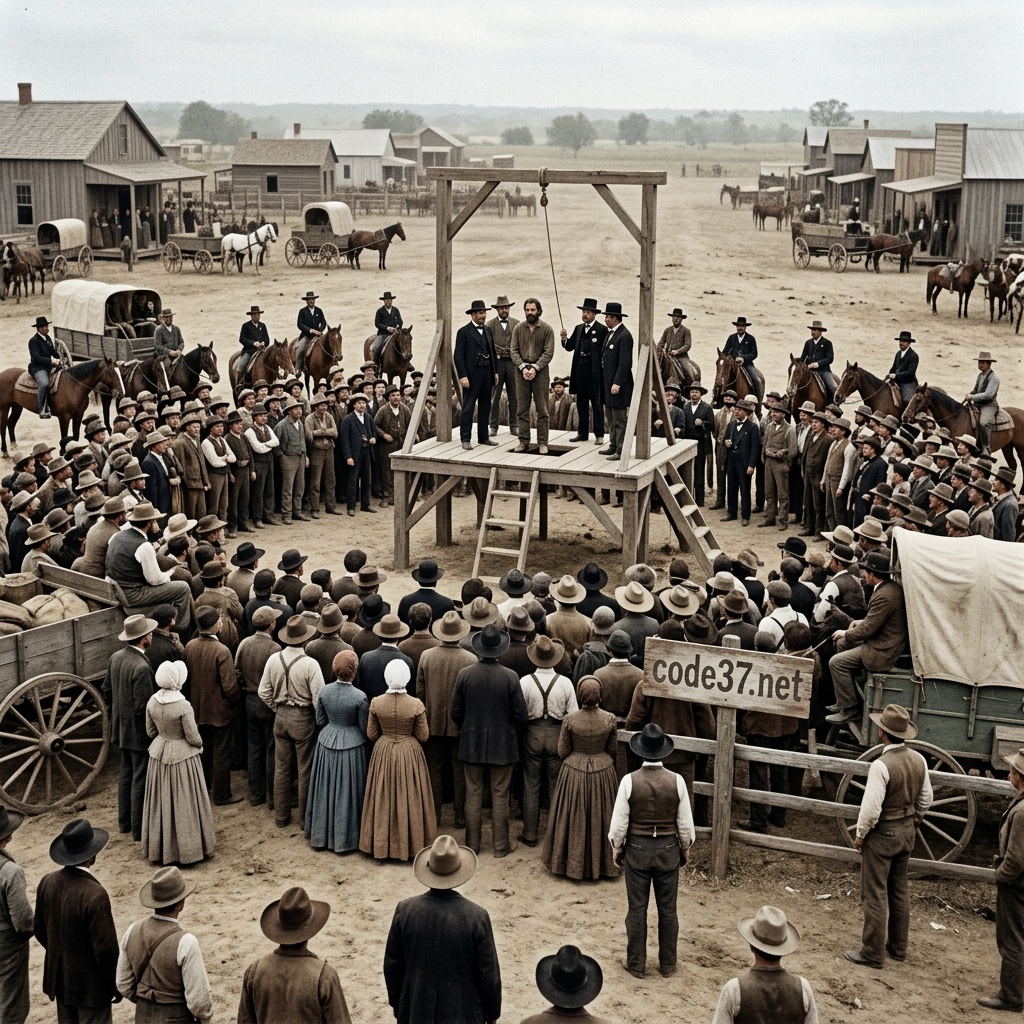
On 11 October 1878, an event took place that left a lasting mark on the history of Texas: the notorious outlaw Bill Longley was executed before a crowd of thousands. Longley’s life and deeds form a fascinating mosaic of historical facts and wild legends that still send shivers down the spine today. William Preston Longley – to give him his full name – was born in 1851 in Austin County, Texas. His father served in the army under Sam Houston and taught his son how to handle firearms from an early age. At the age of just thirteen, Longley committed his first murder when he shot a Black man who had insulted his father. This was merely the beginning of a bloody career. After the end of the Civil War, Longley joined a group of young men who were terrorising newly freed slaves. In December 1866, he shot three Black men and was subsequently hunted down by a posse, but managed to escape. A year later, he resurfaced when he shot a Black sergeant in the US Cavalry. Longley’s life was characterised by constant moves from place to place and a multitude of acts of violence. As a member of a guerrilla gang led by Cullen M. Baker, he waged a private war against Black soldiers and the US Army. After their gang was attacked by vigilantes, Longley retaliated brutally: he hanged two of the attackers and then shot them. In the summer of 1868, Longley’s violence reached new heights when he shot eight Black soldiers. Shortly afterwards, he joined a gang, but killed his boss in a misunderstood rivalry. Longley was unstoppable: he murdered a horse thief, a soldier who spoke disparagingly of Texan women, and an army quartermaster. Almost in passing, he also shot the sheriff who had come to arrest him. Although Longley was apprehended on several occasions and sentenced to long prison terms, he always managed to escape. After being arrested by the cavalry in 1877, he made a spectacular escape by raising the ransom demanded for his freedom himself. Longley’s bloodlust knew no bounds. In Kansas, he shot a cheating card player; in various places, several Black people; and in Frio County, a quarrelsome Mexican. He did not even spare the feared killer Geo Thomas. He fought a particularly dramatic duel with the bounty hunter Sawyer, which lasted four hours and ultimately required 14 bullets to kill him. The final phase of his life began in May 1877, when Sheriff Mult Mast and his deputy Bill Burrows arrested Longley. On 3 September 1877, the death sentence was pronounced. On 11 October 1878, Bill Longley was finally publicly hanged in Giddings. Yet even after his death, myths continue to surround him: some claimed that he had in fact died in Louisiana after escaping his execution. Other rumours circulated that Longley’s execution had been staged and that he had fled to South America. Whatever the truth may be, it is clear that Bill Longley’s life represents a dark chapter in Texan history, one that vividly reflects the raw violence and lawlessness of the post-Civil War era. His deeds, whether reality or fiction, paint the picture of a ruthless murderer whose legends continue to resonate to this day.