Isabella Mueller (crime writer)
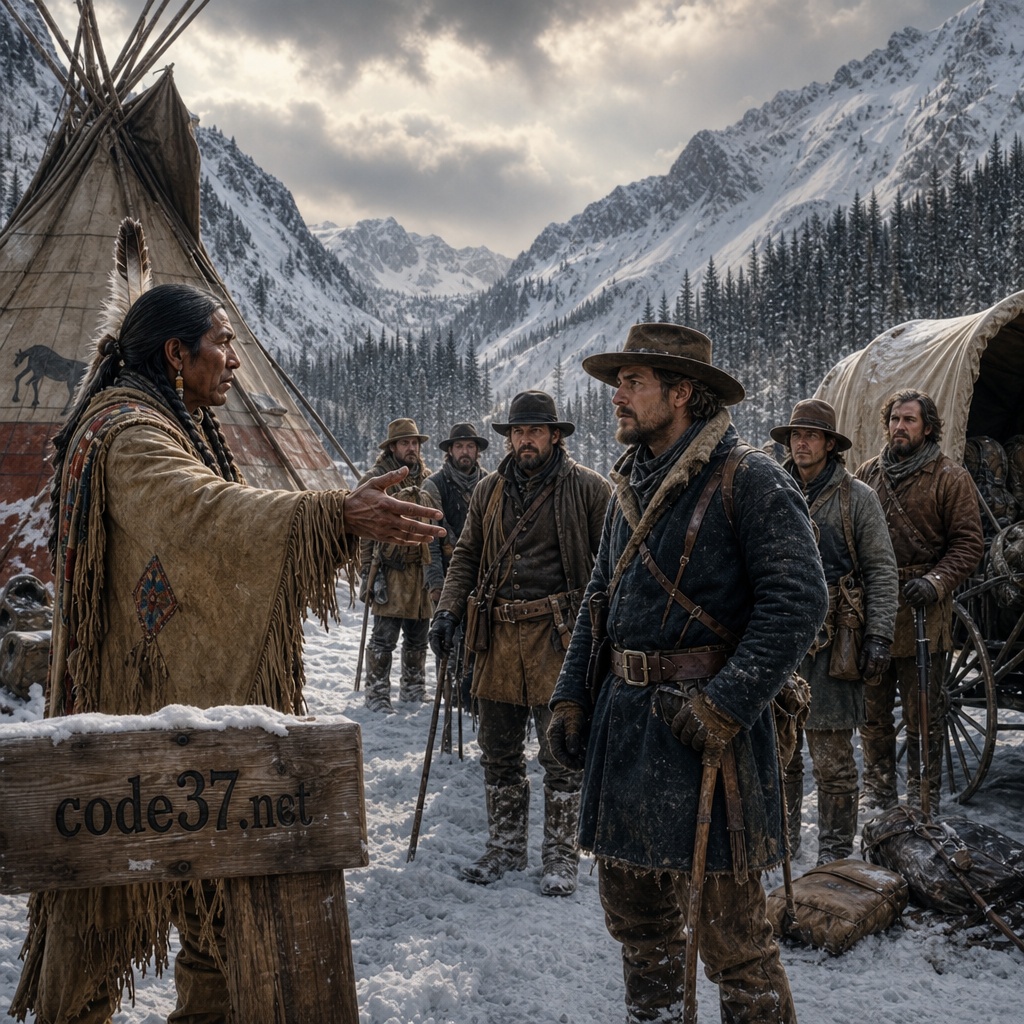
In the wild, unforgiving landscape of Colorado in 1874, a gruesome and terrifying tale made its way into the annals of American history. This shocking tale unfolded through the actions of a man named Alfred Packer, better known as the ‘Colorado Cannibal’. Despite a lack of conclusive evidence, he is regarded as one of the few individuals in American history to have been convicted of cannibalism. Packer’s story can be summarised as a harrowing exploration of the will to survive and moral ambiguity. Alfred Griner Packer was born on 21 January 1842 in the small town of Allegheny in the US state of Pennsylvania, the son of James Packer and Esther Griner. It became apparent early on that his life would not follow a conventional path. Raised in a dysfunctional family, he developed a strained relationship with his parents before eventually moving to Minnesota in his youth, following a row with them, to work as a shoemaker. After the outbreak of the American Civil War, he volunteered for the Union Army. After eight months, Packer was honourably discharged from military service due to his epileptic seizures. Packer re-enlisted on 25 June 1863, but was discharged again on 22 April 1864 due to his health problems. His life was characterised by an endless odyssey through various occupations, including hunter, rancher, farm labourer and, during his time in the West, scout for settlers. Nevertheless, fate did not seem to favour him. Time and again, he left the places where he worked, leaving behind a reputation as a troublemaker and a notorious liar. The turning point in Packer’s life came when he joined a group of twenty men who were on their way to the San Juan Mountains, lured by the prospect of gold believed to lie there. The men were prospectors who were dissatisfied with their finds in Bingham Canyon. When they learnt of the gold deposits in Breckenridge, they decided to try their luck there. But to do so, they had to cover 750 kilometres. Having covered about 40 kilometres of their journey, they met 31-year-old Alfred Packer in Pravo, who claimed to be an experienced guide so that he might be allowed to accompany the group – a decision that was to have fatal consequences. The expedition ran into serious difficulties as winter set in. The men battled against the freezing cold, dwindling supplies and Packer’s growing unpopularity amongst them. His leadership was called into question when he led the group astray and they became stranded in a snow-covered area known as the ‘Mormon Trail’. In their desperation, with the wagons stuck in the snow and their supplies almost exhausted, they were even forced to slaughter their horses. But rescue was at hand when, on 21 January 1874, the group reached the camp of Chief Ouray, a respected chief of the Ute Indians, who offered them shelter and food. Chief Ouray strongly warned the men against continuing their journey through the snow-covered mountains, but eleven of them decided to press on regardless. Packer and five others set off into the deadly expanses of the San Juan Mountains, despite the overwhelming warnings of their well-meaning host. He had suggested a route that would allow them to bypass the mountains and reach the Los Pinós Indian Agency, which lay not far from the mines. But Packer insisted he knew a shorter route, albeit one that led through the mountains. In the end, the prospectors Israel Swan, Frank ‘Butcher’ Miller, George ‘California’ Noon, James Humphrey and Shannon Wilson Bell decided to accompany the eccentric Alfred Packer on his route, whilst the other five men preferred to heed Chief Ouray’s advice and therefore followed the course of the Gunnison River. But before the group of five reached their destination, they had used up all their supplies. They thought they were going to starve to death, but were discovered by cowboys, who took them to their camp, where they remained until April. The group led by Alfred Packer fared differently. Two months had passed since their departure without any news of the group. Then, out of the blue, on 16 April 1874, Alfred Packer turned up at the Los Pinós Indian agency as the sole survivor of his party. There he began to recount a confusing and contradictory account of what had happened to his companions, claiming that, due to the devastating weather conditions, he had been forced to feed on the flesh of his dead comrades. At first, he claimed to have become lost in the snow and been separated from the group. However, his explanations were met with scepticism, particularly as he appeared well-nourished and had substantial sums of money at his disposal, despite having set out on the expedition penniless. It did not take long for Packer’s stories to fall apart. When the illustrator John A. Randolph discovered the disfigured remains of his five companions in August 1874 – which had been cruelly mutilated and, in some cases, eaten – suspicions were reinforced that Packer had done something far worse than merely eating the dead to survive. The brutality with which the men had been slaughtered suggested that more than just hunger had been at play here. Rumours quickly began to circulate that Alfred Packer had killed his travelling companions. He was imprisoned in Saguache following an attack on one of the investigators, a man named Herman Lauter, from which he escaped. Alfred Packer managed to remain in hiding for nine years until he was recognised on 11 March 1883 by Jean Cabazon at Fort Fetterman. Cabazon was one of the 20 gold prospectors who had, however, remained at Chief Ouray’s camp until spring. Naturally, Cabazon alerted the police, who subsequently arrested Alfred Packer, who had been posing as ‘John Schwartze’ whilst on the run. On 16 March 1883, Alfred Packer confessed that Bell had killed his companions. Packer had been scouting the area for food when he returned to the camp, where Bell had been grilling a piece of meat over the open fire that came from Miller’s leg. He found Miller dead by the river with his skull crushed, whilst the other three men lay dead beside the fire pit. When Bell tried to attack him with his axe, he drew his revolver in self-defence and shot Bell, who fell headfirst into the snow. He then took Bell’s axe and smashed in his skull with it. Afterwards, he built himself a shelter out of tree trunks to protect himself from the blizzard. After the blizzard, he fed on the flesh of the dead. When it finally began to thaw, he set off for the Indian agency. He took pieces of the dead men’s flesh as provisions, along with 70 dollars and a rifle. The events that followed led to one of the most famous trials in the history of the American West. Packer was initially charged only with the murder of Israel Swan and found guilty, which led to a death sentence by hanging. However, legal technicalities meant that this verdict was quashed on the grounds of a technical error. In the second trial, he was sentenced to 40 years’ imprisonment for five counts of premeditated manslaughter – the longest prison sentence imposed in the United States at that time. Alfred Packer served his sentence in Canon City Prison. After 16 years in prison, he applied for early release on parole, which was refused. It was only when Polly Pry, a reporter for the Denver Post, intervened, and Packer’s health had deteriorated due to kidney disease, that he was released on 8 February 1901. He initially worked as a security guard at the Denver Post before moving to Deer Creek Canyon, where he served as manager of two mines. Alfred Packer died on 24 April 1907 following a stroke and was buried at Prince Avenue Cemetery in Littleton. The case of Alfred Packer remains a subject of fascination and speculation to this day. Historians and academics have sought to understand and reconstruct his actions, with some arguing that Packer may have acted solely to survive, whilst others firmly believe that he had planned to kill his companions from the outset. Until his death in 1907, Packer repeatedly insisted that he was not a murderer. Nevertheless, his name remains indelibly linked to the macabre tale of cannibalism and violence in the unforgiving wilderness of Colorado. The legend of Alfred Packer lives on to this day, inspiring numerous books, films and musical works. His grave in Littleton has since become a destination for the curious and those drawn to the dark fascination of his story. In a world that is often not black and white, but shrouded in shades of grey, Packer’s story is a powerful catalyst for reflection on morality, survival and what people are prepared to do in extreme situations.