Isabella Mueller (crime writer)
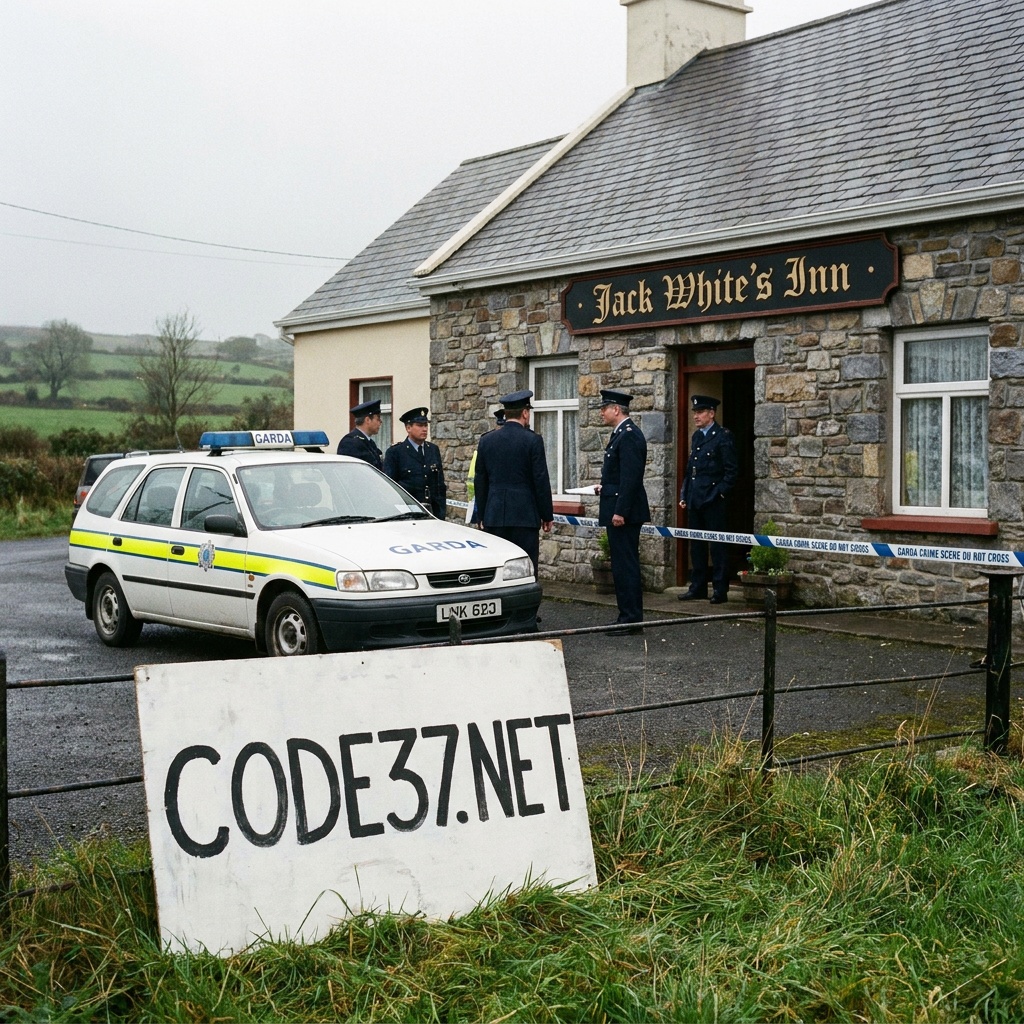
One of Ireland’s most notorious female criminals was undoubtedly Catherine Nevin, better known as the ‘Black Widow’. Catherine Nevin was given this name by the media after she was convicted of inciting the murder of her husband, Tom Nevin, in a mysterious and harrowing case that gripped the nation. The trial is regarded as one of the longest court cases in Irish history. The murder took place around Jack White’s Inn, a pub owned by the couple in County Wicklow. The murder took place in 1996, and Catherine was convicted in 2000 after the jury found her guilty on three counts of inciting others to kill her husband – it was one of the longest jury deliberations in Irish history. Catherine’s story made headlines around the world, as it was full of intrigue, betrayal and courtroom drama. Catherine was born on 1 October 1950 as Catherine Scully on a farm near Nurney in County Kildare. Her early life was a far cry from the sensational headlines that would later define her. After working as a receptionist at the Castle Hotel in Dublin, she met Tom Nevin, a divorcee from Galway, in 1970. The couple married in Rome in 1976 and quickly established themselves as successful entrepreneurs, owning several investment properties and running the ‘Barry House’ pub in the Finglas neighbourhood of Dublin. This was a local haunt frequented by Irish republicans. Whilst Tom was regarded as a gentle giant, even nicknamed ‘Daddy’ by his younger staff, Catherine was seen as a shrewd businesswoman who liked to surround herself with influential people. Catherine was an attractive woman with shoulder-length blonde hair who knew exactly how to skilfully show off her feminine curves to catch men’s eyes. Catherine enjoyed flirting with men and was certainly no wallflower. In 1986, the Nevins purchased ‘Jack White’s Inn’ for 270,000 pounds and transformed it into a thriving establishment with a new restaurant and bed-and-breakfast service. Behind the façade of success, however, things were coming to a head. Rumours were circulating with increasing frequency that Catherine was being unfaithful to Tom and intended to separate from him. The murder of Tom Nevin took place on 19 March 1996, over the St Patrick’s Day weekend. Fifty-four-year-old Tom Nevin was shot dead with a shotgun whilst counting the day’s takings at Jack White’s Inn. Catherine, aged 49, who was in her flat above the pub, claimed she had woken up because someone had pressed her face into a pillow and threatened her with a knife to force her to reveal where she kept her jewellery. Despite her desperate account, the Gardaí, the Irish police, were immediately sceptical due to several inconsistencies in Catherine’s statement and at the crime scene itself. Tom’s body showed gunshot wounds suggesting a shot fired at close range, which was inconsistent with the story of a botched robbery. Furthermore, Catherine’s actions – such as the fact that she did not ask Tom for help to free herself, but instead pressed a panic button – appeared dubious. Further investigations revealed that her marriage was fraught with problems, including Catherine’s numerous affairs and the fact that the couple slept in separate beds. Suspicions intensified when Catherine was arrested on 27 July 1996 for withholding information about Tom’s murder. She invoked her right to remain silent and was released without charge after 48 hours. On the same day, former armed robber Gerry Heapes was also arrested, but was subsequently released without charge. The case took a decisive turn on 14 April 1997, when Catherine was formally charged with Tom’s murder and with three counts of incitement to murder between 1989 and 1990. She was released on bail subject to strict conditions whilst the investigation continued. After the first trial had to be abandoned because it was found that the jury’s discussions could be heard from the public gallery, the second trial against Catherine Nevin began on 14 January 2000. Judge Mella Carroll imposed a press ban during the trial. Consequently, the press were not permitted to report on Catherine Nevin’s appearance or behaviour whilst the trial was in progress. The prosecution, led by Peter Charleton S.C., painted a grim picture: Tom Nevin had been the victim of a contract killing carried out by his own wife for financial reasons and out of deep-seated hostility. The prosecution presented circumstantial evidence and witness statements from individuals who claimed that Catherine had asked them to kill Tom. These were Gerry Heapes, John Jones and William McClean. These three men provided strong incriminating evidence against Catherine. Another key witness was James Curry, who monitored alarm systems for Bell Communications. He testified that a panic alarm had been triggered at Jack White’s Inn in the early hours of the morning, prompting the Gardaí to rush to the scene. Investigators found Catherine tied up and Tom dead in another room. The crime scene showed no signs of forced entry, and all external doors and windows were locked. Ballistic tests carried out at the scene cast further doubt on Catherine’s account, as the shots had been fired at close range and there were no signs of forced entry or a violent struggle. Catherine Nevin vehemently denied any involvement in her husband’s murder and portrayed her marriage as loving and intact. She claimed that Tom had been involved in IRA activities, a revelation she had only learnt of years after their marriage. In her account of the events, she described how she had been tied up by a masked intruder before she managed to set off the panic alarm. The defence sought to discredit the statements of those who accused Catherine of instigating the crime and urged the jury to view the evidence with scepticism. The prosecution, however, highlighted the inconsistencies in Catherine’s account and argued that her actions and stories contained contradictions. Furthermore, following Tom’s death, Catherine would inherit 1 million Irish pounds and gain full control of the small property empire. After five days’ deliberation, the jury found Catherine Nevin guilty of murder and three counts of incitement. She was sentenced to life imprisonment plus additional concurrent sentences for incitement. Catherine remained stoic as the verdict was read out. Although never charged, the notorious criminal Patrick ‘Dutchy’ Holland was suspected of being the hitman. Witnesses had seen Holland at Jack White’s Inn in the mid-1990s, and he was eventually identified by the Gardaí as the prime suspect. Holland, however, denied any involvement, and some officers considered the sum of 40,000 pounds offered for a professional contract killing to be too low. Interestingly, there was an alternative theory suggesting that Catherine herself might have committed the murder and needed an accomplice to stage the crime scene and dispose of the evidence. Catherine Nevin, who always maintained her innocence, served her sentence at the Dóchas Centre in Dublin. Her appeals in 2003 and 2010 were unsuccessful, and in 2016 she was diagnosed with an incurable brain tumour. Catherine Nevin was released from prison on humanitarian grounds at the end of 2017 and died on 19 February 2018 at the age of 67 at Dublin’s Mater Hospital. This marked the end of the life of one of Ireland’s most controversial figures. The legacy of Catherine Nevin, the ‘Black Widow’, remains a chilling reminder of how a seemingly normal life can turn into a tale of murder, fraud and relentless legal battles that continue to capture the public’s imagination to this day.