Isabella Mueller (crime writer)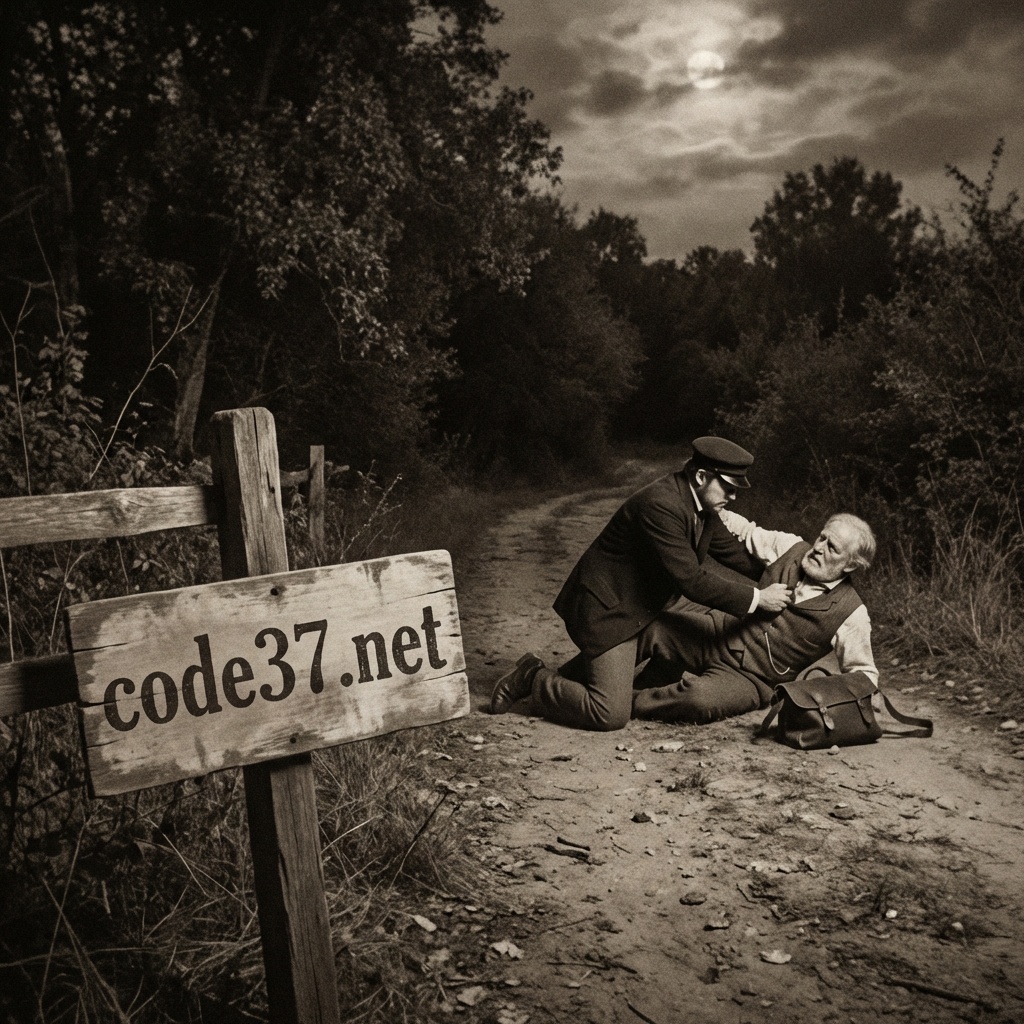
On May 12, 1854, the 19-year-old saddler’s apprentice Christian Hussendörfer achieved dubious fame that immortalized him forever in Munich’s city history. Christian Hussendörfer was an unmarried saddler’s apprentice in Syburg who liked to drink more than his fair share and stay out late into the night. He had also stolen from his master saddler at the time. In July 1853, however, his luck finally seemed to change for the better when he found employment with the respected master saddler Joseph Lindermaier in Eurasburg. Two months later, he was working with his master at a farmer’s house in Holzburg. On September 29, they had finished everything there. Around 10 p.m., they set off on their way back to Eurasburg with the hard-earned wages of the last few weeks. On the way, Hussendörfer suddenly attacked his master out of the blue in order to steal the hard-earned money. But the master put up a fierce fight, whereupon Hussendörfer killed him with several blows and knife stabs. He then took all the wages and made his way to Eurasburg, where he immediately ran to the gendarmes and told them that he and his master had been attacked by robbers and that his master had been killed. The next day, Joseph Lindermaier’s body was found in the forest. The autopsy revealed that his skull had been smashed, his right temporal bone broken, and several organs had suffered severe puncture wounds. Christian Hussendörfer quickly came under suspicion and, after initially denying it, confessed to the murder of his master. On March 20, 1854, he was sentenced to death for the murder of his master Joseph Lindermaier, and on May 12, 1854, Christian Hussendörfer was taken to the Marsfeld execution site in Munich. The experienced executioner Lorenz Scheller, who had already carried out over 70 executions with the sword, was responsible for the public execution. However, the execution of Christian Hussendörfer ended in a fiasco, as the Munich executioner Scheller had to strike no less than seven blows to sever Hussendörfer’s head from his body. The crowd was enraged and wanted to lynch the executioner. As a result, he had to be escorted home by the gendarmerie with great difficulty. At that time, public executions were a spectacle attended by thousands of onlookers. This gruesome execution led King Maximilian II of Bavaria to decree that decapitations were no longer to be carried out with a sword, but with Johann Michael Mannhardt’s guillotine, known as the Mannhardt guillotine. This allowed for technically clean beheadings. Christian Hussendörfer was thus the last person to be publicly executed with a sword. Just a few months after the royal decree, two men and a woman were beheaded on August 19, 1854, for the first time in Munich using a guillotine, and the executioner’s sword, which had been the norm until then, was finally consigned to history.