Isabella Mueller (crime writer)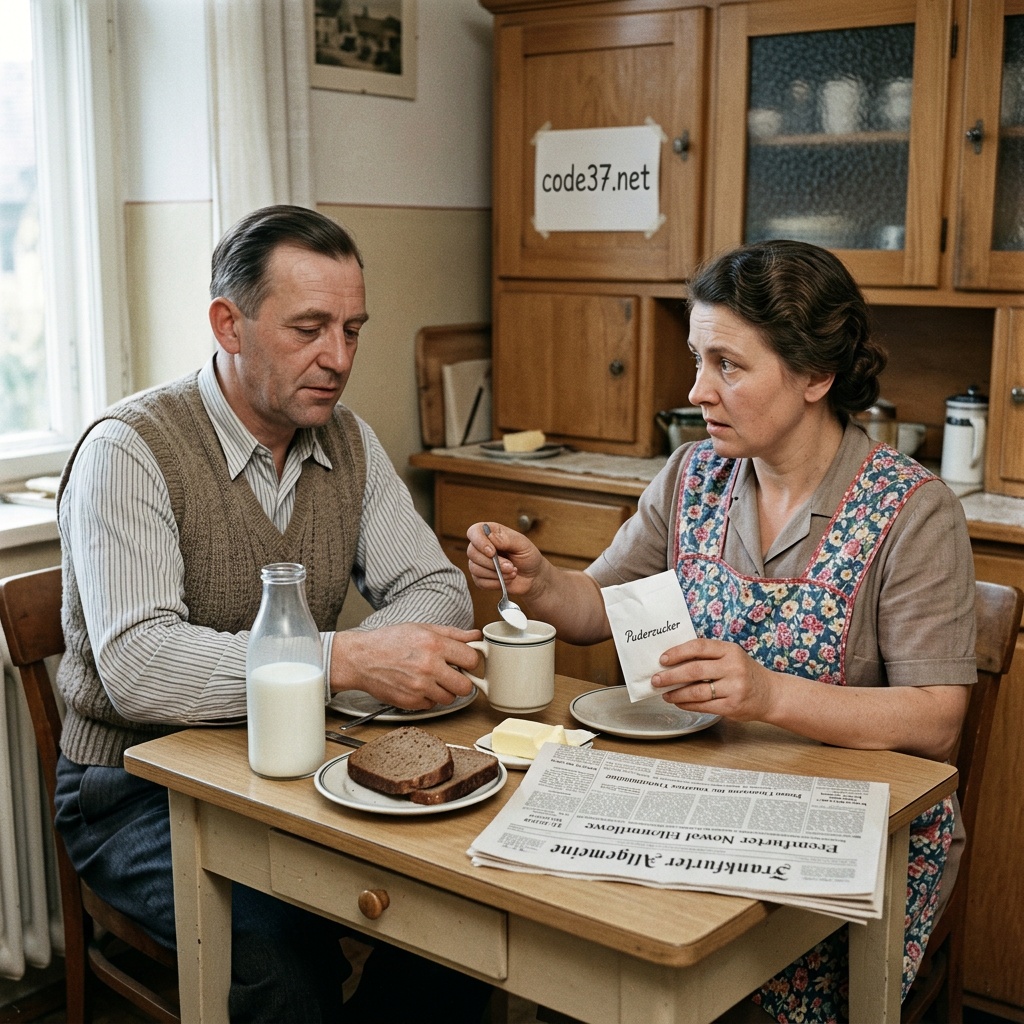
Christa Lehmann was a serial killer who went down in German criminal history as the “Poison Witch of Worms.” The mother of four was the first person in Germany to use the highly toxic, over-the-counter pesticide E 605 as a lethal weapon, and it quickly became the number one murder poison in Germany. But why did this mother of four become a cold-blooded serial killer? Was it perhaps the last words of her mother-in-law, who said to her on her deathbed, “If I were your age, I’d slip the old man something in his food,” that turned Christa Lehmann into a poisoner? Christa Lehmann was born in Worms in 1922 and grew up without parental love. Her mother was admitted to a sanatorium in Alzey at an early age. Whenever Christa visited her, she was beaten. Her father was completely overwhelmed by the task of raising her. Christa Lehmann therefore began working immediately after elementary school, where she met and fell in love with her future husband, the tile setter Karl Lehmann. She married this man, who suffered from stomach ailments and a limp, in 1944. Yet even on their wedding night, he chose to spend time with a waitress rather than with his wife. After the wedding, they moved in with Karl’s parents. Christa did not get along particularly well with Karl’s father, Valentin, who was a tyrant. Their marriage was not exactly a bed of roses either. There were frequent arguments over Karl’s alcoholism; he was rarely home and often left her alone with their four children. One day, her father-in-law, who was a gardener, warned Christa about the pesticide E 605 stored in the house, which must not fall into the hands of the children because it was lethal. Perhaps this warning prompted Christa to mix the pesticide E 605 into her husband’s breakfast milk on September 27, 1952. Half an hour later, he was dead. The doctor believed that Karl, who suffered from stomach ulcers, had died from a perforated ulcer—in other words, a completely natural death. After Karl’s death, Christa literally blossomed. She had numerous affairs, which did not sit well with her conservative father-in-law, which is why, after a year, on October 14, 1953, she mixed the pesticide E 605 into his yogurt. As he rode his bicycle into town, he suddenly fell off the bike and was dead. The doctor who was called to the scene cited heart failure as the cause of death. After his death, Christa became friends with the war widow Annie Hamann. Together with her, she stayed up all night and flirted unabashedly with the U.S. soldiers stationed nearby, which did not sit well with Annie’s mother, Eva Roh. So, during her Sunday visit on February 14, 1954, Christa brought five chocolate mushrooms filled with liqueur, which she distributed to Annie, her brother, a neighbor, and Annie’s mother. Annie’s mother, however, put the chocolate in the refrigerator because she wasn’t in the mood for anything sweet. The next day, Annie ate the chocolate herself, spitting out half of it because it tasted bitter. But her dog greedily devoured the spit-out remains that had landed on the floor. Afterward, Annie felt very ill. She had stomach cramps, and her dog was whining as well. She lay down on the bed while her mother ran to the neighbors to have them call a doctor. The doctor who rushed to the scene could only confirm the deaths of Annie and her dog and notified the police. Annie Hamann’s body was autopsied. During the autopsy, Prof. Kurt Wagner at the Institute of Forensic Medicine in Mainz detected the pesticide E 605. This poison was similar to hydrocyanic acid. Christa Lehmann was arrested on strong suspicion of having poisoned Annie Hamann with the chocolate. During questioning, she confessed that she had intended to kill Annie’s mother, Eva Roh. She deeply regretted the mix-up. Following her confession, the bodies of Karl and Valentin Lehmann were exhumed; traces of E 605 were found in both. Christa Lehmann’s trial began on September 20, 1954, before the court in Mainz. She was sentenced to three consecutive life sentences for triple murder. While in prison in Neuwied, she attempted suicide on several occasions. In 1971, she was transferred to the women’s prison in Frankfurt. After 23 years in prison, Christa Lehmann was released. Under a new identity, she attempted to start a new life.