Isabella Mueller (crime writer)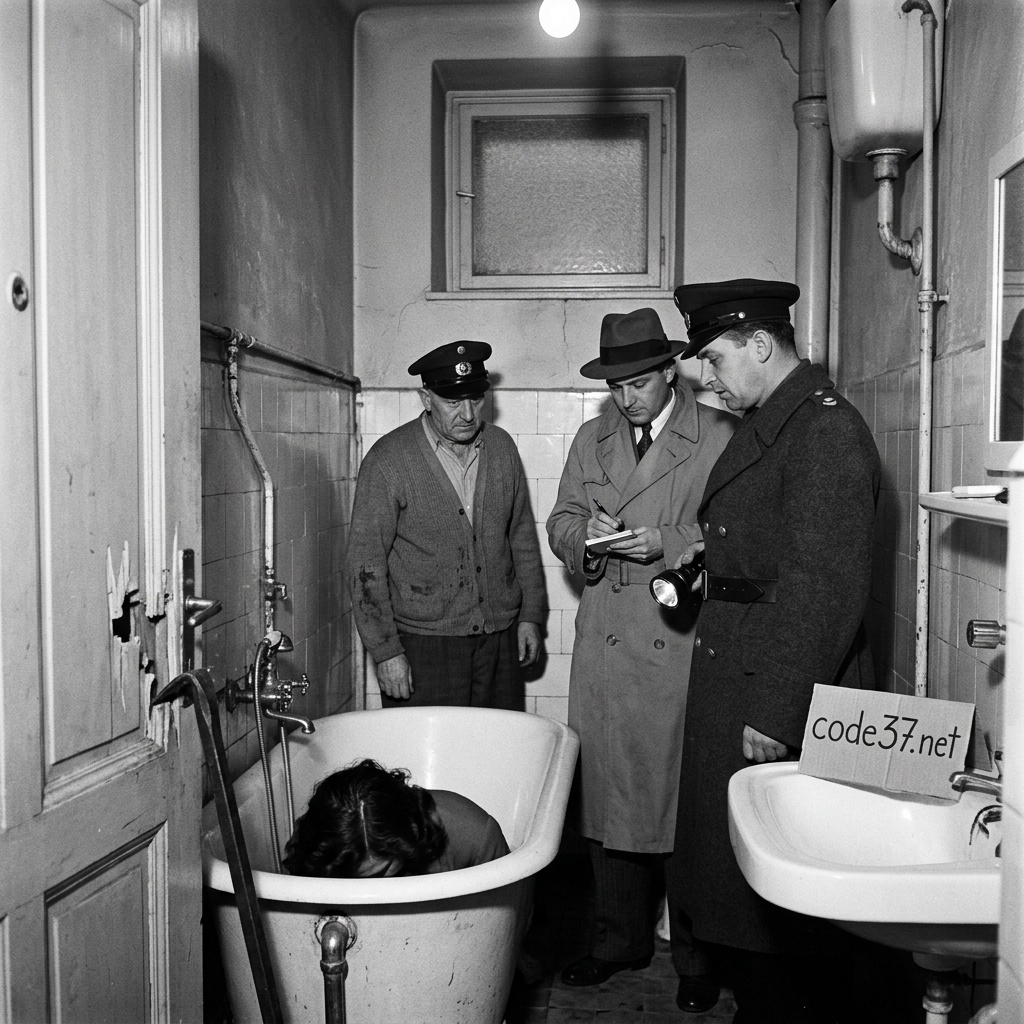
After the end of World War II, there was great hardship in Vienna, the metropolis on the Danube. There was a shortage of food, consumer goods, and housing. During these hard times, 27-year-old textile engineer Julius Kausel landed a lucrative job as managing director at a knitwear factory in Vienna’s 6th district, Mariahilf. The position came with an apartment that belonged to his boss, 49-year-old widow Blanche Mandler. The stingy factory owner, who owned a six-room apartment on Trautsongasse in Josefstadt, registered her authorized signatory, Julius Kausel, there to deceive the housing office. His boss was considered a shrewd businesswoman, but she ran a strict regime and lived extremely frugally. Things were going great for Julius Kausel, not only in business but also in his personal life; he was happily engaged to Maria, who was going through a divorce and brought a daughter into the future marriage. But then, suddenly, on Monday, November 7, 1949, strange things began to happen. First, Blanche Mandler did not return to the office after an off-site meeting following lunchtime, and no one could reach her. This behavior was uncharacteristic of the tough businesswoman, as there were still important matters to attend to. Then, the next morning, the phone rang at Julius Kausel’s home. A man with a Swiss accent said that Ms. Blanche Mandler was still at the doctor’s and would not return to the office until the afternoon. This struck Julius Kausel as suspicious, since in addition to the taxes that were due, bank transfers also had to be made, for which only the boss had signing authority. In the afternoon, the phone rang again at Julius Kausel’s office. This time, a man explained that Ms. Mandler was at the Union Sanatorium on Lazarettgasse, where she was receiving injections for her rheumatism and would have to stay for a few more days. Julius Kausel sent an employee there. Shortly afterward, the employee informed him that there was neither a Union Sanatorium nor a Lazarettgasse in Vienna. There was no patient named Blanche Mandler in any other hospitals either. Julius Kausel made his way to his boss’s apartment, the entrance to which was locked as usual. When Kausel rang the bell, no one answered. He then went to his own apartment, where he discovered that someone had used his pajamas and left a stranger’s alarm clock there. He then went back to his boss’s apartment, where he met the accountant’s husband. The man was supposed to check on Blanche Mandler. Julius Kausel was still hesitant to call the building superintendent, and at first he didn’t want to go to the police either. At the insistence of the accountant’s husband, he decided to go to the nearest police station. It was 8:00 p.m. by then, but he didn’t make his statement there until 9:10 p.m. He reported his boss’s disappearance and the ominous phone calls. The police immediately headed to Blanche Mandler’s apartment and had the caretaker open it. Everything was neatly tidied up, as the boss was known to be a neat freak.Only the dirty pot with leftover spinach puree and two cigarette butts in the ashtray stood out. Afterward, the police had the building superintendent break open the locked bathroom door with an iron bar. What awaited them there could have easily come straight out of a horror movie. Blanche Mandler was lying in the bathtub. Her head had been severed down to the spine, her right thigh was intact, and all the toes on her left foot were missing. Water was streaming from the faucet while draining away through the drain. The medical examiner, Prof. Walther Schwarzacher, identified two kitchen knives lying on the armchair as the murder weapons with which the perpetrator had attempted to dismember the body. The factory owner had been strangled with a scarf found in the bathtub water. The sequence of events was reconstructed as follows. Blanche Mandler was attacked and knocked down in the entryway. She was then strangled with the scarf and dragged into the kitchen. There, the perpetrator attempted to dismember her; when he failed, he continued his crime in the bathroom. The forensic examination revealed that the blood spatters in the bathroom and kitchen came from two people. The AB blood type belonged to Blanche Mandler. The other blood type, A, must therefore have come from the perpetrator. Although Julius Kausel had no injuries on his body, he had blood type A—which proved nothing. The autopsy also revealed that the victim’s thigh had nine fresh puncture wounds. Did these result from her rheumatism treatment? Although the police asked the doctors who had treated Blanche Mandler to come forward through the press, their efforts were unsuccessful. Instead, it came to light that Julius Kausel had worked as a senior medical corporal at the main dressing station during the war and was, of course, familiar with syringes. The police investigated every lead. Since Blanche Mandler was considered a calculating businesswoman, she had many enemies. Yet every lead came to nothing. The time of death was estimated to be sometime between the afternoon and evening hours of Tuesday, and Julius Kausel had no watertight alibi for that time. Julius Kausel was subsequently arrested as a prime suspect and was now languishing in pretrial detention. During cross-examination, he also confessed to having looked in on the boss a second time around 6:30 p.m. He was therefore at the crime scene at the time of the murder. When the police found movie tickets in his jacket for the American film “City Without Masks,” which dealt with a bathtub murder, the weight of the evidence against the young manager became increasingly overwhelming. On November 31, 1949, he was handed over to the Vienna Regional Court. The young man protested his innocence, and indeed, the police commissioner began to doubt whether this slight man was actually the murderer of Blanche Mandler. Why were there no bloodstains on Julius Kausel’s clothing? What was the story behind the used pajamas and the stranger’s alarm clock? And what did the mysterious phone calls mean—was there an unknown third party who had killed Blanche Mandler? Furthermore, Police Commissioner Dr. Heger couldn’t shake the fact that Blanche Mandler hadn’t washed her pot. The woman who otherwise swept up every crumb immediately, since she hated dirt so much. The stingy Mandler always cooked herself huge portions, which she ate for days on end. Most recently, she had cooked spinach porridge, as evidenced by the pot seized in the kitchen. Dr. Heger wanted to know when she had bought the spinach. So he had all her vegetable vendors questioned. It turned out that Blanche Mandler had bought the spinach on Saturday morning. If that were the case, then Blanche Mandler would have been murdered as early as Monday, the day of her disappearance. But the medical examiner, Prof. Dr. Schwarzacher, insisted on his report and the time of death. Therefore, a second expert, Dr. Leopold Breitenecker, was called in, who refuted the time of death based on the coldness of Vienna’s high-mountain spring water. Since dried blood was found in the tub, Dr. Breitenecker concluded that the deceased had been lying in the dry tub for at least an hour before the murderer turned on the faucet. Subsequently, the cold tap water from the high mountains had caused the congealed blood to freeze. Prof. Dr. Schwarzacher had not taken this into account. This also made the spinach purchase make sense. Mandler had bought it on Saturday and eaten it for lunch and dinner. Then came two meals on Sunday. On Monday, she ate her portion for lunch, then drove home with the dirty pot to her apartment, where she was waiting for a man. Blanche Mandler had thus already been killed on Monday afternoon, and Julius Kausel had a solid alibi for that time, as he was at the office, which the employees could attest to. Nevertheless, Kausel was not released from pretrial detention, as the judicial authorities did not believe the perpetrator was a stranger. But Police Commissioner Dr. Heger did not give up on catching the real culprit. He found evidence pointing to a robbery-murder. For a camera, a briefcase, and a key to a safe were missing. Furthermore, he found a telegram from a Dr. Bossarth that had been sent from the Vienna post office on the morning of November 7, the Monday on which Blanche Mandler disappeared. In addition, a handwritten letter from Dr. Bossarth was found. The question now arose: who was Dr. Bossarth? After intensive research, he turned out to be Rudolf Lutz, who had served five and a half years in prison for embezzlement, mail theft, black market dealings, and the mistreatment of a business partner. Dr. Heger compared the signature on Dr. Bossarth’s telegram. The handwriting was clearly that of Rudolf Lutz. Furthermore, it was proven that he had stayed at a hotel on Mariahilfer Straße from November 7 to 8. He also had no alibi for Monday afternoon and could not explain the 50,000 schillings he had deposited into his Tyrolean bank account after Blanche Mandler’s murder. During questioning, he denied the murder of Blanche Mandler but admitted to having impersonated Dr. Bossarth to appear creditworthy. Even when Tyrolean investigators seized a bloodstained suit during a search of his home, Rudolf Lutz still denied the murder of Blanche Mandler. It was only when Dr. Heger confronted him with his new SLR camera—which he had traded for the stolen camera from Blanche Mandler’s apartment—that he broke down and confessed to the murder of his lover. Julius Kausel was not released from prison until January 9, 1950. By that time, he had already spent 63 days there as an innocent man. After his release from prison, his fiancée Maria married him in 1961 and adopted their daughter. Yet he suffered his entire life from the whispers behind his back.