Isabella Mueller (crime writer)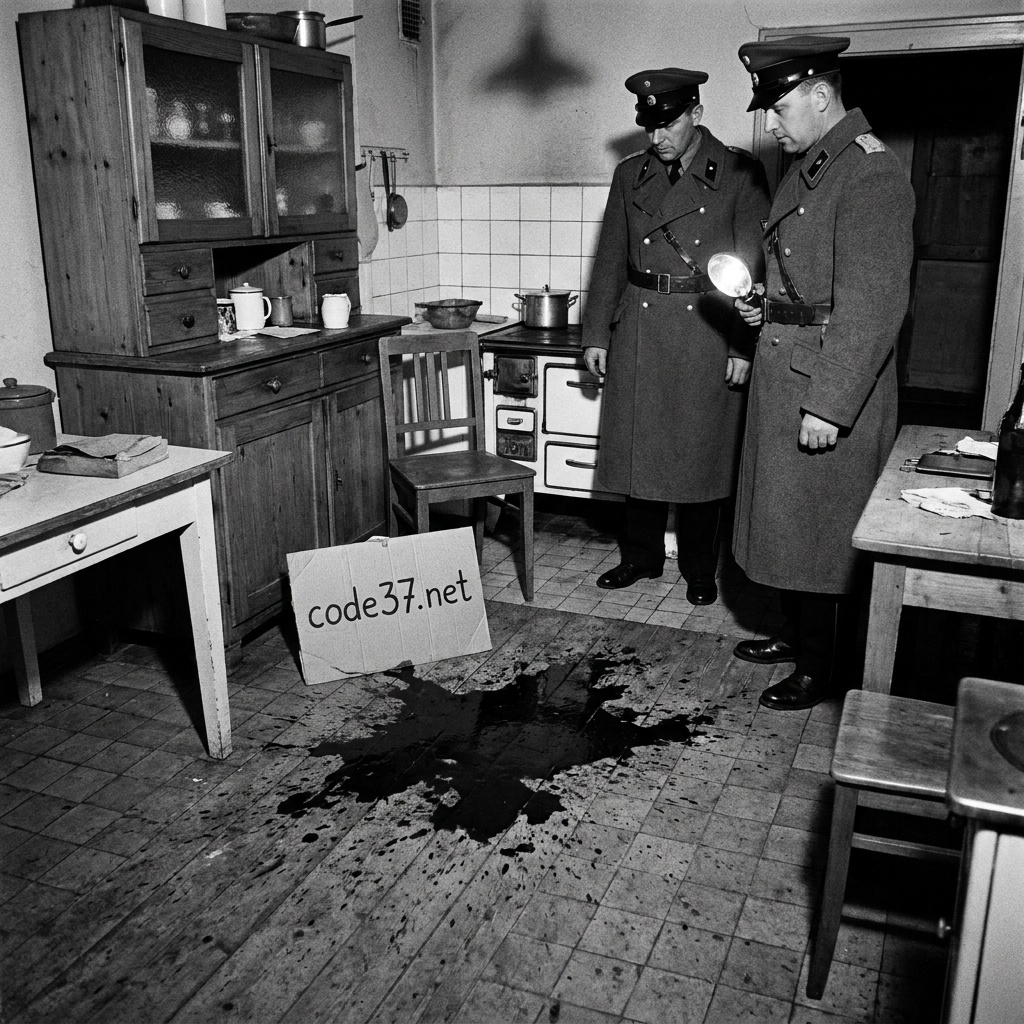
It was 1937 when, on the evening of 11 March, the carpenter Leopold Hasel turned up at the Landstraße police station at Gürtel 252 in Austria’s capital, Vienna. There, he told the duty officer that a terrible crime had taken place in his house, as his kitchen was covered in blood. The district police inspector, accompanied by several officers, immediately set off for the house on the Gürtel, on the border between the Viennese districts of Landstraße and Favoriten, where they found a large pool of blood in the kitchen and, in the adjoining workshop, the dismembered, headless body of a man. The deceased was identified as Leopold Kaufer, a cocaine dealer and burglar known to the police and a former chauffeur. He had evidently been murdered by the carpenter’s wife, Rosa Hasel, and her long-term lover, the Czech merchant Karl Dudek. Both were arrested and taken to the police station for questioning. In the meantime, the crime scene was examined. At the Favoriten police station, Rosa Hasel was questioned first; she confessed, together with her lover Karl Dudek, to having murdered Leopold. Rosa was a woman of medium height and sturdy build, with tousled, street-dog-blonde hair and a slightly crooked nose. She came from a humble Viennese background. Her father was a machinist and her mother a domestic helper. Rosa had four other siblings. After finishing school, she had begun an apprenticeship as a dressmaker. She worked as a dressmaker for a year before completing a typist’s course. She found a well-paid job in an office, but despite this, she continued to work as a prostitute, which led to her being arrested on several occasions. Rosa had been married once before. Shortly after her divorce, she married Leopold, with whose brother Rosa had previously had a sexual relationship, which she continued even after the marriage. Leopold knew nothing of Rosa’s extramarital affairs, as Rosa was able to skilfully conceal them from him. The house in which Rosa lived with Leopold, who was by then unemployed, belonged to both brothers. On the day of the murder, Leopold had been visiting his brother Josef. Rosa had taken advantage of his absence to invite Leopold Kaufer – whom she had known since 1936 and with whom she occasionally had sex – and her lover Karl Dudek, with whom she had been having an affair since 1932, on a drinking spree. To pay for this, Rosa – who was a severe alcoholic and consumed 5–6 litres of the devil’s brew every day – had even pawned two of her rings. After the drinking spree at a pub, the trio had gone to Rosa’s house, where Leopold became increasingly insistent. Rosa fought back, but Leopold would not let her go. She grabbed a pickaxe and struck Leopold, whilst at the same time calling out to Karl – a slight, medium-height man with a black, curled-up beard – for help. When Leopold fell to the floor from Rosa’s blows, they both kicked him. Once he was unconscious, they dragged him from the kitchen into the workshop. They then stripped him and dismembered his body with a knife and the hoe so that they could dispose of the remains in the sewer. When Rosa’s husband came home at around 8.30 pm, Rosa tried to send him to the pub. However, he smelled a rat when he saw the blood in the kitchen. Rosa then confessed the murder to him. Leopold immediately alerted the police. Rosa confessed to killing Leopold without showing any emotion. Leopold Kaufer was a married man who lived with his widowed mother at 16 Humboldtgasse. He had once worked as a chauffeur. However, for some time he had been making a living from the illicit trade in cocaine, which is why he was known to the police. Rosa portrayed the murder of Leopold as a love drama set in the underworld. Allegedly, Leopold, who was infatuated with Rosa, wanted to marry her. However, as her husband would not agree to a divorce, he made death threats against both him and Rosa. Rosa took the death threats very seriously, as Leopold always carried a revolver and a knife with him. During police questioning, Rosa claimed to be the main perpetrator, having killed Leopold in self-defence. Her long-term lover Karl had merely rushed to her aid. During the investigation, it emerged that Rosa not only led a dissolute life and was still working as a prostitute, but that she and Karl had also been slaughtering dogs on a commercial scale for months, which is why the pair were nicknamed the ‘Dog Terror of the Favoriten’. The dogs’ meat was used to prepare meals. The fat was sold as a remedy for tuberculosis. Rosa, of course, invested the money she earned from this in alcohol. The post-mortem revealed that Leopold Kaufer had been killed by blows to the head with a pickaxe. His skull had been smashed in and his eyes had subsequently been gouged out with the pickaxe. He was then expertly dismembered, as if by a butcher. Although the police were certain that the murder of Leopold Kaufer had been planned well in advance, However, both Rosa and Karl insisted that they had killed Leopold in the heat of the moment. Rosa had many male acquaintances. She had even had her husband draw up a waiver. In the first, he was to renounce his claim to his wife, and in the second, to the entire contents of the flat. She had entrusted these to Leopold Kaufer. When she demanded them back from him, however, he refused to return them to Rosa. On 16 March 1937, the Vienna Security Office filed a complaint against the murderous couple with the Military Court. However, on 18 March 1937, both were transferred to the First Regional Criminal Court. On 22 November 1937, the sensational trial of the year began in the grand jury courtroom of the ‘Grey House’ at Regional Court No. 1 against 37-year-old Rosa Hasel and her 48-year-old lover Karl Dudek for the murder of Leopold Kaufer, in the presence of countless onlookers. On the first day of the trial, Rosa pleaded guilty to the murder of Leopold Kaufer, but claimed that Karl had delivered the fatal blows. On the second day of the murder trial, Karl denied all guilt. He testified that he had only helped Rosa to cover her tracks out of fear. Following the examination of witnesses and Karl Dudek’s confused statements on the subsequent days of the trial, he testified on the final day that he had struck Leopold and held him down on the ground whilst Rosa had dealt the fatal blows. On 27 November 1937, Rosa Hasel and Karl Dudek were sentenced to death by hanging for the murder of Leopold Kaufer. Both accepted the verdict with composure and calm. On 12 November 1938, Rosa Hasel and Karl Dudek were executed for the joint murder of Rosa’s lover and Karl’s rival, Leopold Kaufer. With that, the tragic love story was finally consigned to history.