Isabella Mueller (crime writer)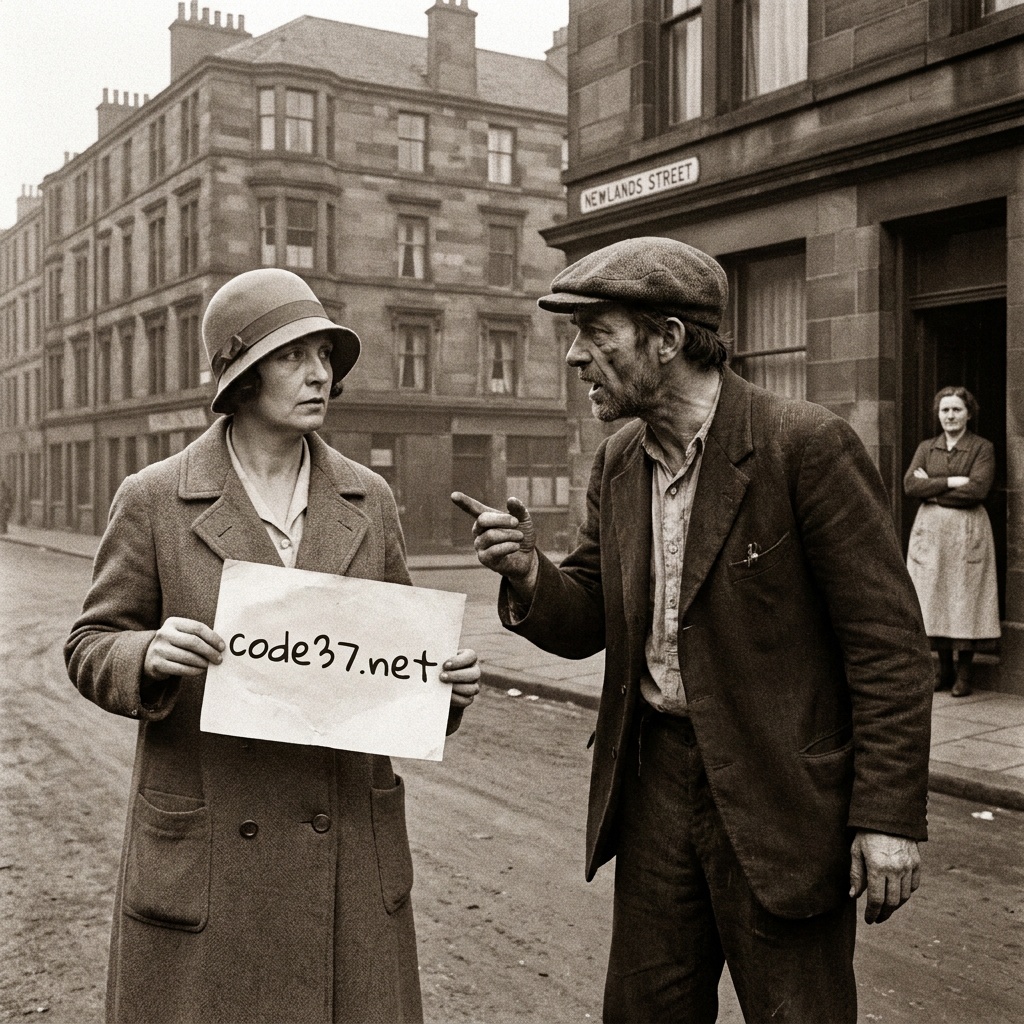
Glasgow remains Scotland’s most dangerous city, where the murderer Susan Newell once wreaked havoc. She was the last woman in Scotland to be hanged as a result of a death sentence in the courtyard of Duke Street Prison, Glasgow’s women’s prison. Today, the Cathedral House Hotel stands on the site where Susan Newell’s ghost is said to keep hotel guests on their toes at night to this day. But who did Susan Newell actually murder? Susan was born in Glasgow in 1893 as Susan McAllister. She grew up in poverty. Her first husband, with whom she had a daughter named Janet, died in the First World War. In 1923, Susan married John Newell, a metro worker, womaniser and drunkard. They lived with their eight-year-old daughter Janet in a rented flat on Newlands Street in the Glasgow suburb of Coatbridge. The couple were constantly arguing, which eventually led to their landlady, Mrs Young, giving them notice to leave the flat. After that, the argument escalated completely and Susan attacked John, inflicting serious head injuries on him on 19 June 1923. He then informed the police and fled to his sister’s house. The following evening, at around 6.45 pm, the 13-year-old newspaper boy John Johnston knocked on Susan’s door to sell her an evening paper. Susan invited the boy in and took a newspaper from him. When he asked for the money for the paper, Susan simply refused to pay. An argument ensued, which ended with Susan simply strangling the boy. After Susan’s daughter Janet had returned home from playing, she helped her mother wrap the boy’s body in a carpet. The next day, the mother-daughter duo loaded the tied-up bundle onto a go-kart. They intended to use it to transport the body from Coatbridge to Glasgow. On the way, a lorry driver stopped and gave them a lift to Duke Street in Glasgow. As he unloaded the go-kart along with the bundle, a local resident saw a foot sticking out. The lorry driver, however, did not notice anything. The woman decided, together with her sister, to follow the mother-and-daughter pair. On the way, they met a man whom they asked to alert the police. When the mother and daughter attempted to dispose of the body in a back yard and then flee over the wall, they were arrested by the police. During police questioning, the mother-daughter pair accused John of killing the paperboy and forcing them to dispose of the body. On 18 September 1923, Susan and John Newell stood trial for the murder of John Johnston before Lord Alness’s court. As John had a watertight alibi – he had been at his brother’s funeral at the time of the crime – the charges against John Newell were dropped. The post-mortem examination of John Johnston’s body had revealed that he had been strangled so brutally that his windpipe had burst. Furthermore, part of his skull had caved in as a result of the blows he had received. Susan’s lawyer attempted to build her defence on the grounds that she was of unsound mind, but this was refuted by the prosecution’s expert witness, Professor John Glaister. Susan Newell was found guilty by the jury of the murder of John Johnston, a case known to the public simply as the ‘Go-kart Tragedy’ and the ‘Coatbridge Murder’. Susan was sentenced to death by hanging. She subsequently submitted a petition to the Scottish Minister for External Affairs seeking to have the death sentence commuted to a term of imprisonment. However, this was rejected. On 10 October 1923, 30-year-old Susan Newell was executed at Duke Street Prison in Glasgow, where her ghost is said to still roam at night.