Isabella Mueller (crime writer)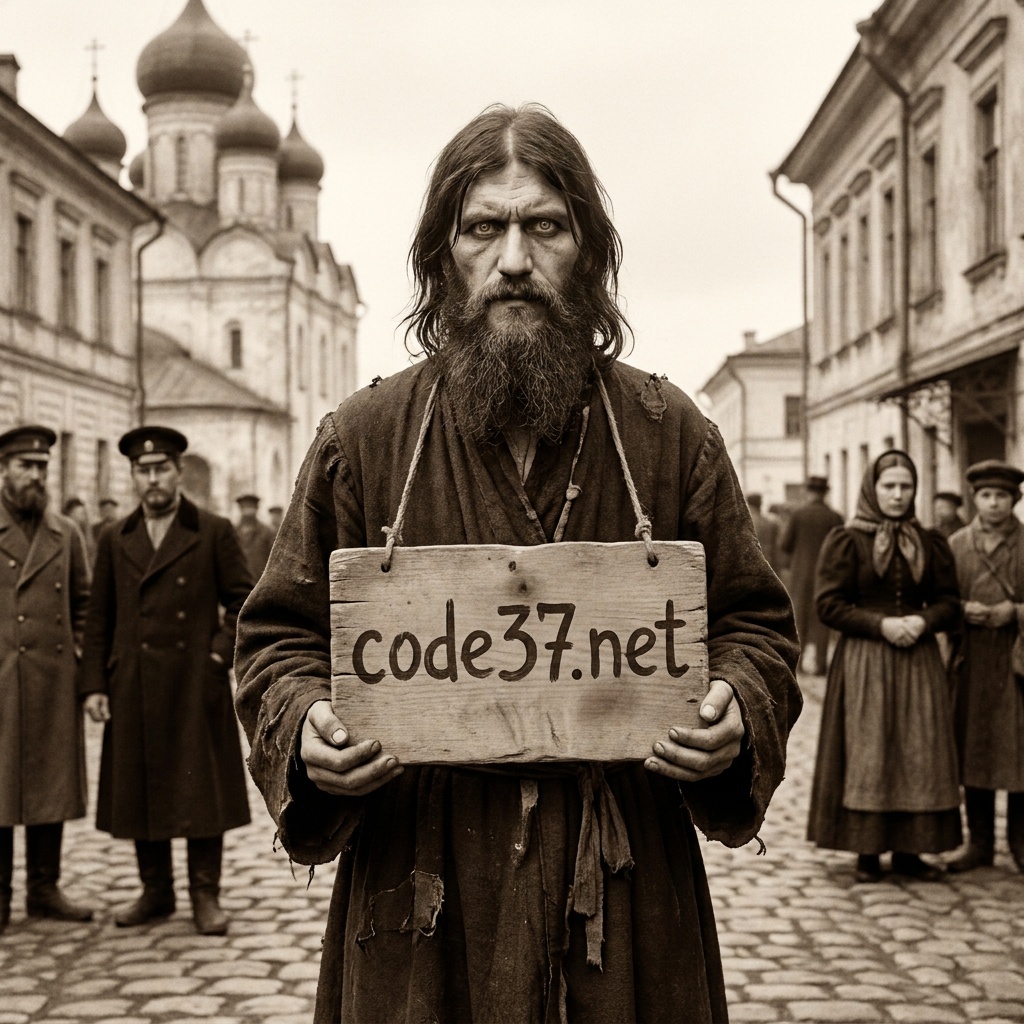
Grigori Yefimovich Rasputin was a legendary figure who went down in Russian history as an itinerant preacher, miracle healer, advisor to the Tsar and sexual predator. Grigori Rasputin was a farmer’s son who hailed from the West Siberian village of Pokrovskoye and travelled the world as an itinerant monk until, in the spring of 1903, at the age of 34, he arrived in Russia’s then capital, St Petersburg, with his wife and three children. Rasputin was a tall, gaunt man with long hair, a thick beard and a piercing gaze, who was already regarded as a prophet among the clergy at that time. In St Petersburg, Rasputin, whose greatest weakness was beautiful women, quickly took a mistress who introduced him to the upper echelons of the court. It was there that, in 1905, he had his fateful encounter with Tsar Nicholas II and Tsarina Alexandra, whom Rasputin bluntly called ‘Batjuschka’ (little father) and ‘Matjuschka’ (little mother). Soon afterwards, Rasputin became one of the closest confidants of Tsarina Alexandra, whom he not only cured of her insomnia, but whose son Alexei he was the only one able to provide relief for from his haemophilia, the bleeding disorder. The illness of the Tsar’s only son was a state secret of the highest order. Even when Alexei fell in 1907 and developed an oedema on his leg, no doctor could help him; only Rasputin, with his hypnotic gaze, was able to do so. From then on, Rasputin was regarded as a miracle healer, and was even rumoured to be having an affair with Tsarina Alexandra. Due to the rumours, Rasputin was banished from court on the Tsar’s orders, but he kept returning to court because of the Tsar’s son’s injuries. Rasputin, who had a great deal of influence over the Tsar’s family, was a thorn in the side of many. He therefore lived in constant fear that someone would attempt to assassinate him. This happened on 29 June 1914 according to the Julian calendar, when a woman named Chinija Gusseva rammed a rifle into his stomach in his home town. Rasputin miraculously survived the attack and, whilst still in hospital, warned of the First World War. Yet the Tsar paid no heed to these warnings. Due to Rasputin’s drunken escapades and countless affairs following his recovery, he was forced to leave St Petersburg. It was not until 28 September 1915 that he was allowed to return there, where he was soon declared the scapegoat for the catastrophic defeat of the Russian army, which had suffered 2 million casualties in the First World War. In November 1916, Rasputin sparked a major debate in the Russian parliament, the Duma, which culminated in the decision that Rasputin had to be removed. But how? On 30 December, Rasputin was invited to dinner at the palace of Prince Felix Yusupov, whose wife Irina was a niece of the Tsar. Despite warnings, Rasputin accepted the invitation, as he regarded Yusupov as a friend. Also present at the dinner were Grand Duke Dmitri Pavlovich, Duma deputy Vladimir Purishkevich and the medical officer Stanislaus Lasowert. These were all conspirators who had mixed cyanide into the cake and the Madeira wine in order to eliminate Rasputin once and for all. However, the poison did not take effect, which is why the host himself shot Rasputin in the chest with his Browning pistol. However, the shot was not fatal, a fact the conspirators only realised as he was being carried away, when Rasputin suddenly jumped up and ran off. He was shot down with four shots. His body was sunk in a hole in the ice of the Neva. The post-mortem refuted the claim that Rasputin had been poisoned or even shot. Rather, he had been tortured until he finally died. Under pressure from his family, Tsar Nicholas II decided against prosecuting the perpetrators. However, the death of the miracle-working monk did not have the desired effect, for now the peasants and workers rose up against the authorities. Finally, on 23 February 1917 according to the Julian calendar, the Russian Revolution broke out, leading to the overthrow of the tsarist family.