Isabella Mueller (crime writer)
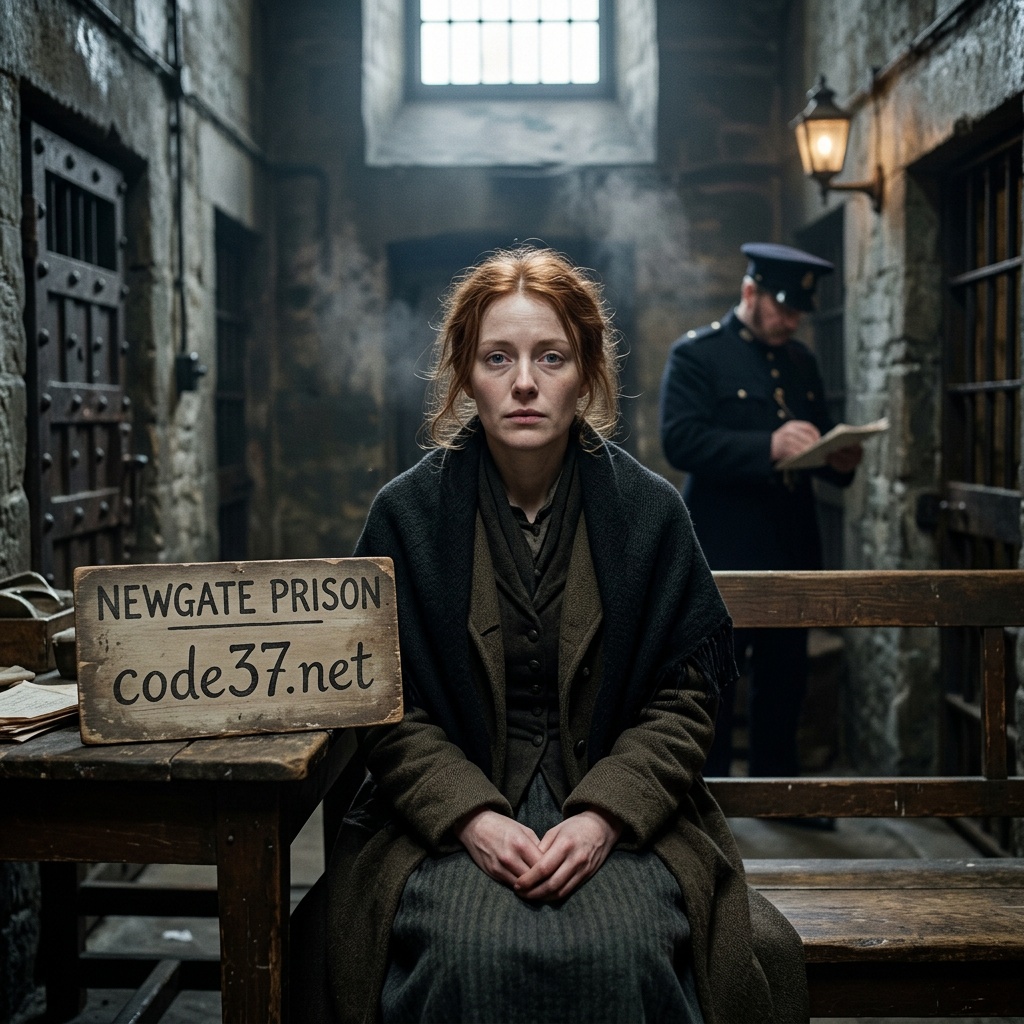
Mary Eleanor Wheeler was a cold-blooded murderer. She was born in 1866 to Mary Eleanor Wheeler and Thomas Wheeler, but little is known about her childhood. When Mary was 14 years old, her father Thomas was found guilty of the murder of the farmer Edward Ansteen and hanged at St Albans Prison on 19 November 1880. Mary herself was later to meet the same fate. At the time of her arrest, Mary was 24 years old and was described as 1.66 m tall with ‘beautiful reddish hair and delicate blue eyes’. She had a normal build and well-shaped hands. Although her face was not exceptionally pretty, she evidently had no trouble attracting men. In her late teens, she had a relationship with a carpenter named John Charles Pearcey. Although they never married, Mary took his surname and continued to use it even after they separated. It was under this name that she was arrested, charged and brought to trial. Mary tended to associate with wealthier men and had never worked or felt the need to do so. One of her many admirers, Charles Creighton, rented a room for her at 2 Priory Street in the fashionable London borough of Kensington around 1888. Mary, who suffered from depression and had only her elderly mother and an older sister as relatives, drank heavily. As well as Mr Creighton, who visited her once a week, she also fell in love with Mr Frank Samuel Hogg, a removal man who impressed Mary with his printed calling cards. Mary would signal to Frank that she was available by leaving a light on in the window, and he had a key to the house. But there was a serious obstacle to Mary’s happiness: Frank was married and had a daughter, both of whom were also called Phoebe. Phoebe Hogg was 32 years old at the time of her death and had been very ill in early 1890. She had married Frank Hogg in November 1888, whilst she was three months pregnant with his child, and gave birth to their daughter, Phoebe Hanslope Hogg, in the summer of 1889. Frank’s affair with Mary took place both before and during the marriage. On the morning of 24 October 1890, Mary is said to have asked a boy to do her a favour. She gave Willie Holmes a penny to deliver a message to Phoebe Hogg, inviting her to afternoon tea. At around 4 pm, Charlotte Priddington, Mary’s neighbour, heard the sound of breaking glass coming from Mary’s house and called over the fence to check if everything was all right, but received no reply. At around 7 pm, a man on his way home discovered a woman’s body on the pavement on Crossfield Road and immediately reported it to a police officer. The woman’s head was wrapped in a cardigan, which the man removed, revealing Phoebe Hogg’s blood-stained face with a large cut to her neck. The body was initially taken to Hampstead police station and then to the mortuary. It transpired that the deceased had a fractured skull and a cut to her neck so severe that her head had almost been severed. There were also bruises on her head and arms, suggesting that she had put up a fight. An examination of the scene where the body was found suggested that the murder had taken place elsewhere. At that stage, the police had not yet identified the body. Later that evening, a patrol officer discovered a heavily bloodstained pram on Hamilton Terrace, about a mile away from where the woman’s body had been found. The following morning, the body of a little girl was found. It turned out that the girl had died of suffocation but otherwise showed no injuries apart from a few scratches. Frank Hogg and his sister Clara reported Phoebe missing after reading about the discovery of the woman’s body in the Saturday newspaper. Frank sent Clara to Mary to ask if she’d seen Phoebe; Mary said she hadn’t, but agreed to accompany Clara to the mortuary to see if it really was Phoebe’s body. Mary’s behaviour there was very strange. Having agreed to go with Clara, Mary said at the first sight of the body: ‘That’s not her’, even though Clara recognised Phoebe’s clothes. Mary did her best to prevent Clara from identifying the body and became almost hysterical when the full extent of Phoebe’s injuries became clear. The police asked Mary and Clara to examine the pram, which Clara identified as Phoebe’s. A neighbour of Mary’s said she had seen Mary on the evening of the murder pushing the pram with a large object inside it. Frank Hogg was informed of the positive identification of his wife. He confessed to the affair with Mary when the key to her house was found. The police decided to question Mary as the next suspect, as she had already displayed suspicious behaviour at the mortuary. So they went to Priory Street and searched her house thoroughly. They found significant traces of blood and splatters in the kitchen, along with a bloodstained carving knife and a fire poker. There were also clear signs of a struggle – with two broken windows in the kitchen. A carpet showed bloodstains and smelled strongly of paraffin, where an attempt had been made to clean it. Mary’s behaviour became increasingly bizarre during the police search. She sat at the piano, singing and whistling loudly, and tried to explain away the bloodstains by saying she had been ‘killing mice, killing mice’, which seemed hardly credible. Inspector Banister decided to arrest Mary at that point and charge her with the murders of the mother and child. When Mary was searched, bloodstains were found on her clothes, scratches on her hands and two wedding rings on her fingers, one of which was later identified as Phoebe Hogg’s. Mary was taken into custody. Whilst awaiting her hearing at the police court, she told Sarah Sawhill, the woman looking after her, that Mrs Hogg had in fact come round for tea that afternoon and that, whilst there, Mrs Hogg had made a remark that offended Mary, whereupon an argument broke out. Mary realised she was incriminating herself and refused to speak any further on the matter. Mary was charged before the Central Criminal Court at the Old Bailey by Judge Denman. Her three-day trial began on 1 December 1890. The prosecution was led by Mr Forrest Fulton, assisted by Mr C.F. Gill, and her defence was led by Mr Arthur Hutton. Mary entered a formal plea of not guilty, and the prosecution then began to present its case. They read out various letters that Mary had written to Frank Hogg, which allegedly demonstrated the depth of her passion for him prior to his forced marriage to Phoebe, brought about by her pregnancy. Mary had told Frank that she did not want to leave him, even if he had to marry Phoebe, and that she would treat Phoebe as a friend. The proposed motive for the murder was jealousy of Phoebe, now that Mary had to share Frank with her. Evidence was also presented regarding the crime scene and the nature of Phoebe’s injuries. John Pearcey identified the cardigan found wrapped around Phoebe’s head as one he had given to Mary, and evidence was presented that the blinds in Mary’s house had been drawn on the afternoon of the murder. Arthur Hutton challenged the circumstantial evidence against her and also asked whether a woman of her height and build would be capable of inflicting such horrific injuries on the deceased. Mary did not give evidence during the trial and remained impassive throughout. She was found guilty after just 52 minutes at midday on the third day. In accordance with customary practice, Mary was asked whether she had ‘anything to say as to why the court should not pass the death sentence against her in accordance with the law’, to which she replied: ‘I say I am innocent of this charge.’ Judge Denman then donned his black cap and sentenced her to be hanged. At that time, there was no right of appeal – the Court of Criminal Appeal was not established until 1907. Her lawyer, however, endeavoured to save her by claiming that, at the time of the offence, she was not in her right mind due to epileptic fits from which she had suffered since birth. On 16 December, the Home Office wrote to Mr Freke Palmer informing him that a medical examination under the Criminal Lunatics Act had been authorised. This was to be carried out on Friday by three doctors – Bennett, Gilbert and Savage – whose one-hour interview with Mary revealed no evidence of legal insanity. Following a thorough review of their report, her case files were marked with the fateful words ‘the law must take its course’. This decision was communicated to her solicitor on Saturday. At Mary’s request, Frank Hogg was granted permission to visit her at Newgate Prison on Monday afternoon, but he did not turn up, which greatly upset Mary, who lay weeping on her bed when she realised he would not be coming. Apart from that, she remained very composed throughout her final day and night. On her final afternoon, Mary was visited by Mr Freke Palmer, her solicitor, whom she asked to arrange certain bequests and also to place a personal advertisement in a Spanish newspaper. Mary steadfastly refused to make a confession to Mr Palmer, despite his repeated questions and his promise to present relevant facts to the Home Secretary in a final attempt to secure a pardon. Mary was due to be hanged by James Berry two days before Christmas 1890 at Newgate Prison in London. After her return from the Old Bailey to Newgate, she was bathed and given a prison uniform – a plain grey dress – before being taken to the death cell, where she was guarded round the clock by three teams of guards. The Sheriff of London, Sir James Whitehead, had decided to bar newspaper reporters from her execution, presumably out of consideration for her gender and age. The execution was scheduled for Tuesday, 23 December, and Berry arrived at the prison on Saturday. Her guards reported that she showed ‘remarkable strength’ on the night before her execution. The gallows at Newgate were a large structure, built in 1881, which could accommodate up to four prisoners side by side, although on that day only a single noose hung from the six links of the iron chain attached to the central beam. Outside the prison, on that bitterly cold December morning, around 300 people, including many women, had gathered to hear the tolling of the bells at St Sepulchre’s Church and to see the black flag flying over the prison, signalling that the execution had taken place. Mary apparently aroused little public sympathy, presumably because of the murder of the child, and there was a cheer from the crowd as the flag was raised. Her body was left hanging for the customary hour in the brick-lined pit beneath the trapdoor, and then removed and placed in a coffin on the closed trapdoors to be viewed by the coroner’s inquest. That very same day, she was buried in an unmarked grave within Newgate. As was customary in high-profile cases, Madame Tussaud’s commissioned a wax figure of her for the Chamber of Horrors and purchased Frank Hogg’s pram along with several other items. The exhibition of Mary’s remains attracted 30,000 people. The rope used to hang Mary is on display at Scotland Yard’s Black Museum. There was reliable evidence that Mary had suffered from epilepsy since childhood, and her lawyer, Mr Freke Palmer, gathered extensive evidence of her epilepsy and two suicide attempts, which suggested that Mary was not entirely of sound mind. It should be noted, however, that epilepsy is not regarded as a mental illness nowadays. Suffering from epilepsy means having recurrent seizures. A seizure is a temporary state of abnormal electrical activity in the brain. The word ‘temporary’ is important, as these occasional seizures do not in themselves constitute a mental illness. Epileptic automatism has been successfully used as a defence in murder trials because it proves that the person could not have formed the intention to kill whilst experiencing a seizure. In Mary’s case, however, none of this constituted a legal defence of insanity, which at the time was governed by the McNaughten rule. This rule arose from the case of Daniel McNaughten, who in 1843 attempted to kill the Prime Minister, Sir Robert Peel, against whom he harboured an imaginary grudge, but instead shot his secretary, Mr Drummond. The court found him not guilty of the offence on the grounds of insanity, because at the time of the offence he either did not know what he was doing or, if he did, did not realise that it was wrong. In McNaughten’s case, it was established that he did not know what he was doing at the time of the shooting. The McNaughten rule was interpreted very strictly in Mary’s day, and there was little scope for success with this defence. Mr Palmer publicly expressed his disappointment with the Home Secretary, saying that it seemed as though the whole world was against her. There is some truth in this – probably due to the murder of the baby and her promiscuous behaviour. Mary was even suspected by Inspector Frederick Abberline of the London Metropolitan Police of being Jack the Ripper. Arthur Conan Doyle had put him on this track, speculating that Jack the Ripper might have been female. A woman could have posed as a midwife and appeared in public wearing bloodstained clothes without arousing suspicion. This theory of a female Jack the Ripper was also shared by William Stewart in his 1939 book. In May 2006, a DNA test revealed that the saliva on the stamps affixed to the letters allegedly written by Jack the Ripper and sent to London newspapers came from a woman. Whether Jack the Ripper was female or male remains the subject of wild speculation to this day.