Isabella Mueller (crime writer)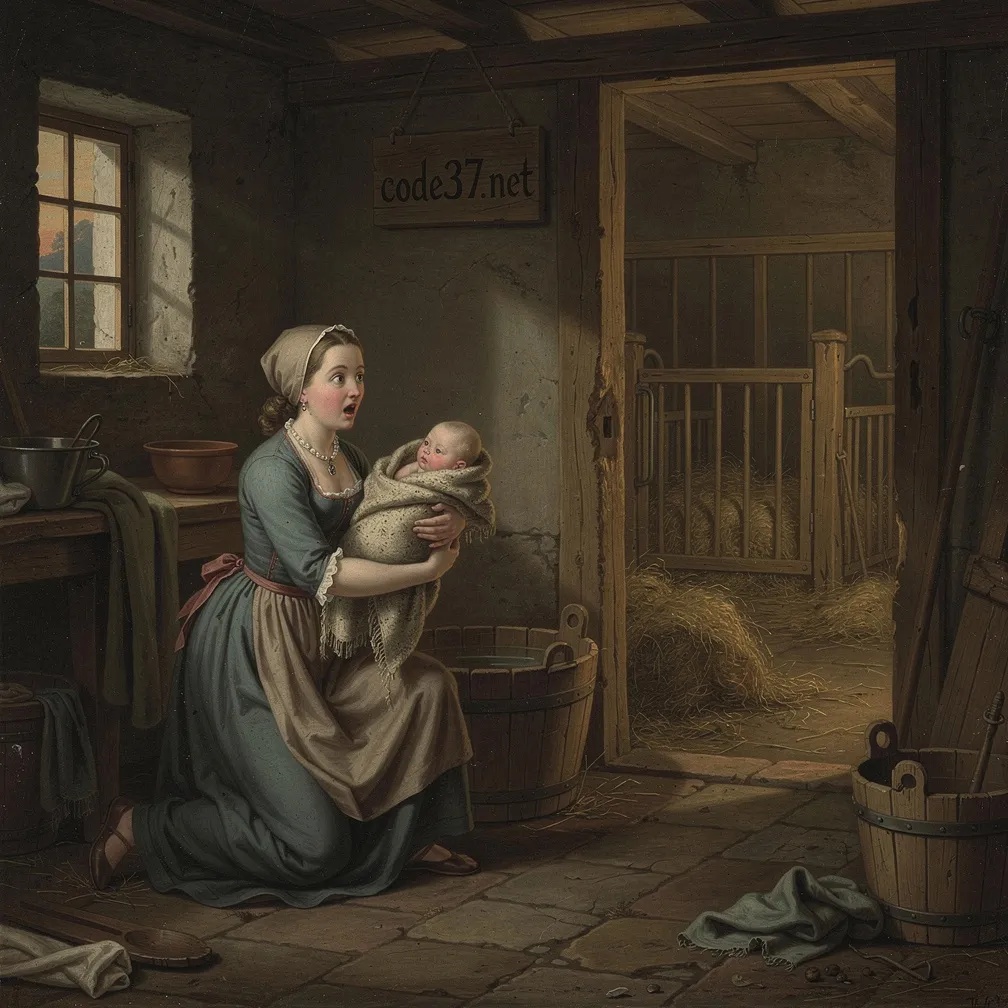
In 1772, the child murderer Susanna Margaretha Brandt was the talk of the town in Frankfurt am Main, the birthplace of Johann Wolfgang von Goethe, the man with whom I share a birthday. At the time, he was working as a lawyer in Frankfurt and followed the trial of Susanna Margaretha Brandt with eagle eyes, obtaining copies of her trial records. Inspired by this trial, he wrote Urfaust, in which Susanna Margaretha Brandt served as the model for his Gretchen. But who was Susanna Margaretha Brandt, whose fate moved Johann Wolfgang von Goethe so deeply that he wrote a first draft of his later play Faust? Susanna Margaretha Brandt was born on February 8 as the daughter of a soldier. She grew up as an orphan and later became a maid for the widowed landlady of the inn “Zum Einhorn.” Her two sisters also worked there. At the beginning of winter 1770, a goldsmith’s apprentice from the Netherlands stayed there; he made advances toward her and seduced her three to four weeks before Christmas. He had invited her to a glass of wine and may have slipped a drug into it to render Susanna Margaretha Brandt defenseless. The traveling craftsman then continued on to Russia. When Susanna Margaretha realized she was pregnant, she tried to hide her pregnancy from her sisters and her landlady. Being illiterate, she could not notify the child’s father; moreover, she did not even know his full name. While she was in the laundry room on July 31, 1771, she experienced severe abdominal pain, whereupon her landlady prepared her some tea and simultaneously threatened to evict her, as concealing a pregnancy or giving birth in secret were punishable offenses. Susanna Margaretha gave birth to a son in the laundry room on August 1, 1771. Since it was a precipitous birth, the baby fell headfirst onto the floor. In a panic, she hid the child—who was presumably already dead—in the stable. The next morning, Susanna Margaretha fled to Mainz on the market boat, where she sold her earrings to pay for a night’s lodging at an inn. The very next day, she returned to Frankfurt, where she was arrested at the Bockenheimer Tor and imprisoned in the Katharinenpforte jail. Due to her poor health, she was taken to the hospital. On August 8, her son’s dead body was recovered and shown to her. Susanna Margaretha confessed to having killed him. The dead infant had suffered strangulation marks and numerous broken bones. Susanna Margaretha denied having done this. From October 8 to 12, 1771, the court sat in the Römer, Frankfurt’s city hall, without a public hearing. On October 12, the death sentence was handed down to Susanna Margaretha Brandt. According to the Constitutio Criminalis Carolina, the infanticide should have been “buried alive and impaled.” However, the court sentenced Susanna Margaretha to be beheaded by the sword. Her court-appointed defense attorney, Schaaf, submitted a written plea in which he pointed to mitigating circumstances. But the court upheld the sentence on January 7, 1772. A petition for clemency filed the following day was rejected. On January 14, 1772, around 10 a.m., Susanna Margaretha Brandt was summoned by the executioner Johann Hoffmann to the Paradeplatz in front of the Hauptwache in Frankfurt am Main. She was led to the scaffold and tied to a chair. Then she was beheaded by the executioner with a single stroke of the sword. Thus ended the tragic life of Susanna Margaretha Brandt, who went down in Frankfurt’s criminal history as a child murderer and was immortalized in literature by Johann Wolfgang von Goethe.