Isabella Mueller (crime writer)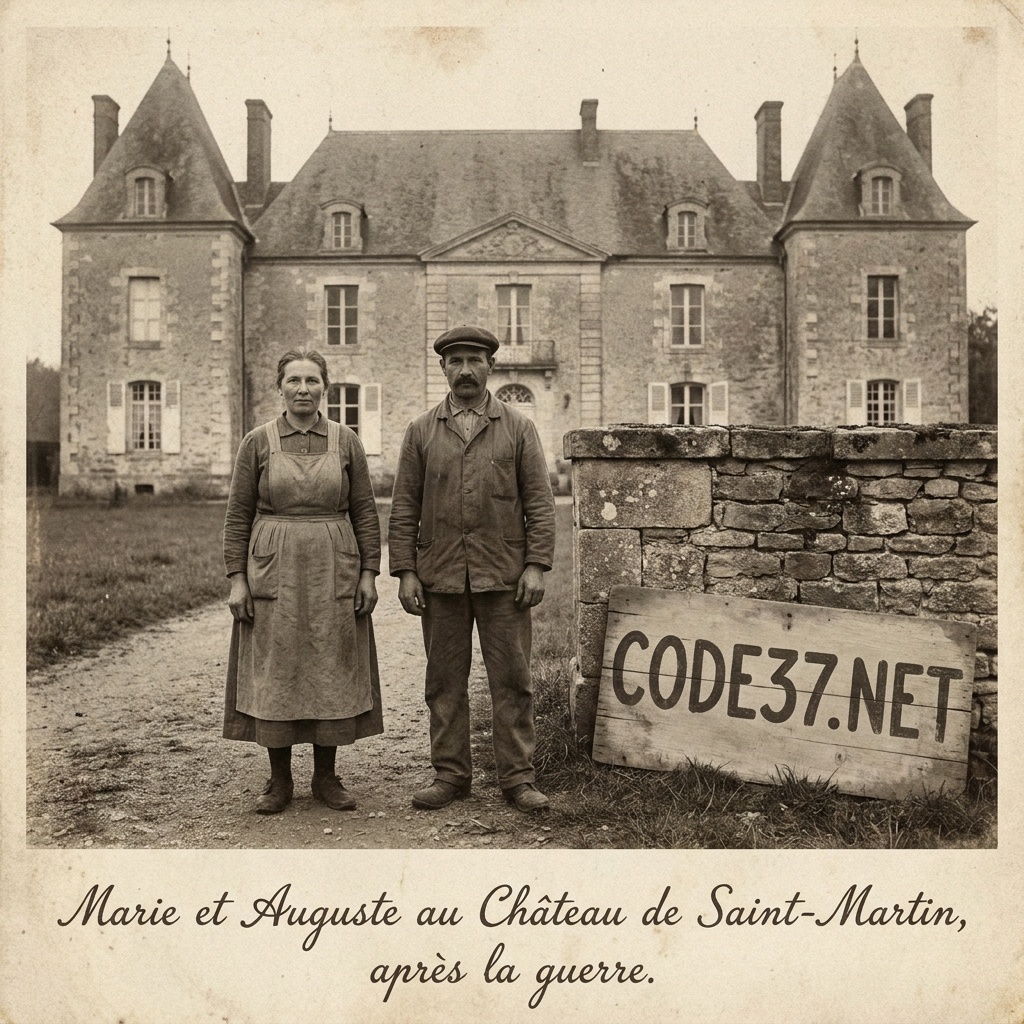
Marie Besnard went down in French criminal history as the “Poisoner of Loudon,” accused of poisoning 12 people with arsenic. The murder trial, which lasted nearly 10 years, is considered one of the most gripping in the history of the French justice system. Marie, born on February 15 in Saint-Pierre-de-Maillé to farmers Pierre and Marie-Louise Devailland, grew up in a sheltered environment. After the end of World War I, she married her cousin Auguste Antigny. Marie and Auguste moved to the Château de Saint-Martin to serve as caretakers there. Auguste died at the age of 33. The doctor cited tuberculosis as the cause of death. Two years after his death, in 1929, Marie married Léon Besnard, who owned a house and a rope factory in Loudon. The couple lived there happily for nearly twenty years, until Léon died on October 25, 1947, after a brief but serious illness. Before his death, Léon had told the postmistress, Madame Pintou, that he believed he had been poisoned by his wife. This information set the ball rolling, ultimately sealing Marie’s fate. From that point on, the police began investigating Marie. While the investigation was still ongoing, Marie’s mother, Marie-Louise Devailland—who had been living with Marie and her husband Léon since 1940—died on January 16, 1949, at the age of 87. Due to a flu epidemic that was rampant in Loudon, the doctor certified a natural cause of death. Since 1947, rumors had repeatedly surfaced that Marie was having an extramarital affair with Adi Dietz, a German prisoner of war who worked on her farm. To the investigating officers, this constituted the motive for the possible murder of Léon, whom Marie allegedly wanted to get rid of so she could be free for Anton. Consequently, in May 1949, Léon’s body was exhumed and tested for poison. Indeed, toxicologist Béroud found 39 mg of arsenic per kilogram of body weight in Léon’s body. This dose indicated a fatal case of arsenic poisoning. Since Marie’s mother had recently passed away, her remains were also exhumed. She was found to have 58 mg of arsenic per kilogram of body weight. Marie was subsequently placed in pretrial detention. Afterward, the remains of all of Marie’s recently deceased family members and neighbors were exhumed. The first to be examined was the body of Marie’s first husband, Auguste, in which 60 mg of arsenic per kilogram of body weight were found. Next, the remains of Marie’s great-aunt, Louis Lecomte, were examined. She had passed away in 1938 at the age of 80 and had previously bequeathed a generous portion of her estate to Marie in her will. Her body contained 35 mg of arsenic per kilogram of body weight. Next, the body of Marie’s neighbor, the pastry chef Toussaint Rivet, who had died in 1939, was examined. His remains were found to contain 18 mg of arsenic per kilogram of body weight. The body of Marie’s father, Pierre Devailland, was found to contain 30 mg of arsenic per kilogram of body weight. Only the remains of Léon’s grandmother, Madame Gouin, who had died in September 1940, contained such a small amount of arsenic that it was insufficient to support a murder charge. Just two months after her death, Marie’s father-in-law, Marcellin, had died, leaving Léon the substantial sum of 227,000 francs. In his body, 38 mg of arsenic per kilogram of body weight were discovered. Three months later, his wife, Marie-Louise, died, leaving Léon and Marie a six-figure sum. In her remains, 60 mg of arsenic per kilogram of body weight were detected. Léon’s sister, Loucie, had been found hanged in the attic in May 1941, which was strange. This was because Marie was a devout Catholic, which is why she would never have committed suicide—an act considered a mortal sin. In her body, 30 mg of arsenic per kilogram of body weight were discovered. After Léon’s cousins, Pauline and Virginie Lalleron, had fled to him to escape the German troops and named Marie as their sole heir in their wills, they died suddenly and unexpectedly. The exhumation and subsequent examination of their bodies revealed that Pauline had 48 mg of arsenic and Virginie had 24 to 30 mg of arsenic per kilogram of body weight. Shortly after the deaths of the two cousins, Léon and Marie’s neighbor Blanchet Rivet, the wife of the pastry chef, had died. After her husband’s death, she had been living with Marie and Léon and, in exchange for a small pension, had transferred ownership of her house to them. Her remains were found to contain 18 mg of arsenic per kilogram of body weight. The trial of Marie Besnard began on February 20, 1952, in Poitiers. Marie was represented by the 64-year-old star attorney Albert Gautrat. Throughout the entire trial, Marie always wore a black lace mantilla that covered her head and neck down to her shoulders. Initially, Marie was sentenced to two years in prison and a fine of 50,000 francs for receiving pension payments to which she was not entitled. Marie’s attorney took an extremely astute approach to her defense by casting doubt on the accuracy of the toxicological findings. This was because none of the deaths had shown signs of acute or chronic arsenic poisoning. Furthermore, there were no witnesses other than the postmistress, Madame Pintou. The trial was based solely on circumstantial evidence. The court in Poitiers then commissioned four toxicologists and forensic pathologists to conduct new examinations. These took two years and proved quite difficult, as after the initial exhumation, the bones of the deceased had been placed in a communal grave. However, the results confirmed Bérouds’ expert opinion. Meanwhile, Marie’s attorney had commissioned a counter-report that examined the fundamentals of the opposing side’s investigative methods. This cast doubt on the new expert opinion, prompting the court to decide to obtain yet more expert opinions. On March 15, 1954, the second trial against Marie Besnard began in Bordeaux; like the first, it ended on March 31, 1954, with the decision to obtain new expert reports. Marie’s lawyer did everything in his power to discredit the new reports by repeatedly commissioning counter-reports. In fact, this strategy seemed to be working. Marie was released on bail of 1.2 million francs. After seven years of expert evaluations, the third and final trial against Marie Besnard began on November 1, 1961. Since the court-appointed experts could not conclusively prove that the arsenic had not entered the remains of the deceased from the cemetery soil, Marie Besnard was acquitted on December 12, 1961, of the charge of 12 counts of murder by poisoning due to lack of evidence. An unbelievable verdict that caused widespread horror among the French public. On February 14, 1980, Marie Besnard died in Loudun as a free woman.