Isabella Mueller (crime writer)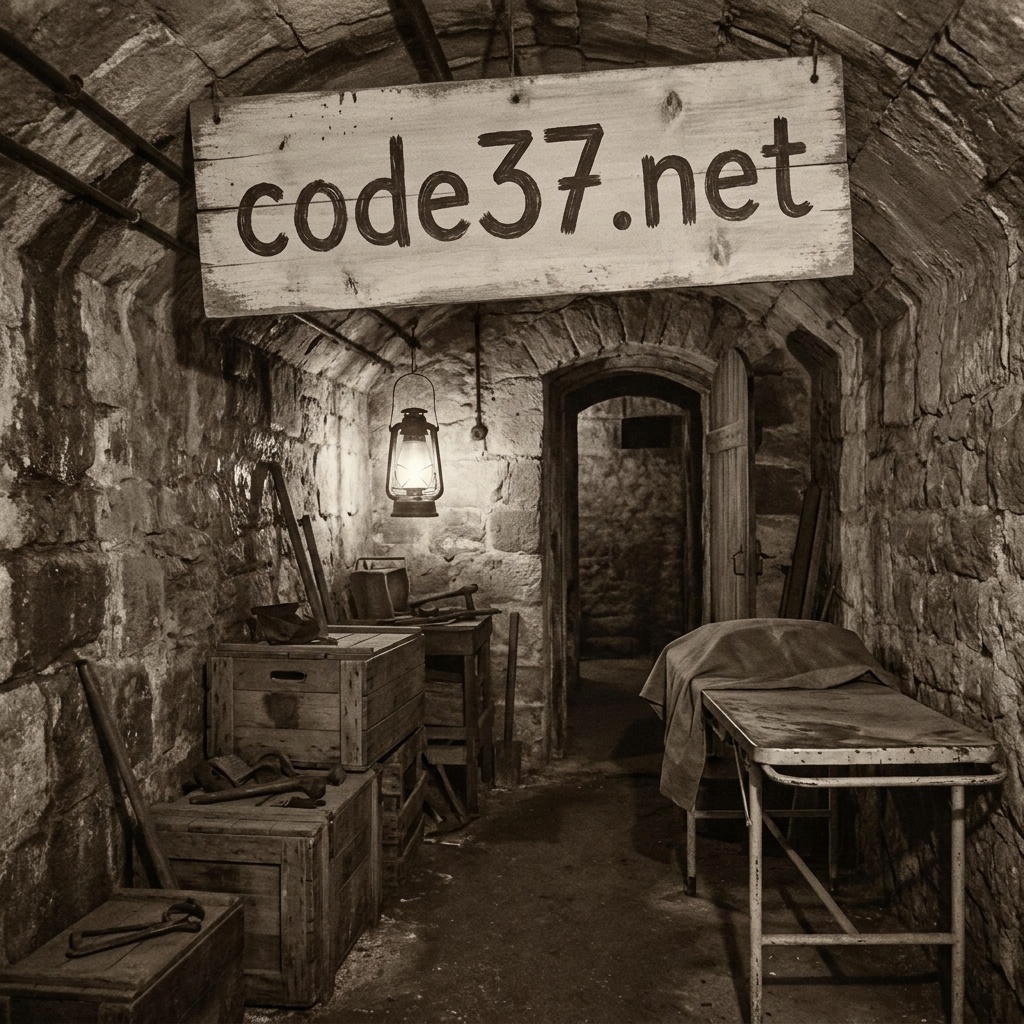
Herrman Webster Mudgett, better known as Henry Howard Holmes, was a notorious serial killer who built a hotel in order to torture women there. This man, who during the day posed as a friendly hotelier, turned out at night – according to the sensationalist press – to be a murderous beast who would knock women out with chloroform so that he could disembowel them on his operating table in his torture chamber, or mutilate them with a scalpel, a knife and all manner of torture instruments. But who was this beast in human form, who outwardly played the part of the perfect gentleman – always well-dressed, beguiling women with his sparkling blue eyes and neatly trimmed moustache – yet described himself as possessed by the devil? Herrman Webster Mudgett was born on 16 May 1861 in Gilmanton, New Hampshire, the third child of Levi Horton Mudgett and Theodate Page Price. His parents were devout Methodists who owned a farm, where Henry would dissect small animals whilst they were still alive from a young age. Henry’s father reportedly had a drinking problem, which led him to repeatedly abuse his family with a cane. Whenever Henry was locked away in the attic, he would devise technical contraptions. Henry was regarded as a good student who, after attending Phillips Exeter Academy, successfully graduated from Gilmanton Academy with honours. Shortly afterwards, at the age of 16, he married Clara A. Lovering in New Hampshire. He then studied medicine for one year at the University of Vermont before transferring to the University of Michigan in 1882, where he successfully completed his medical degree in June 1884. During his time at university, he worked in the anatomy laboratory under Professor William James. It was there that he began taking out life insurance policies on the cadavers, the proceeds of which he then pocketed to finance his studies and his living expenses. After completing his medical degree, Henry initially practised in Philadelphia. As his earnings were very meagre, Henry worked, amongst other things, as a warder in a psychiatric hospital, as a headteacher and as a door-to-door book salesman, until he decided to move to Chicago in 1886. Chicago was regarded as a burgeoning metropolis, where Henry decided to bid farewell once and for all to his old name, Herrman Webster Mudgett, and henceforth call himself only Henry Howard Holmes. Henry settled in the Englewood neighbourhood, where he was employed as a chemist by Elizabeth Holton, the wife of a chemist, in the chemist’s shop run by her seriously ill husband, Everett Holton. Henry, who later took over the pharmacy, purchased the neighbouring plot of land on which he intended to build a two-storey house. By this time, Henry’s first marriage had long since been a thing of the past. Although he had never officially divorced, he married Myrta Z. Belknap in Minneapolis in 1887, with whom he had a daughter named Lucy. In the same year, he began construction work, which he financed through the pharmacy’s takings and numerous mortgages. As Henry repeatedly found himself in serious financial difficulties and the construction of the building dragged on due to constantly changing tradesmen and a lack of funds, he committed insurance fraud, forgery and even murder. After Henry learnt that the World’s Columbian Exposition was to take place in Chicago from 1 May to 30 October 1893, he decided to convert his building complex into a 60-room hotel. According to the Yellow Press, this hotel had a cellar with a torture bench and an operating table, soundproof and airtight rooms into which gas flowed through a nozzle, as well as rooms that led to nowhere or were fitted with iron plates to heat them up. In addition, there was also a crematorium, acid baths and lime pits to dispose of the bodies, which fell into the cellar via a built-in trapdoor without the other hotel guests ever suspecting a thing. Once the hotel had been completed, Holmes referred to it as his castle. At that time, Holmes acquired large quantities of chloroform. Rumours soon began to circulate that the Chicago police had received numerous missing persons reports after individuals – often single women – had booked a room at the ‘horror hotel’. In the autumn of 1893, Henry fled Chicago with his third wife to escape his creditors. He was eventually arrested in Boston on 17 November 1894 for the murder of his acquaintance Benjamin Pitezal, who was already being held in Texas on charges of horse theft. Henry Howard Holmes had taken out a life insurance policy on Pitezal, the proceeds of which he collected following his murder. Henry had also killed Pitezal’s three children. He had buried Alice and Nellie in the cellar of his house in Toronto, whilst Howard, Pitezal’s third child, had been murdered in the US state of Indiana. Henry was brought to trial in October 1895 for the murder of Pitezal and found guilty. He was sentenced to death. Henry was hanged on 7 May 1896 at Philadelphia County Prison, having previously confessed to murdering 27 people. Before his execution, he had sold his story to the press for a profit. However, some of the murders Henry claimed to have committed turned out to be false, as many of the people he claimed to have killed were still alive. After his execution, Henry Howard Holmes was buried at Holy Cross Cemetery in Yeadon, Philadelphia. He was subsequently hyped up by the media as America’s most cruel serial killer. Numerous horror stories were circulated about the ‘Horror Hotel’ and Henry Howard Holmes, which were simply pure fiction. The ‘Horror Hotel’ never actually existed. The fact is, however, that Holmes was a murderer, a fraudster and a bigamist, whose hotel went up in flames in 1895.