Isabella Mueller (crime writer)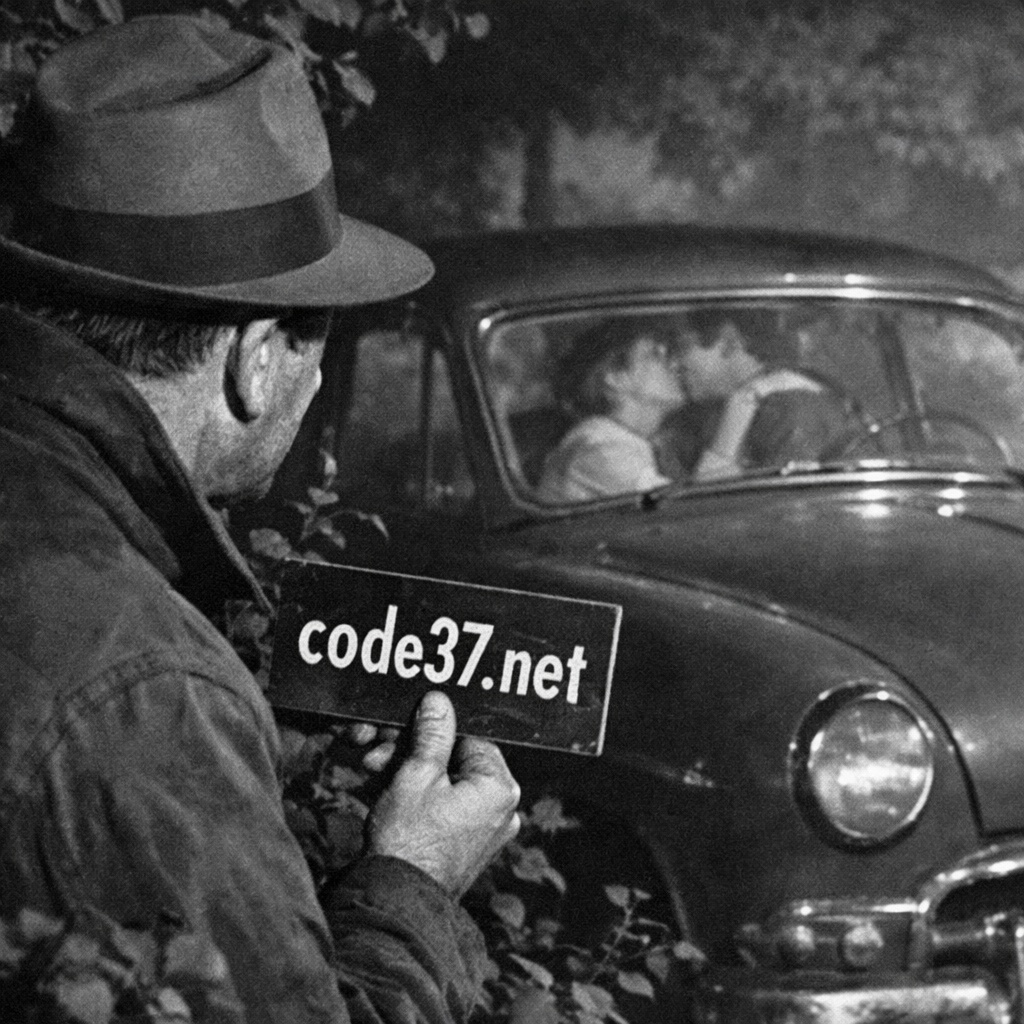
A heinous series of double murders targeting couples in love took place in Düsseldorf between 1953 and 1956. During this period, a perpetrator would lie in wait for couples who were spending time together in their cars in secluded spots, in order to watch them, kill them, and rob them. The search for the serial killer—who was dubbed by the media the “Lovers’ Killer” and the “Man-Hunter of the Rhine”—was in full swing. A total of 250,000 wanted posters were distributed, and a reward of 15,000 marks was offered for information leading to the perpetrator’s capture. Yet despite the fact that investigators followed up on over 2,263 tips, there was no trace of the perpetrator. He seemed to be a phantom. But then chance came to the police’s aid. On June 10, 1956, a forest ranger noticed a man near Meerbusch who was watching a couple having sex in their car in a small wood. When he tried to rob them, the woman screamed for help. The forester heard her cries for help, immediately rushed to the car with his triple-barreled shotgun, and ordered the man to put his hands on his head. He then notified the police. When they arrived, they found a P 38 pistol in the man’s pants. The police were certain they had apprehended the couple’s murderer and took him to the station for questioning. The man was 31-year-old Werner Boost, who was born on May 6, 1928, as the illegitimate child of an East German farmer’s wife. He spent his childhood in a Protestant children’s home in Düsseldorf-Kaiserwerth, where his mother had placed him. He was then sent to a welfare home after stealing 300 Reichsmarks from his mother. Werner had never met his father. After dropping out of two apprenticeships, Werner was drafted into the Wehrmacht at the age of 16, where he was taken prisoner by the Americans. After the war ended, Werner attempted to complete his abandoned bakery apprenticeship. But he failed again, so he made a living doing odd jobs and helping people escape from the former GDR. For the latter, Werner was sentenced to three weeks in prison by the courts of the Soviet occupation zone. In 1949, Werner married a woman who was the mother of two daughters, and he moved with them to Düsseldorf. There, he committed a theft with his 28-year-old friend Franz Lorbach, for which both had to serve a prison sentence lasting several months. While Werner was being interrogated at the police station, Franz Lorbach turned himself in to the police after learning of Werner’s arrest from the media. He negotiated a leniency agreement for himself. Franz testified that Werner—who had hypnotized and drugged him—had shot and killed Bernd Servé, the lawyer for the German Trade Union Federation, on January 17, 1953, at the Düsseldorf waterworks “Am Staad.” Werner had observed Servé becoming intimate with 18-year-old Adolf Hüllecremer in an Opel Kapitän. Werner then shot the lawyer in the head and struck his friend with the pistol, knocking him unconscious. Werner and Franz believed that Adolf had been killed by the blow from the pistol. However, he feigned death and thus survived. Werner and Franz stole their valuables and fled. In November 1955, the police recovered a submerged blue Ford from a water-filled gravel pit near Düsseldorf-Kalkum. Inside were the bodies of 26-year-old baker Friedhelm Behre and his young girlfriend, Thea Kürmann. Both had been robbed and shot. Just a few months later, on February 8, 1956, the police discovered a car covered in blood. Only one day later, not far from where the car had been found, the police discovered two charred bodies in a burned-out hayloft. They were identified as 20-year-old secretary Hildegard Wassing and her boyfriend Peter Falkenburg. Both had been robbed and shot to death. The man had been murdered by a shot to the head that exhibited the same unusual angle as the one used in the 1953 murder of attorney Bernd Servé. During a search of Werner’s home, the police found not only an arsenal of weapons but also a cache of chemicals containing cyanide and hydrochloric acid. According to Franz, Werner had been experimenting with these substances to kill silently and perfectly. In the criminal trial at the Düsseldorf Regional Court in June 1956, Werner Boost was sentenced to life imprisonment for the murder of Bernd Servé in conjunction with aggravated robbery, based on the testimony of his accomplice, Franz Lorbach. There was insufficient evidence for the other murders. This caused great consternation not only among the public but also within the police force. Franz Lorbach, as the prosecution’s key witness, received a 6-year prison sentence. After 34 years, Werner Boost was released from prison in 1990.