Isabella Mueller (crime writer)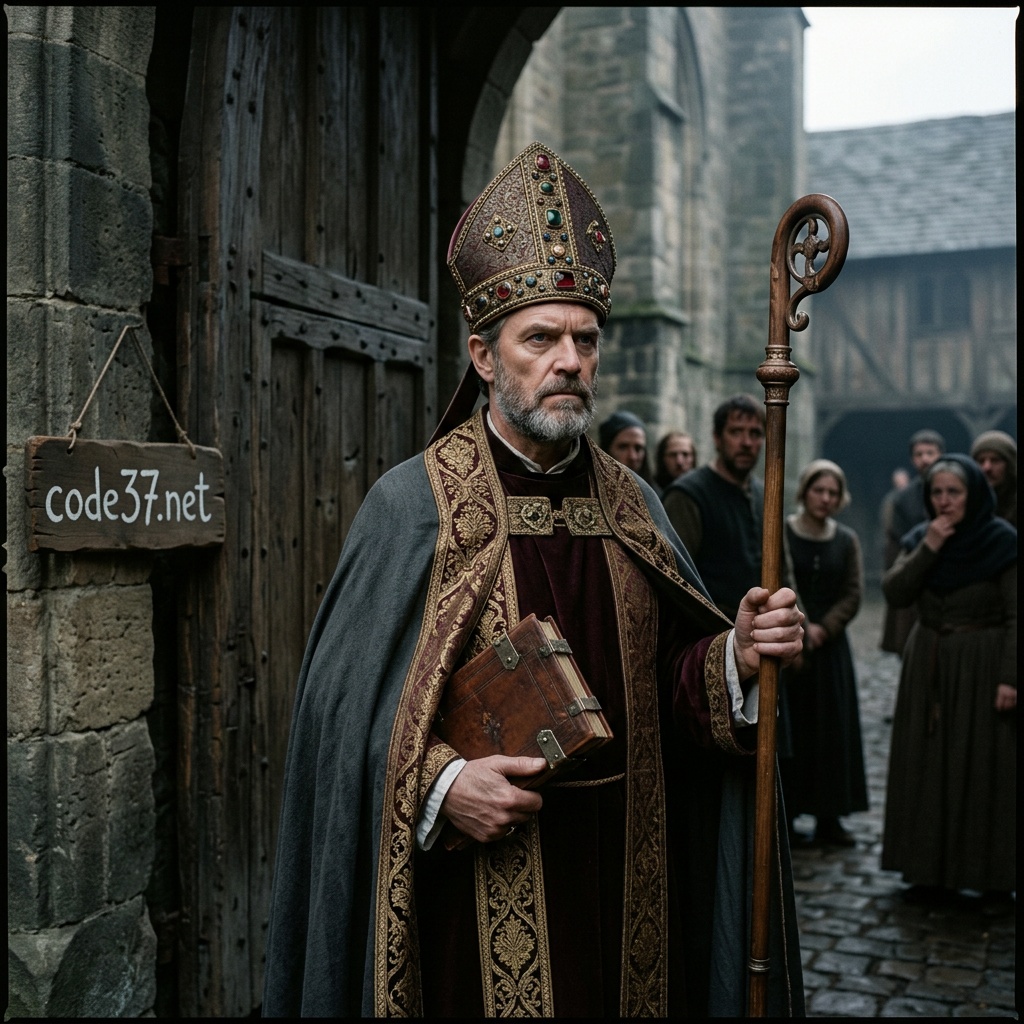
In the dark days of the 14th century, when the shadows of the Plague and decay loomed over the Holy Roman Empire, a fearless figure arose in the Diocese of Constance, determined to restore order and rid the Church of its vices. This man was Johann Windlock, Bishop of Constance, a reformer who ruled with an iron fist and shied away from no form of resistance, which ultimately cost him his life. Johann Windlock came from a distinguished family of Constance burghers and showed an early talent for administration and diplomacy. Following his theological training, he rose rapidly through the ranks of the Church. In the year 1337, he was appointed Official of the Episcopal Court and Magister. His skill and loyalty soon caught the eye of the powerful Duke Albrecht II of Austria, who appointed him his Protonotary in 1341 and even his Chancellor in 1349. Windlock’s rise seemed unstoppable. Yet his ambitions extended even further. With the Duke’s support, he was elected a canon in Constance in 1351 and, just one year later, on 29 November 1352, he became Bishop of the diocese. Pope Clement VI confirmed his appointment on 9 July 1352, and thus began Windlock’s era as a relentless reformer of the Diocese of Constance. As Bishop of Constance, Johann Windlock proved himself to be a determined reformer from the very outset. At that time, conditions in the diocese were in a state of ruin. Windlock was firmly resolved to change this. He did not shy away from imposing an interdict on even the most influential clergy and dignitaries, or even arresting them, if they opposed his reforms. Windlock knew no compromise. He wanted to rid the Church of its vices and restore order, whatever the cost. His approach was often ruthless, and he showed no leniency towards anyone who stood in his way. Even the provost of the cathedral could not escape his wrath and was arrested by Windlock. Through his reform of the clergy, Windlock made the cathedral chapter his enemy; at the same time, by imprisoning the parish priest of Constance, imposing an interdict on Constance and laying claim to lordship over the city, he fell out with the nobility and the citizenry. As a result, Windlock’s work as a reformer was to come to an abrupt end. On 21 January 1356, he was assassinated at his residence near Constance Cathedral. The exact circumstances of the murder remain unclear to this day, but it is likely that Windlock’s ruthless approach and his enemies within the Church led to his violent death. Emperor Charles IV reacted to Windlock’s assassination with sharp criticism. He publicly denounced the conduct of the Constance prelates and called on them to abandon the practice of granting benefices and to return to their ecclesiastical duties. Windlock’s tragic end served as a stark reminder of the dangers to which reformers were exposed at that time. Despite his early death, Johann Windlock, Bishop of Constance, left a lasting legacy. He had shown that it was possible to rid the Church of its vices and restore order, even if the price to be paid might be high. His work as an intrepid reformer shaped the history of the Diocese of Constance and served as an inspiration for later generations of church leaders who had the courage to bring about change.