Isabella Mueller (crime writer)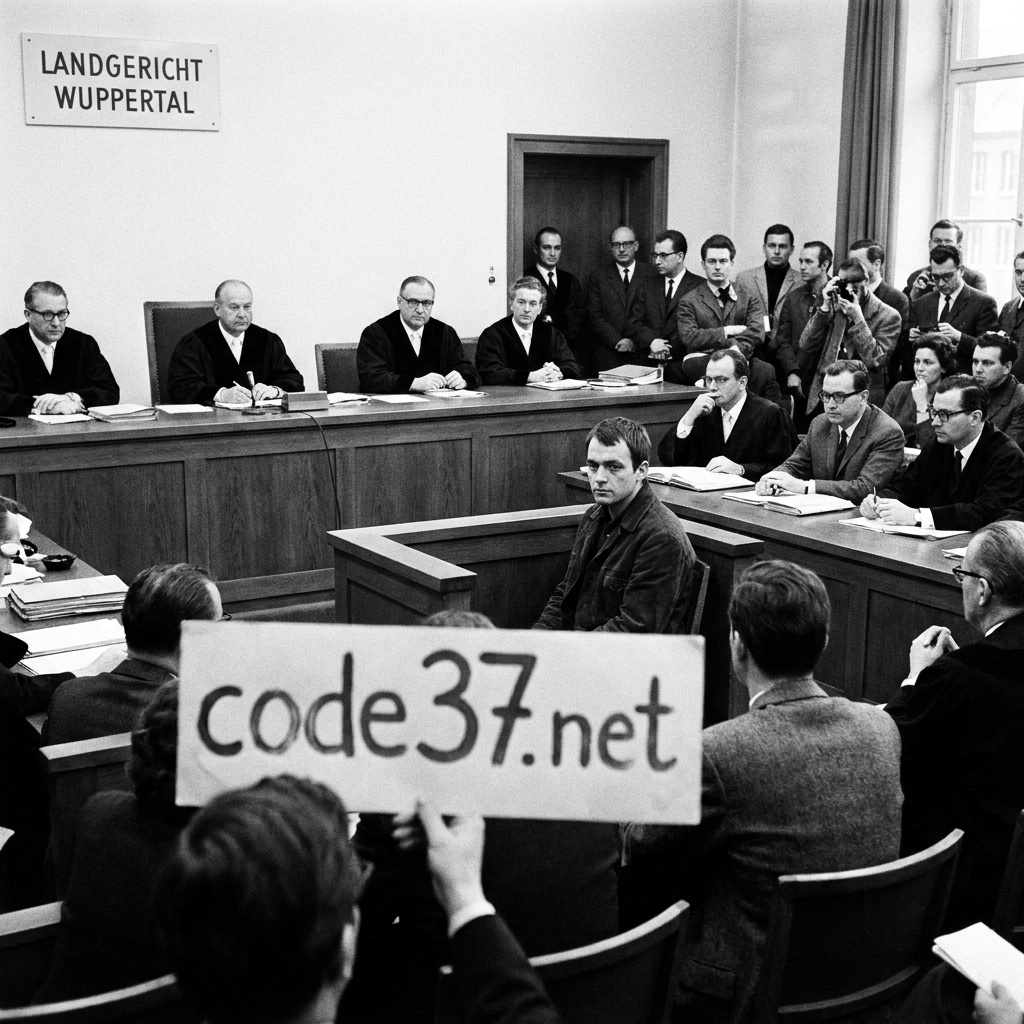
Between 1962 and 1966, four boys were sexually abused, killed, and then dismembered with a butcher’s knife in North Rhine-Westphalia. It was only when one of the boys managed to escape that this horrific series of murders came to light; the perpetrator was Jürgen Bartsch, a 19-year-old butcher’s apprentice. He was born on November 6, 1946, in Essen as the illegitimate child of Belgian coal miner Adolf Peters and Elisabeth Anna Sadrozinski, whose maiden name was Karl-Heinz Sadrozinski. But shortly after his birth, his mother Anna died of tuberculosis. At first, the nurses cared for the newborn until a fateful encounter occurred that changed the boy’s life forever—but not for the better. The wife of the respected butcher Gerhard Bartsch had to undergo major surgery at the hospital, where she learned of the orphaned boy. The childless couple decided to take the 11-month-old boy into their home. However, the boy’s adoption was delayed for seven years due to concerns raised by child welfare services regarding his questionable origins. The 11-month-old Karl-Heinz Sadrozinski became Jürgen Bartsch, who was forced to live in the Bartsch family’s basement—with barred windows and artificial lighting—until he started school. He was completely isolated from the outside world and was not allowed to leave the house or play with other children. This was partly because the Bartsches did not want others to find out that Jürgen was not their biological child, and partly because Jürgen’s foster mother suffered from an obsessive-compulsive disorder regarding cleanliness. This was so severe that she bathed Jürgen in the bathtub until he was 19 years old. At the age of 10, Jürgen was sent to a boarding school. He had to transfer to another one because his parents felt it wasn’t strict enough. On October 14, 1958, Jürgen arrived at the Catholic boarding school run by the Salesians of Don Bosco at the Marienhausen Monastery in Aulhausen. There, he learned by chance that he had been adopted. One day, while confined to bed with a fever, he was sexually abused by Father Gerhard Pütz, which led him to make two attempts to escape in October 1960. However, since his parents had already brought him back to the boarding school after his first attempt, he resigned himself to his fate. It is unclear when Jürgen began to develop sadistic, pedophilic fantasies. In any case, he began not only to act out these fantasies in his mind but also to put them into practice, until one of his victims managed to escape. On June 18, 1966, Jürgen met 14-year-old Peter Frese in Wuppertal-Elberfeld and lured him into an air-raid shelter. There, he forced Peter to undress by beating and kicking him. He tied Peter up and attempted to rape him. However, he let him go and left, saying that if he returned, he would kill Peter. Once Peter was alone, despite his fear of death, he managed to burn through the rope using a candle. He was able to escape and alerted the police, who immediately launched a manhunt for Jürgen Bartsch. When the police searched the air-raid shelter, they made a horrific discovery. They found the dismembered remains of four boys. These were identified as 8-year-old Klaus Jung, who had disappeared on March 31, 1962; 13-year-old Peter Fuchs, who had been reported missing since August 6, 1965; 12-year-old Ulrich Kahlweiß, who had disappeared on August 14, 1965, and 11-year-old Manfred Graßmann, who had been missing since May 6, 1966. As early as June 21, 1966, the fugitive Jürgen Bartsch was apprehended thanks to tips from the public. During questioning, he made a full confession. Jürgen had always acted according to the following modus operandi. He lured the children away from the fair with the promise of searching for treasure with them, which is why he was later dubbed the “Fairground Killer” by the public. He then enticed the boys into the air-raid shelter, where he sexually assaulted them. Afterward, he beat them to death and dismembered their bodies with a butcher’s knife. On December 15, 1969, Jürgen Bartsch—who was deemed a fully accountable adult—was sentenced to life imprisonment at his first trial at the Wuppertal Regional Court. His attorneys appealed this verdict to the Federal Court of Justice, which overturned the first-instance ruling. On April 6, 1971, Jürgen Bartsch was sentenced by the Juvenile Division of the Düsseldorf Regional Court to 10 years in a juvenile detention facility, followed by placement in the Eickelborn Psychiatric Hospital. There he met a nursing assistant from Hanover, whom he married on June 2, 1974. Since Jürgen did not want to be confined to a psychiatric facility for life, he requested castration, which was performed on April 28, 1976, at the Eickelborn State Hospital. However, Jürgen suffered a fatal circulatory collapse due to an overdose of anesthesia administered by a nurse. He died on the operating table. Since this had happened to the nurse before, he was sentenced to probation for negligent homicide. Jürgen Bartsch was buried anonymously in Essen. With that, the “Fairground Killer” was finally a thing of the past.