Isabella Mueller (crime writer)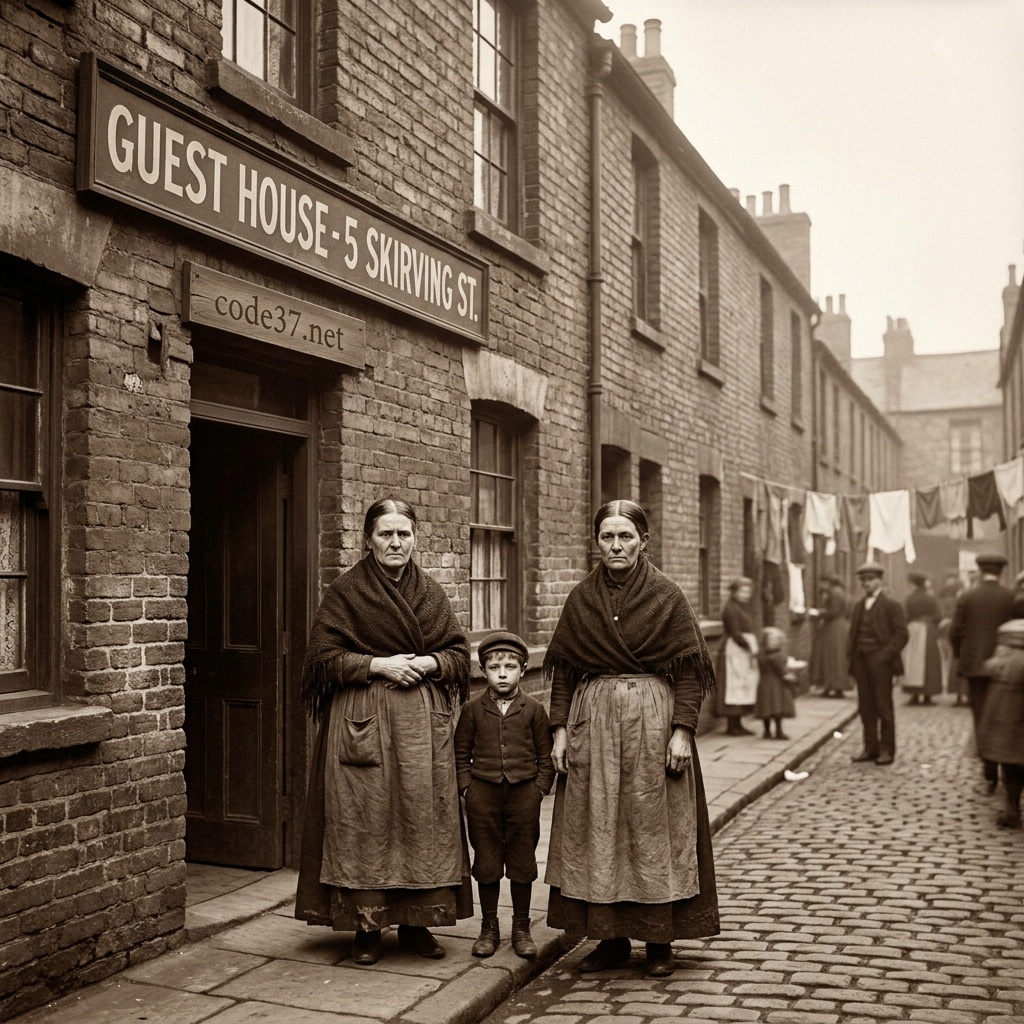
Known as the “Black Widows of Liverpool,” the Irish sisters Catherine and Margaret Flannagan went down in English criminal history; they were so famous that their wax figures were on display for nearly a century in Madame Tussauds’ “Chamber of Horrors” in London. In the 1880s, the sisters, along with Catherine’s son John, had emigrated to Liverpool due to the Great Famine in Ireland, where they opened a boarding house at 5 Skirving Street in a poor neighborhood. Thomas Higgins, along with his 6-year-old daughter Mary, and Patrick Jennings, along with his 14-year-old daughter Margaret, rented rooms there. Although the sisters—who were both severely alcoholic and illiterate—had enough lodgers, they still lived in extreme poverty. As their financial situation continued to deteriorate, they became aware of funeral societies. These were essentially non-profit life insurance organizations. All members paid their premiums, and the money was paid out to the surviving relatives in the event of a loved one’s death. The two sisters quickly hatched a diabolical plan to make a lot of money very easily. Their greed was so great that they didn’t even shy away from killing Catherine’s son John, who became their first victim. When 22-year-old John—who was in perfect health—suddenly died, having previously been covered by a large life insurance policy, no one suspected that the two sisters might have had anything to do with his death. Without arousing suspicion, Catherine received 71 pounds from the insurance company, as people died daily in the slums. Two years later, in October 1882, Margaret married her lodger, Thomas Higgins; his 8-year-old daughter, Mary, died just as suddenly as the 19-year-old lodger, Margaret Jennings, did a few months later. In both cases, the insurance company paid out a considerable sum to Margaret. Rumors quickly began to circulate that the sudden deaths could not be a coincidence, which is why the sisters, along with Margaret’s husband, moved twice. But the sisters had developed a taste not only for killing but also for making a quick buck, which proved to be their undoing with their final victim. This victim, in September 1883, was Margaret’s 45-year-old husband, Thomas Higgins, who suddenly fell seriously ill. The doctor who was called diagnosed dysentery, the cause of which was presumably his heavy consumption of cheap whiskey. He prescribed opium and castor oil to relieve his symptoms. But two days later, Thomas was dead. The attending physician listed dysentery as the cause of death on the death certificate. But Thomas’s brother had become suspicious after learning that his brother had been insured by five different insurance companies for a total of a substantial 100 pounds. For this reason, he requested that the authorities perform an autopsy on his brother. During the autopsy, traces of arsenic were found in Thomas’s organs. This led to a search of the sisters’ home, during which investigators discovered not only a white powder but also traces of arsenic in a shopping bag belonging to Margaret Higgins. The investigation revealed that the sisters had obtained the arsenic by soaking arsenic-laced flypaper. In a pub in Liverpool, investigators apprehended the two sisters and took them to the police station for questioning. While Margaret was arrested, her sister Catherine managed to escape; she was not apprehended until 10 days later in the Liverpool suburb of Wavertree. Both sisters were charged with the murder of Thomas Higgins on October 16, 1883. Catherine made a full confession, in which she accused her sister Margaret of being the instigator. She also claimed that they belonged to a criminal ring consisting of several women who used arsenic to eliminate people. Since Catherine contradicted herself, no one believed her, though she had presumably told the truth. The three-day trial in February 1884 caused a huge public sensation. The courtroom was packed to capacity every day of the trial, and the press pounced on the so-called Borgia sisters, who were found guilty by the jury and sentenced to death by hanging. This sentence was carried out on March 3, 1884, at Kirkdale Prison in front of 1,000 onlookers. The two sisters were hanged at the same time and were thus united even in death.