Isabella Mueller (crime writer)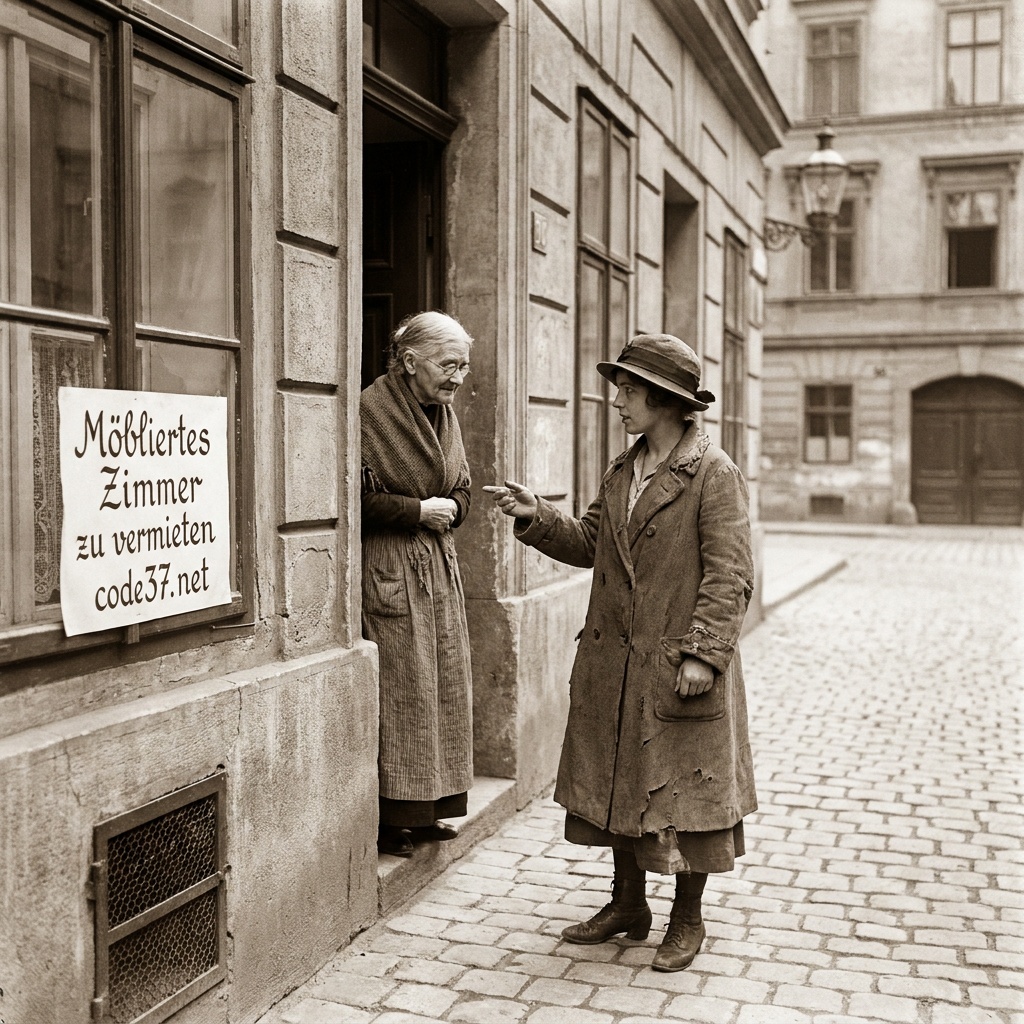
A young woman who struck fear into the hearts of the people of the Austrian capital, Vienna, during the First World War was Leopoldine Kasparek, better known as ‘The Strangler of Vienna’. She was born in Vienna on 12 November 1893. Her parents were proud coffee-house owners who, as their daughter from a good family, ensured Leopoldine led a comfortable life. However, when Leopoldine fell in love with, of all people, a waiter employed by her parents and married him despite her parents’ objections, her contact with them became extremely sporadic. Leopoldine’s husband, with whom she had a young child, was called up as a soldier to the Russian front in the very first months of the war. From then on, Leopoldine had to provide for herself alone. Leopoldine, who had developed a penchant for theft at an early age, now committed several robberies and acts of blackmail, for which she received short prison sentences. Leopoldine justified these acts by claiming she had committed them out of desperation. No one suspected that Leopoldine would develop into a cold-blooded serial killer who targeted elderly, wealthy ladies. In total, Leopoldine attacked 14 elderly ladies, four of whom died. Leopoldine always followed the same modus operandi. Leopoldine would enquire with elderly, single ladies about furnished rooms or respond to newspaper advertisements offering domestic work. In this way, she gained the trust of the elderly ladies, whom she would strangle at a suitable moment until they were unconscious or even dead, before taking their valuables and money. She committed her first murder at the age of just 22. She then murdered 56-year-old Marie Wurisch on 16 February 1916, from whom she had rented a room at 56 Erdbergstraße. Leopoldine strangled the widow – who suffered from heart disease and was blind in her right eye – until she lost consciousness. She then doused her with paraffin wax and set her alight without the slightest sign of remorse. Initially, the police assumed it was a tragic accident. However, once signs of strangulation were found on Marie Wurisch’s larynx, it became clear that this was a homicide. Leopoldine had developed a taste for murder; on 21 August 1916, she strangled and robbed the 80-year-old crockery dealer Cäcilie Höltschl. Her final victim was 72-year-old Stefanie von Mack on 10 September 1916. After neighbours of the murdered Marie Wurisch had told the police they suspected Leopoldine, she was questioned. Leopoldine eventually confessed to the murder of the widow Wurisch. Leopoldine was arrested in September 1916. In order to be transferred from prison to hospital and then escape from there, Leopoldine swallowed a large darning needle. This had to be surgically removed. Once Leopoldine’s condition had stabilised, she strangled an elderly nurse until she lost consciousness. She put on the nurse’s uniform and fled the hospital, but was recaptured after only half an hour. Even whilst in pre-trial detention, Leopoldine planned a robbery, which was foiled by the betrayal of a cellmate. There was indeed a great deal of criminal energy in the seemingly innocent Leopoldine Kasparek. During the trial at the Vienna Special Court, Leopoldine Kasparek showed no remorse whatsoever. She boasted about her crimes and cursed the judges and jury. After four days of hearings, Leopoldine Kasparek was sentenced to death by hanging for the crimes of theft (both committed and attempted), robbery with murder, and malicious damage to another’s property by setting fire to the clothes of the murdered Marie Wurisch and the furnishings of her flat. Without batting an eyelid, she accepted the verdict. Yet Leopoldine was fortunate, as the Emperor granted her a pardon. The Supreme Court sentenced Leopoldine Kasparek to life imprisonment in a high-security prison, a sentence aggravated by a day of fasting every quarter and solitary confinement in a dark cell on 16 February each year, the anniversary of the widow Wurisch’s death. Leopoldine Kasparek died in May 1921 at Neudorf Prison. Thus ended, in such an unspectacular manner, the life of Leopoldine Kasparek, the ‘Strangler of Vienna’.