Isabella Mueller (crime writer)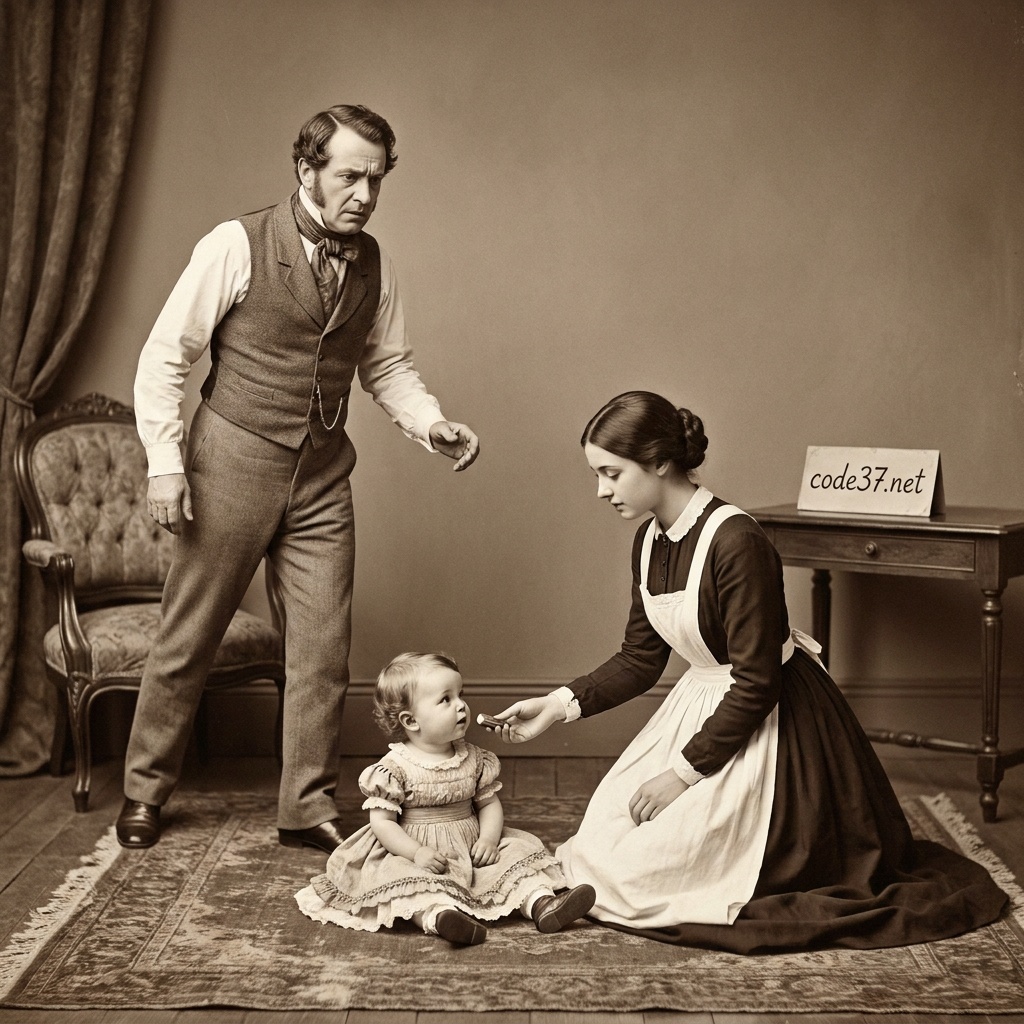
One of the most chilling female serial killers in criminal history was the 15-year-old Frenchwoman Marie-Françoise Bougaran, who, in an extremely perfidious manner, killed the children entrusted to her care whilst working as a nanny. Marie-Françoise was born on 4 September 1850 in the French town of Plabennec in north-western Brittany. Her mother passed away when she was just 5 years old. When Marie-Françoise was 10, her father also died. Shortly afterwards, her six-year-old little brother and her seven-year-old half-brother also passed away, leaving Marie-Françoise an orphan. Having endured so much death and suffering at such a young age, Marie-Françoise was adopted by her uncle, a miller in Ploudaniel, following these tragic losses. There, she learnt to read and write from a teacher in Trégarantec. Marie-Françoise was an intelligent girl, but one who allowed little close contact with those around her. Consequently, living with her new adoptive family proved extremely difficult, which is why Marie-Françoise was sent to the French town of Lesneven to help her cousin Gabrielle Bougaran. Gabrielle ran a restaurant with her husband, where Marie-Françoise was to lend a hand. But no sooner had she arrived than Marie-Françoise complained of pain throughout her body; there was even talk of murderous thoughts. Gabrielle was suspicious of her cousin Marie-Françoise, whom she regarded not only as a liar but also as a thief, and without further ado sent her to the Robinaud family to work as a maid and nanny. Joseph-Henri Robinaud and his wife Marie-Vincente came from the French upper class; they were the parents of four children, whom Marie-Françoise was now also expected to look after. Just one month after Marie-Françoise had started her employment with the Robinaud family in October 1865, eight-month-old Josephine died, having vomited faeces a few days earlier. No one suspected that the child’s death was unnatural; in reality, she had been suffocated by Marie-Françoise, who had stuck her fingers into the baby’s mouth. Prior to this, she had broken little Josephine’s right thigh bone and two bones in her right lower leg by twisting the limb. However, this only came to light later. Just six days later, five-year-old Anna also vomited faeces and blood. The following evening, Joseph-Henri heard his daughter Anna shouting at the nanny, Marie-Françoise, and accusing her of having thrust a knife into her throat. Joseph-Henri immediately ran to his daughter Anna and confronted Marie-Françoise, who, however, vigorously denied any accusation against her, whereupon Anna’s father went back to sleep. However, after barely half an hour, Joseph-Henri was woken once more by his daughter Anna’s screams. He ran to her bedroom, where he observed Marie-Françoise removing faeces from Anna’s mouth. Joseph-Henri believed that Marie-Françoise had only been trying to help his daughter and went back to sleep. This proved to be Anna’s death sentence, for at around 3 o’clock in the morning, Marie-Françoise plunged a knife into Anna’s throat, severing her carotid artery from the inside of her throat. However, Marie-Françoise was lucky: the subsequent post-mortem, carried out by two doctors, led them to conclude that Anna had died of intestinal bleeding. This was a fatal misjudgement which, sadly, cost another life. As early as 15 November 1865, two-year-old Henri, like his siblings before him, had been vomiting faeces. From 23 November onwards, he also began to cough up blood. Three days later, Marie-Françoise inserted a knife into his mouth, using it to slit his carotid arteries from the inside of his throat. Marie-Françoise claimed that Henri, who had suffered from the same symptoms as his sister Anna, had also died of intestinal bleeding. The parents did not harbour even the slightest suspicion against Marie-Françoise, which is why no post-mortem examination was carried out. Following these tragic deaths, Marie-Françoise took up her new post with the Menou family on 29 November 1865. Just one day later, François Menou heard his two-year-old daughter Marie screaming in horror. He immediately rushed to her and caught Marie-Françoise red-handed as she was stuffing faeces into his daughter’s mouth. Mr Menou sacked Marie-Françoise with immediate effect and threw her out of his house. He also informed the gendarmerie, who, following the incident, immediately recognised a link to the Robinaud family’s deaths. The children’s bodies were exhumed and autopsies carried out. This finally brought the whole horrifying truth to light. Marie-Françoise was arrested and put on trial. Even before the trial began, she confessed that she had fed the children faeces. On the very evening of her confession, she ate her own faeces. This caused her to vomit blood. Marie-Françoise had intended to take her own life in this way. She wanted to suffer the same torments that her victims had endured before their deaths. However, Marie-Françoise’s suicide attempt failed. In April 1866, the trial took place before the Assize Court in Quimper on charges of the triple murder of the Robinaud family’s children. Marie-Françoise’s lawyer pleaded for a finding of diminished responsibility, arguing that his client suffered from juvenile insanity, ‘dementia praecox’. But the jury would have none of it; they found Marie-Françoise fully responsible for her actions and sentenced her to 20 years’ imprisonment. Marie-Françoise was taken to prison in Rennes, where, at her own request, she was transferred to the prison in Saint-Laurent-du-Maroni after serving five years. In 1874, Marie-Françoise married a convict 32 years her senior, who was serving a sentence for the murders of his two former wives. Just one year after the wedding, Marie-Françoise died at the age of 24. Thus, one of the most brutal female serial killers was finally consigned to history.