Isabella Mueller (crime writer)
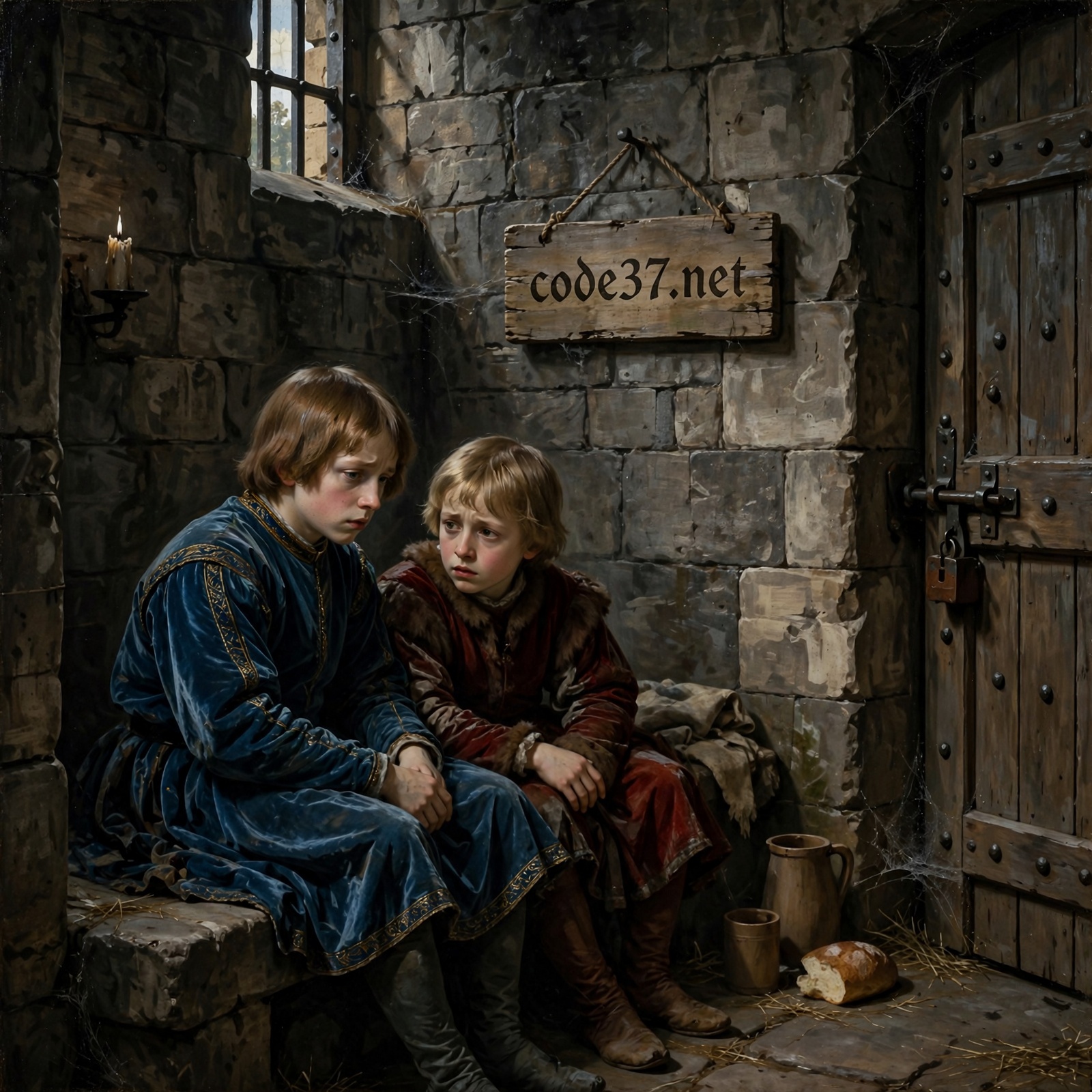
One of the unsolved mysteries of English history is the mysterious disappearance of the two young princes, Edward V and his brother Richard of Shrewsbury. This myth of the lost heirs still fascinates people from all over the world, who wonder what really happened to the young royals in the Tower? This dark chapter in English history unfolded in the summer of 1483. The two young princes, Edward V and his younger brother Richard of Shrewsbury, Duke of York, were imprisoned in the Tower of London and were never seen again. Their fate remains one of the greatest mysteries of British history to this day and has since sparked countless speculations and conspiracy theories. The House of York was a powerful dynasty during the Wars of the Roses, a series of bloody conflicts over the English throne between the Houses of Lancaster and York. The death of King Edward IV in April 1483 set in motion a chain of events that led to the disappearance of his sons. Edward IV left the kingdom to his twelve-year-old son, Edward V, whose coronation never took place. Immediately after his father’s death, Edward V was placed under the protection of his uncle Richard, Duke of Gloucester. Richard had made a name for himself as a loyal and valiant knight, but his true ambitions were soon to come to light. Under the pretext of protecting his nephew from supposed enemies, Richard had him and his younger brother Richard taken to the Tower of London – ostensibly for their own protection. In an unexpected political manoeuvre, Richard dissolved Parliament and had Edward IV’s marriage to Elizabeth Woodville annulled, thereby rendering Edward IV’s children illegitimate bastards. With this move, Richard paved the way for his own coronation as King Richard III on 6 July 1483. Accounts of the brothers’ final months in the Tower are sparse and contradictory. Some sources claim that the brothers were regularly seen playing in the Tower’s garden. However, these reports cease in the autumn of 1483. It appears as though the boys suddenly vanished without a trace. Ever since the princes’ disappearance, historians and amateur detectives have been trying to solve the mystery. Numerous theories about their deaths are circulating. The best-known theory suggests that Richard III had his nephews killed to secure his own rule. Richard had the strongest motive, as the princes’ existence threatened his legitimacy. The lack of information about their whereabouts reinforces the suspicion against him. Another theory suggests that Henry Tudor, who laid claim to the throne through his marriage to Elizabeth of York, had the princes eliminated. Following his victory over Richard III at the Battle of Bosworth in 1485, he claimed the throne for himself. Some speculate that Henry subsequently covered his tracks to ensure that no one could challenge his rule. Another theory is that Henry Stafford, 2nd Duke of Buckingham, was the mastermind behind the disappearance of the two princes. He harboured ambitions for the throne and was embittered by the meagre reward he received after supporting Richard III. However, his involvement remains a matter of debate. In 1674, workers renovating the Tower discovered two skeletons, believed to be the remains of the princes. The remains were interred in Westminster Abbey. In 1993, an examination of the bones was carried out. This revealed that the skeletons matched the ages of the missing princes. According to recent reports, a group of historians and forensic scientists has drawn up plans to re-examine the remains. With the aid of state-of-the-art technology, they hope to be able to definitively identify the remains as those of the princes, thereby reaching a final conclusion about their fate. The drama surrounding the princes in the Tower has inspired numerous writers and artists. William Shakespeare portrayed Richard III in his play of the same name as a ruthless murderer of his nephews, which significantly shaped the public image of the king. Poets such as Sir Thomas More and historians such as Alison Weir have contributed to the legend by circulating various hypotheses and narratives. The fate of the Princes in the Tower remains one of the most fascinating and tragic mysteries in history. Despite numerous theories and centuries of speculation, it remains unclear who was responsible for the princes’ disappearance. The likelihood that we will ever learn the whole truth is slim, but the search for answers will undoubtedly continue. In a world characterised by intrigue and power struggles, Edward V and Richard of Shrewsbury were innocent victims of wider political machinations. Their mysterious fate reminds us that history is often more complicated than it seems at first glance, and that even the most powerful dynasties are not immune to betrayal.