Isabella Mueller (crime writer)
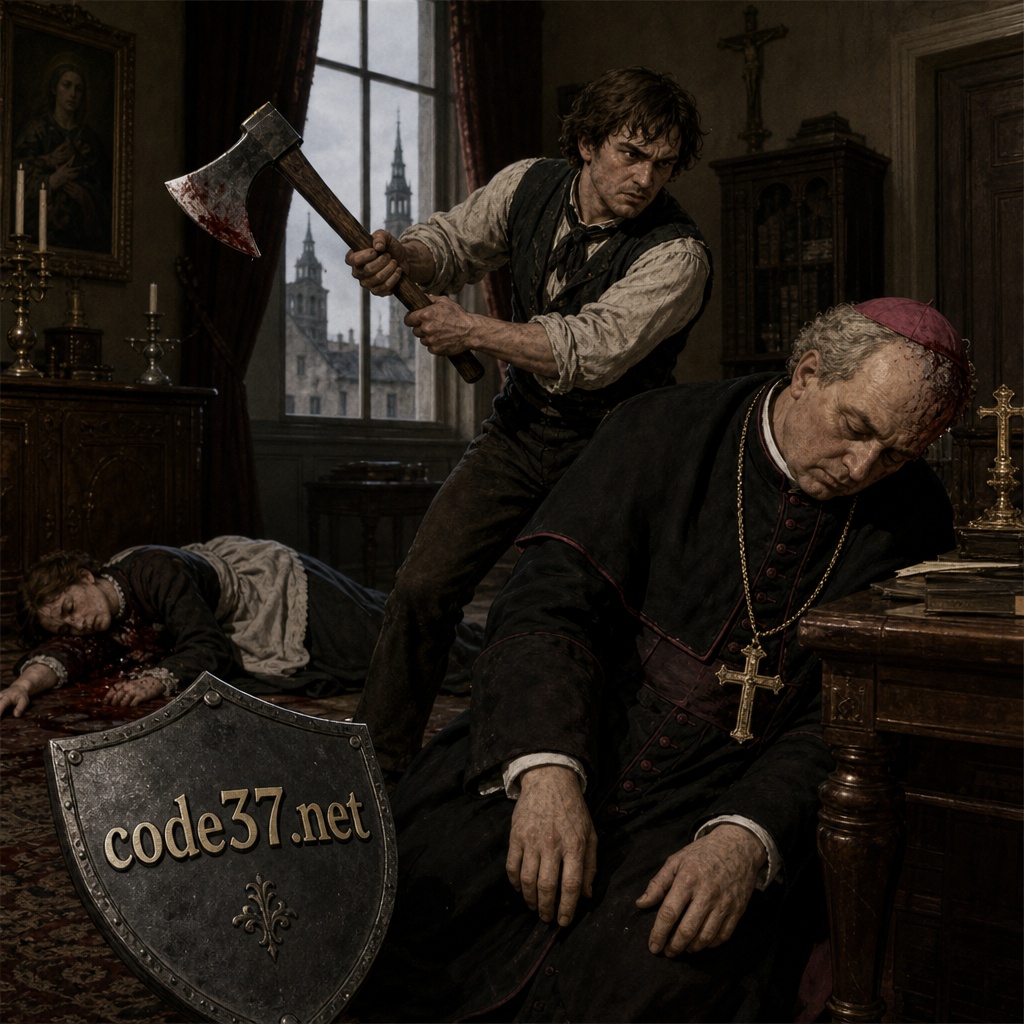
The robbery and murder of the Bishop of Ermland, Stanislaus von Hatten, is a dark chapter in German criminal history, revealing not only the brutality of the crime itself, but also the cruel punishments that were subsequently imposed. In the heart of East Prussia, in the town of Frauenburg, a crime took place almost 200 years ago that caused a public outcry and continues to horrify people to this day. The Bishop of Ermland, Stanislaus von Hatten, fell victim to the tailor’s apprentice Rudolph Kühnapfel. This tragic story is not merely an isolated incident, but reflects the cruelty and brutal justice characteristic of the spirit of the times. The crime took place in 1841 in Frauenburg, when the tailor’s apprentice Rudolph Kühnapfel, driven by greed, murdered Bishop Stanislaus von Hatten and his housekeeper. Kühnapfel first attacked the housekeeper, Rosalie, with a hatchet, before surprising the bishop from behind with the same weapon. The horrific scene that unfolded suggests that Kühnapfel acted not only for financial reasons, but was also driven by a deep-seated hatred. These motives highlight the psychological complexity of the perpetrator, the roots of which can be traced to the social and economic realities of the 19th century. A confession followed swiftly, and the Royal Higher Regional Court in Königsberg convicted Kühnapfel of two counts of robbery and murder. His sentence was the deadly torture of breaking on the wheel. On 7 July 1841, this barbaric method of execution was carried out on him. At that time, breaking on the wheel was not only a cruel punishment but also a public spectacle. People flocked to witness this bloody spectacle. It was a spectacle that evoked both horror and a morbid fascination. Since then, scholars and historians have sought to document the circumstances and brutality of such punishments. Wolfgang Schild, a legal historian, has described the practices of breaking on the wheel in detail. First, the condemned man’s bones were shattered. These brutal blows were intended to contort the body into an agonising position without causing immediate death. The battered body was then placed on a wheel and laced into it so that the broken limbs were fitted into the spokes. The sight was gruesome, and the process could take days before the offender actually died. It was not merely a punishment, but a cruel spectacle of death. The folkloric significance of these public executions is reflected in the fact that they often became social events. Taverns and market stalls seized the opportunity to entertain the spectators and provide them with food and drink whilst they waited for the gruesome spectacle. People lived in a world where cruel punishments were regarded as the norm, and the executions became a social event. But what motivated society to stage such cruel spectacles? In his “History of Jurisdiction”, Wolfgang Schild argues that it was less about deterrence and more about the fulfilment of emotional needs. For many, watching the spectacle was a way of expressing deep-seated feelings such as anger, fear or even joy. These bloodthirsty spectacles were rooted in the context of the divine order. They were intended to bring earthly justice into harmony with divine justice. The torment of the condemned was not merely a punishment, but also a religious ritual. The various methods of execution reflect the diversity and cruelty of the justice system of the time. Wheeling was reserved for murderers and the most serious criminals, whilst thieves were often punished by beheading or hanging. Witches and other ‘demons’ frequently met their end at the stake. The barbaric treatment of human life was a harrowing feature of this era. It is important to emphasise that public executions in the Middle Ages and early modern period were often regarded as social events. These kinds of spectacles attracted large crowds and were often accompanied by festivities. In the case of Kühnapfel and others like him, the execution was not merely a matter of justice, but also a popular pastime. Contemporary accounts show that spectators were prepared to camp outside the scaffold for days or even weeks in order to witness such gruesome spectacles. This fascination with the suffering of others testifies to a deep-seated cultural pattern in which death and suffering themselves became part of social life. When considering the death penalty and its implementation, it becomes clear that 19th-century society had a complex relationship with violence. The variety of methods of execution reflects not only the inhumanity of the justice system of the time, but also the social climate of fear and control. Individuals were often punished in particularly dramatic ways to set an example to other potential criminals. The wheel, like other forms of execution, served a specific social purpose: it was intended not only to punish the perpetrators, but also to remind society of its limits. The story of Rudolph Kühnapfel and the associated method of breaking on the wheel shed a telling light on the dark sides of human nature and the workings of the justice system at a time when the venting of emotions and the quest for justice often led to a bloody spectacle. Whilst the social changes of the 19th century gradually led to a reform of criminal law, the Kühnapfel case remains a poignant example of the cruelty and collective wounds of an era in which an individual’s life and death were often sacrificed to the craving for public entertainment.