Isabella Mueller (crime writer)
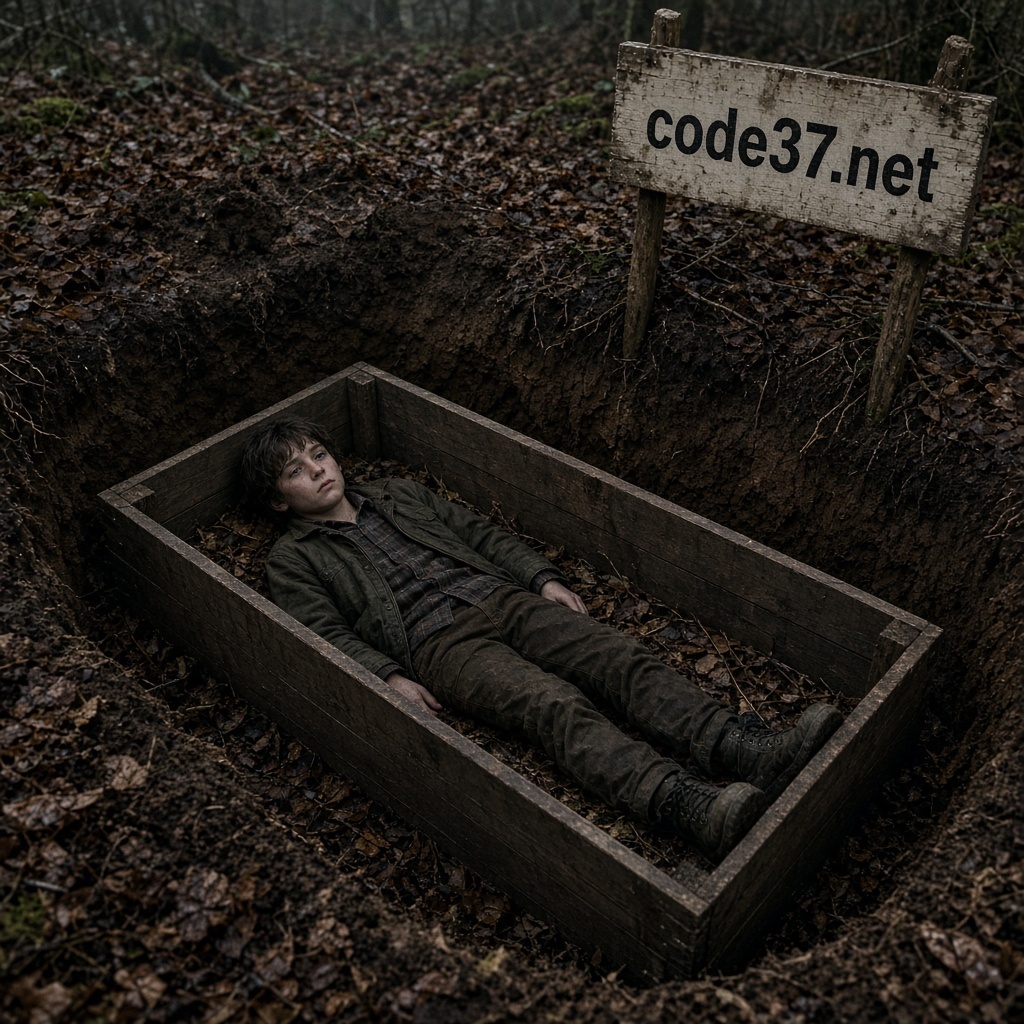
In early 1973, 13-year-old Paul Martin Andrews endured a veritable nightmare: not only was he kidnapped, but he was also locked in a damp wooden box buried in the woods, chained up, beaten and raped several times a day – and this went on for eight days. It was 11 January, a day that would change Paul Martin Andrews’ life forever. It snowed so heavily in Portsmouth that day that it was considered the heaviest single-day snowfall since 1963. Because of the heavy snowfall, the pupils had the day off school. One of them was Paul Martin Andrews. Paul Martin Andrews was born in 1959 and was the eldest of three children. With both parents working, he and his siblings grew up as so-called ‘latchkey children’, often left to their own devices. Life changed drastically when his parents separated whilst Andrews was just eleven years old. The divorce followed a year later. Despite all the adversity, the family managed to get through this difficult time. When Andrews was 13, his mother remarried and moved with the children from rural Isle of Wight County to her new husband’s house in Portsmouth. Here, a whole new world of temptations opened up for the young Andrews, with cinemas, amusement arcades and cigarettes. However, his nicotine habit put such a strain on his pocket money that he took a job as a newspaper delivery boy. On 11 January, Andrews had to deliver newspapers again, but this time, due to the snow-covered streets, he had to do so on ice skates and with a sledge. When he returned and realised there wasn’t a drop of milk left in the house, Andrews set off to buy some. On the way there, about three blocks from his home, a blue van pulled up alongside him. The driver asked him if he’d like to help move some furniture at his brother’s house in exchange for some cash. The man introduced himself as Peewee. Andrews, who was short of cash, agreed and got into the stranger’s van. During the journey, Andrews spotted a long knife in the van, which greatly alarmed him. After a stop at a shop, they returned to the van, and once again Andrews felt the urge to flee, but his fear of possible consequences stopped him. But Peewee managed to calm Andrews down by engaging him in conversation. After a 30-minute drive, they arrived at Dismal Swamp State Park, a wooded area on the border between the US states of Virginia and North Carolina. Peewee turned onto a secluded road. He then parked the van and they both walked to a hunting hide, which Peewee described as his brother’s ‘game box’. It was situated beneath a mound of earth, beneath which a concealed metal hatch glinted in the snow, leading to a plywood box buried in the ground. Although alarm bells were ringing in Andrew’s head, he climbed into the box at Peewee’s urging to help him load the supplies they would need during the hunting season when they were watching game for extended periods. No sooner was Andrew inside the box than Peewee pulled out the long knife he’d brought from the van and announced: “I’ve got bad news for you. You’ve just been kidnapped.” Quick-witted, Andrews tried to wrest the knife from Peewee, but Peewee struck him with all his might in the face and overpowered him. He tied Andrews’ legs and arms and chained him up in the small, damp box. That was the start of Andrews’ ordeal, as Peewee raped him several times a day and severely abused him. The repeated sexual assaults left not only physical but also deep psychological scars. Peewee showed no sign of affection or remorse. He viewed Andrews merely as an object of his sick fantasies. Despite this nightmare come true, Andrews soon devised a way to reduce the frequency of the abuse by constantly trying to engage his tormentor in conversation. As the week progressed, the kidnapper’s carefully planned schemes gradually began to lose their effect. With no clear escape plan, Peewee grew increasingly nervous. Meanwhile, after her brother had failed to return from fetching milk, Andrews’s sister Jennifer had immediately informed her parents, who alerted the police. The police promptly launched a major search operation. Initially, it was suspected that Andrews might have accidentally drowned in one of the waterways or rivers flowing through Portsmouth and Norfolk. For this reason, the Coastguard had a nearby waterway drained and the fire brigade carried out a helicopter search. But there was no trace of Andrews. After a week of unimaginable suffering, during which Andrews lived in constant fear that Pewee would kill him, Pewee left him alone in the cramped, bitterly cold box. But Andrews was lucky. The next morning, he heard the sounds of hunters out looking for rabbits. Andrews screamed for his life and actually managed to get them to come to his prison. Andrews told them that he had been abducted. They immediately alerted the police, who rescued Andrews and took him to Obici Memorial Hospital, where his mother, Ann, was working as a nurse. Following Andrews’ rescue and a brief stay in hospital, the next, no less painful phase began for him: dealing with psychologists who showed him little understanding and admitted him to a psychiatric institution. But what became of Andrews’ abductor? Based on Andrews’ description, Peewee was identified as Richard Alvin Ausley. He was a known child abuser who, as far back as 1961, had abducted and repeatedly raped a 10-year-old boy. He was sentenced to 26 years for this, but was released on parole as early as 1971. On the day Ausley abducted Andrew, he was due to appear in court to face charges of abusing a 14-year-old boy. Ausley was sentenced to 48 years’ imprisonment for the abduction and mistreatment of Andrew; this sentence was increased by five years after another boy came forward, claiming he had been sexually abused by Ausley on multiple occasions from 1972 onwards. When Ausley was due to be released on parole in 2002, this triggered a panic in Andrew. Andrew had remained silent about his traumatic experience for almost three decades. But Andrews now broke that silence and went public with his story. He campaigned for the passing of legislation on the civil commitment of sexually violent offenders. This legislation was intended to ensure that extreme sex offenders were placed in psychiatric institutions after serving their sentences. This law on the civil commitment of sex offenders was finally passed a year later. Andrews, who is now open about his homosexuality, was grateful for this. For a long time, he had kept this a secret, as Ausley repeatedly portrayed himself as a victim of Andrews, claiming that Andrews had seduced him. Ultimately, however, Ausley’s fate caught up with him. On 13 January 2004, at the age of 64, he was killed in Sussex I Prison in Waverly by a 24-year-old inmate, Dewey Keith Venable. The post-mortem revealed that Ausley had been strangled and had suffered blunt force trauma to the upper body. Venable had been serving an 18-year prison sentence since 2004 for car theft, kidnapping and robbery. He himself had been the victim of a paedophile named Dennis L. Sewell, who had warned the prison guards never to put him in a cell with a child molester. But when this did happen, Venable saw red, and his sentence for Ausley’s murder was extended by 12.5 years. For Andrews, Ausley’s death marked yet another closure to a chapter that he will never forget, any more than he will ever forget the ordeal he endured. The grim story of Paul Martin Andrews is not only a symbol of injustice and pain; today, it also serves as a reminder to the community to stand together for justice and healing.