Isabella Mueller (crime writer)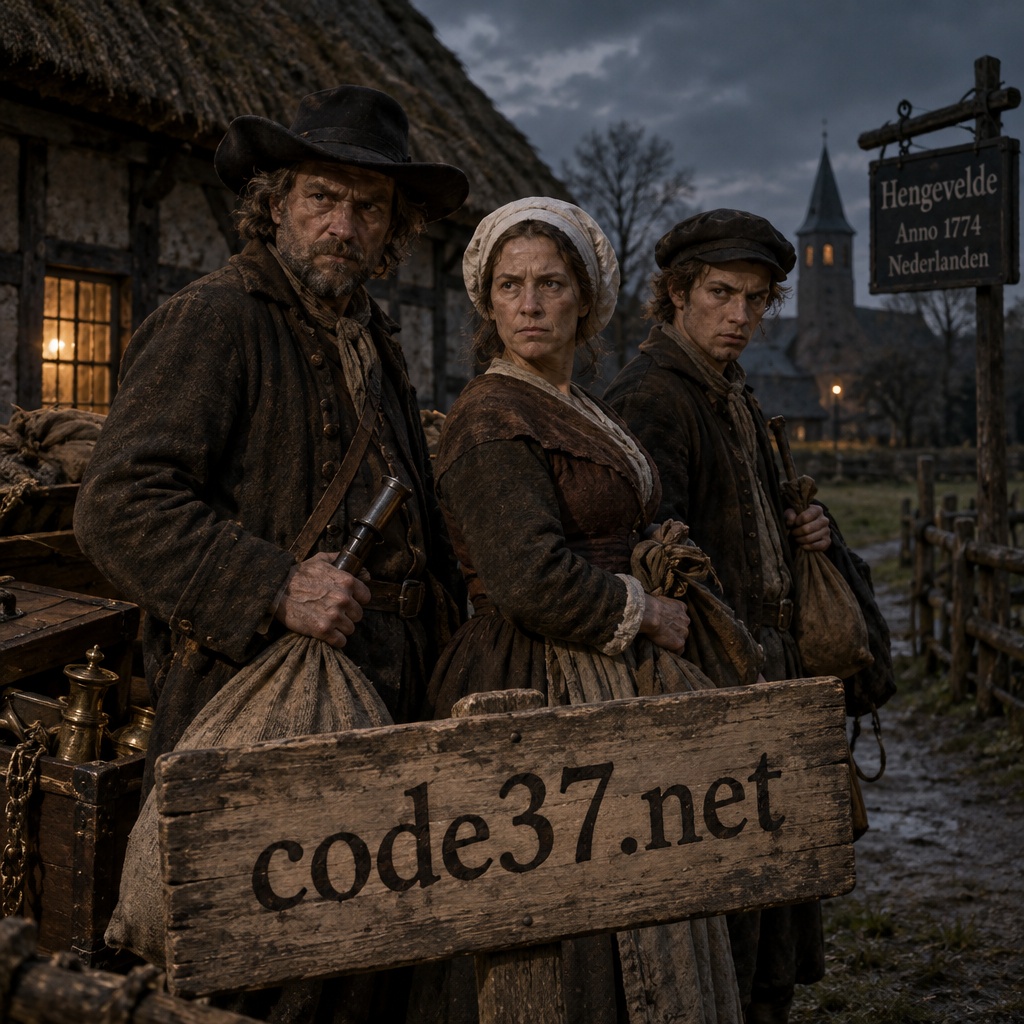
Klaas Annink, better known as Huttenkloas, is a colourful figure in the history of Dutch crime. Born on 18 June 1710, the son of Jannes Annink and Geertrui Sueters in Bentelo, a small town in Twente, he left a lasting impression through the crimes of which he was accused, as well as through the sinister nature of his deeds. This essay examines the life and murders of Huttenkloas, his arrest and the significant events that led to his downfall. The exact circumstances of Klaas Annink’s early life are sparsely documented. He grew up in Bentelo, a rural area characterised at the time by a farming community. Living conditions were harsh and poverty was widespread. It was in this environment that Annink’s character was formed, and possibly also his propensity for violent crime. It is believed that his family’s dire straits led him to embark on criminal activities alongside his wife, Aarne Spanjers – whom he married in 1734 – and his son, Jannes. Together, they formed a notorious family who were held responsible for numerous burglaries and murders in and around Hengevelde. These crimes, often committed under the guise of necessity, made them feared figures in the region. In 1774, Klaas committed his first murder together with his son Jannes. Their victim was their second cousin, Harnem Pompen, who was living with them. As he was aware of their criminal activities, the father-and-son duo decided to get rid of him. They tied Pompen to a chair and then smashed his skull with two blows from an axe. Klaas and his wife then stripped him before burying him on their property. In March 1775, the father-and-son pair committed their second murder, that of the hosiery merchant Willem Stint. He had often stopped by the family’s home after his sales rounds. This time he had made a tidy profit, which is why they killed him. However, his father, a respected merchant from Hanover, set about investigating his son’s whereabouts. In doing so, he came across the Annink family, where his son had last been seen alive by witnesses. He filed a report with the police. A thorough investigation was launched. This ultimately led to the arrest of Klaas, his wife Aarne, his son Jannes and his youngest son Gerrit. The family was imprisoned in Oldenzaal Prison, where they awaited their fate. One instrument of torture in Oldenzaal Prison was particularly notorious: the so-called ‘shackle chair’. This chair was not only a method of punishment but also a means of extracting confessions from prisoners. According to legend, many prisoners who refused to confess were made to endure excruciating pain on this chair, which was fitted with chains and nails. It is said that Klaas Annink, too, was tortured on this chair for no fewer than 114 days and eventually confessed to having committed the murders. Annink’s confession was decisive for the course of his trial. It revealed the cruel brutality of his crimes and caused outrage amongst the public. However, the methods used to extract the confession also led to considerable controversy and raised questions about the ethics of the justice system at the time. The trial of Klaas Annink and his family was the subject of public interest from the very beginning. Many people in the region were keen to see how the courts would deal with the crimes of the Huttenkloas. The trial took place under exceptional circumstances, as the public was seeking revenge for the crimes committed. Ultimately, Klaas Annink, his wife Aarne and their son Jannes were found guilty and sentenced to death. Their son Gerrit was put on a ship bound for the East and West Indies with orders that he be kept there. On 17 September 1775, the death sentences were carried out. Over 20,000 people witnessed the execution at the gallows field in Oldenzaal. First, Aarne was killed by a stranglehold. The father and son were then laid on a beam on the ground, where the executioner struck their bodies with a wheel until almost all their bones were broken. He then struck their skulls with the executioner’s axe. Their bodies were later buried on the gallows field. The barbaric execution of Klaas, Jannes and Aarne marked the brutal end to their criminal careers. However, the legacy of Huttenkloas lives on to this day, not only in the history books but also in local culture. The chair he sat on, the ‘Chair of Huttenkloas’, is now on display at the Palthehuis Museum in Oldenzaal. This artefact serves as a reminder of the region’s dark history and the horrors perpetrated by Klaas Annink and his family. Furthermore, the name Huttenkloas has since gained widespread recognition and is now also adopted by local businesses. The Hengelose Huttenkloas B.V. brewery uses his name to produce a beer that keeps the legend alive. Alexander Schoemaker, a Dutch accordionist and singer, also released a CD in 2009 exploring the legends of Twente, including the ballad of Huttenkloas. These cultural references demonstrate just how deeply the stories about Klaas Annink are woven into the region’s collective memory. The life of Klaas Annink, alias Huttenkloas, is a complex mix of poverty, crime and public sensationalism. His deeds and the consequences that followed shed light on the darker sides of human nature and the challenges facing society at that time. Despite his violent legacy, interest in his story remains undiminished, and it is likely that the name Huttenkloas will remain part of Twente’s culture and history for a long time to come. The tale of Klaas Annink serves as a cautionary tale and represents a fascinating chapter in the history of Dutch crime.