Isabella Mueller (crime writer)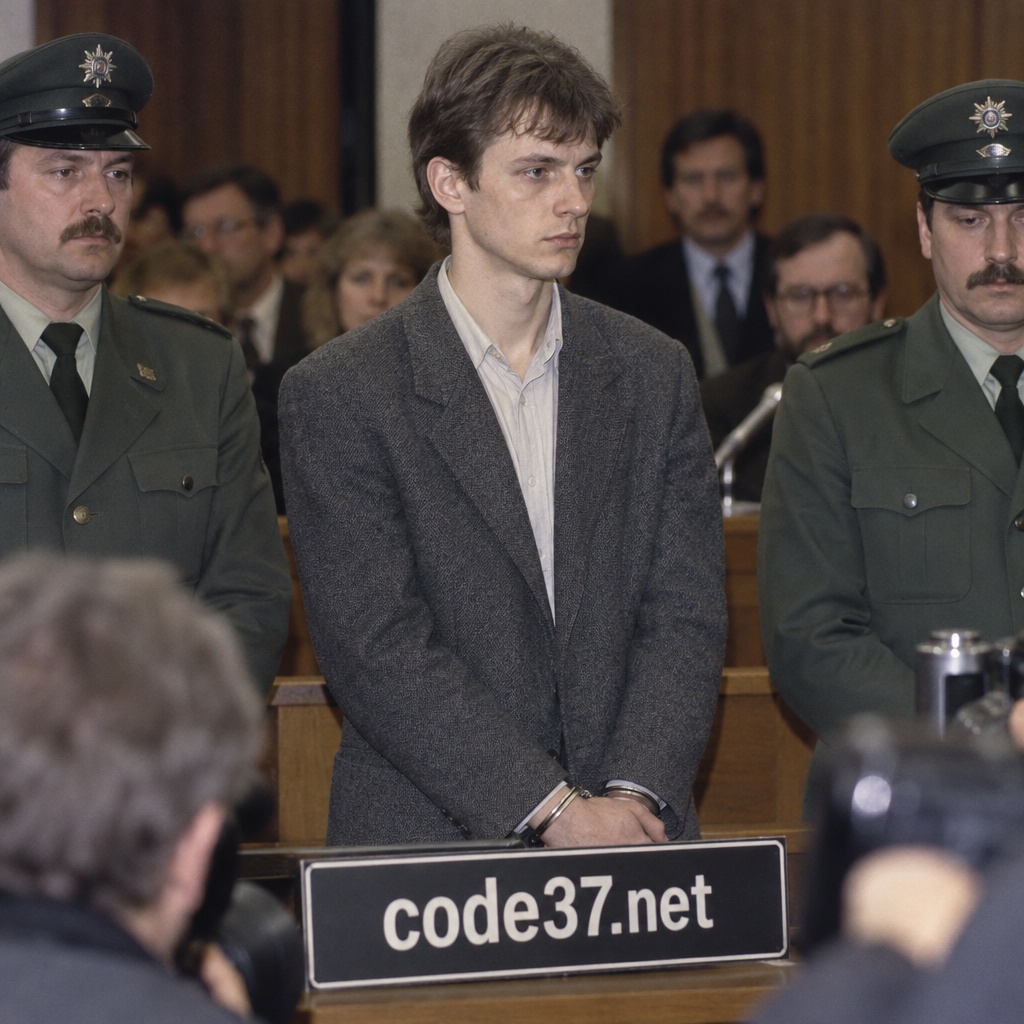
It was 10 April 1987 when an oppressive silence hung over the court building in Aachen. The whispers of the public were drowned out by the gravity of the charges. Standing before the public were a man whose crimes had shaken not only the city but the entire country. Helmut Weidenbröker, a 23-year-old chemist from Broichweiden, was no stranger. His name was linked to a series of sinister crimes that had plunged the region into fear and terror. Helmut Weidenbröker was born in 1964 into an unremarkable family. His youth was characterised by a certain normality, though this was overshadowed by dark thoughts. He lived with his parents and his sister in the small town of Broichweiden, near Aachen. His intellectual talent took him to university, where he began studying chemistry. Yet behind the façade of the promising student lay a dark soul. His life took a dramatic turn when, whilst at university, he slipped into the world of crime. The incident that led to his arrest was shocking. Dressed in his sister’s clothes, he had mugged elderly women and stolen their handbags. The police managed to arrest him. Helmut confessed immediately, but gave no motive whatsoever, even after he had been sentenced to two years’ imprisonment. After serving his time in prison, Weidenbröker was released on parole. Whilst at liberty, a gruesome series of murders began, targeting young women who had all been sexually assaulted with a foreign object and then killed. The people of Broichweiden and the surrounding area lived in constant fear. It was as if a shadow had fallen over the region. The first victim was 19-year-old Marta Habermann. On 4 May 1982, Marta was on her way home from a party. She was waiting at a bus stop, her zest for life and youth seeming to radiate from her. But in the darkness, someone crept closer, and soon she became the next tragic footnote in the series of murders. Her body was found shortly afterwards. A scene of horror. Raped with a beer bottle and brutally murdered, her body was riddled with 17 stab wounds. The investigation was in full swing. The police were alarmed; the public became vigilant and frightened. The next person to go missing was Karen Fink, a 16-year-old girl who disappeared on 19 April 1983 whilst walking home from school. Her body was discovered a week later in a pond, just as tortured and riddled with countless knife wounds as Marta’s had been. The nature of the crimes pointed to a psychologically disturbed perpetrator, and the link to the previous murder was impossible to overlook. Just a few months later, whilst the wounds of the past had not yet healed, another young girl went missing. This was 18-year-old Doris Schröder. Her body was recovered on 30 August 1983 from an artificial lake near the Belgian border. The crime bore all the hallmarks of the previous murders. This time, however, her vagina had been literally torn apart by the insertion of a foreign object. Despair spread amongst the population, along with panic. The investigators were faced with a mystery. There was no explanation for these murders. At every location where one of these horrific crimes took place, the perpetrator left a trail of terror and tears. With the abduction and murder of Elke Braun on 3 June 1984, the number of victims rose further. The murderer seemed to grow bolder with every crime. His brutality was relentless. Despite the police’s passionate commitment, it seemed as though the killer was untouchable. The investigators began to focus on Weidenbröker. He had been in the vicinity of his murders, and reports from other passengers mentioned his presence at the bus stops. Yet there was no direct evidence, and he initially enjoyed his freedom whilst terrorising the town. On 6 March 1986, 18-year-old Beate Görtz disappeared. She, too, was an innocent victim in this relentless series of murders. She had just got off the bus in Broichweiden when she vanished. The search for her ended 12 days later. Her body was found in a river. The crucial clue came from the other bus passengers, who were able to recall Weidenbröker. The connection was all too clear. Following his arrest, he eventually confessed only to the murder of Beate, but the prosecution could not ignore the links to the other victims. The picture of the murderer had become clear. On 10 April 1987, the verdict was handed down against Helmut Weidenbröker. Life imprisonment for the murder of Beate Görtz. Although the authorities were certain that Helmut Weidenbröker had also brutally raped the other four women with a foreign object and then killed them, the evidence was insufficient. As the court left the room, the reverberations of his crimes could still be felt in the town for a long time to come. People gathered and breathed a sigh of relief, although the sadness over the lost souls continued to burn in their hearts. The town had paid a price. Months of uncertainty and fear had left their mark on the minds of its citizens. Some found comfort in the memory of the deceased, whilst others lived with the heavy burden of knowing that a man who had once been part of their community had harboured a monster amongst them. Helmut Weidenbröker became a legend of terror, a monument to the darkness that can lurk in human hearts, and a timeless example of how a seemingly ordinary life can plummet into abysses beyond the imagination. Yet after his conviction, the series of murders came to an abrupt halt, suggesting that Helmut Weidenbröker had indeed been the murderer of the other four women. For this could not have been a coincidence – or could it?