Isabella Mueller (crime writer)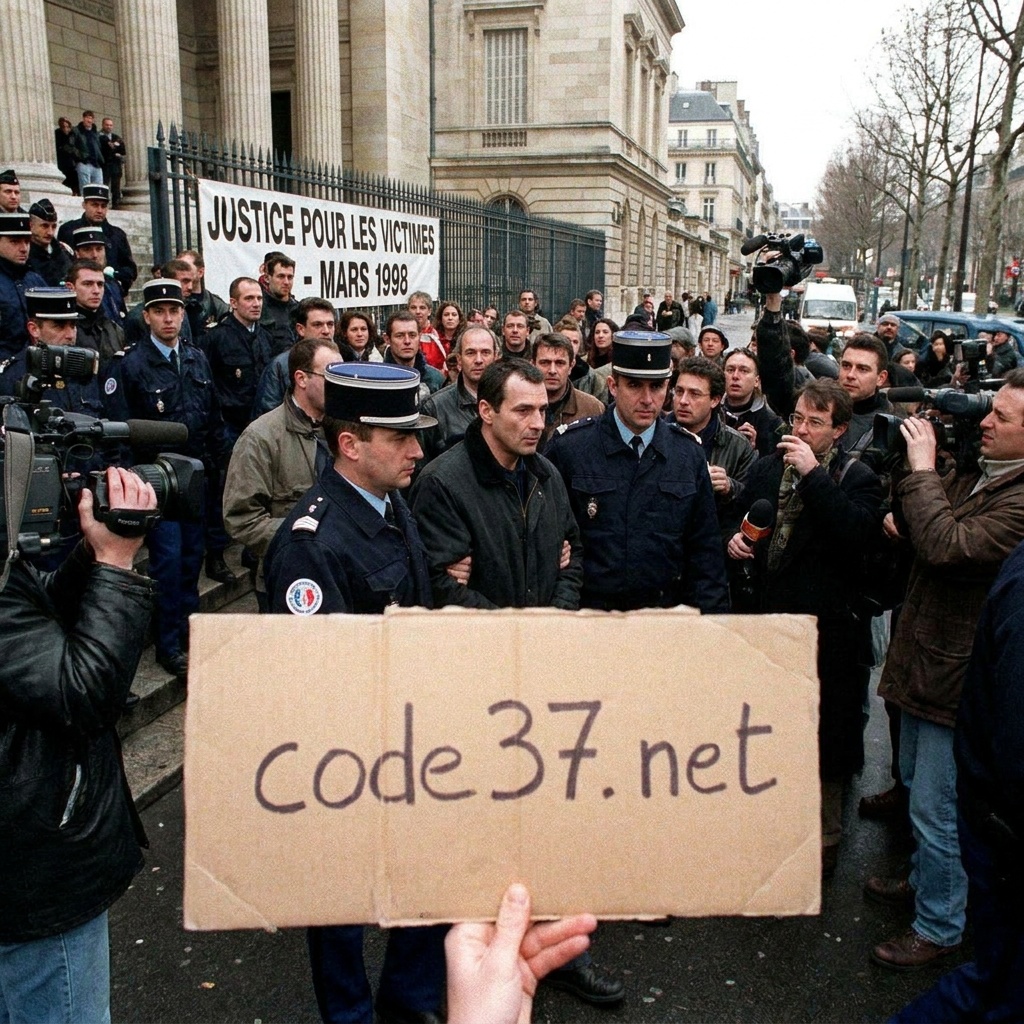
For over six years, between 1991 and 1997, a serial killer and rapist terrorised the streets of Paris, preying on young women. During this period, a total of seven women were raped, tied up and had their throats slit. As the murders took place in the Bastille district, in the east of Paris, the press dubbed the killer ‘The Beast of the Bastille’ and ‘The Killer of East Paris’. He was not arrested by the French police until 26 March 1997, although his name had already been leaked to the press two days earlier, causing a scandal. But who was this beast who murdered and raped women? He turned out to be Guy Georges, who was born on 15 October 1962 in Vitry-le-François as Guy Rampillon, the son of the Frenchwoman Hélène Rampillon and the African-American George Cartwright, a cook in the military at a NATO base. Guy spent the first six years of his life alternating between living with his biological mother and in foster care, until he became a ward of the state at the age of six. He was placed with the Morin family, who had seven biological children and 13 foster children. In 1968, Guy’s surname was changed to Georges. His mother took Guy to live with her and moved with him to California, where she intended to marry an American soldier. Guy went off the rails at an early age; he called himself ‘Jo’ after the character ‘Injun Joe’ from The Adventures of Tom Sawyer and used to run about with a knife drawn. Guy was a ticking time bomb who repeatedly attempted to strangle his foster sisters. In 1981, he committed his first rape and carried out a knife attack on Nathalie C., who survived. A year later, he attacked Violette K., who managed to escape. For this, Guy was sentenced to 18 months’ imprisonment. He then attacked Pascale N. in February 1984, raping her and stabbing her with a knife. Guy was sentenced to 10 years’ imprisonment. Whilst on day release, Guy committed his first murder. This marked the beginning of the gruesome series of murders that kept Paris on tenterhooks for over six years. His first murder victim was 19-year-old literature student Pascale Escarfail, who was found murdered and raped in her flat at 41 Rue Delambre on 24 January 1991. Three years later, on 7 January 1994, he murdered 27-year-old Catherine Rocher in an underground car park on Boulevard de Reuilly. Later that same year, on 8 November, 22-year-old Elsa Benady was found dead in an underground car park in the 13th arrondissement, and on 9 December, 32-year-old Agnés Nijkamp was found dead in her home in the 11th arrondissement. On 16 June 1995, Elisabeth Ortega managed to escape the killer. A composite sketch was produced based on her description. However, the search for the serial killer proved fruitless. Although the police had recovered DNA from the crime scenes, DNA analysis was still in its infancy, which is why the serial killer was able to continue his bloody spree in the east of Paris. On 8 July 1995, 27-year-old Hélène Frinking was found murdered and raped; on 23 September 1997, 19-year-old Magali Sirotti; and on 16 November 1997, 25-year-old Estelle Magd. In between, there were failed murder attempts and plenty of DNA traces. However, as there was no central DNA database in France, the police had no way of comparing the DNA found at the crime scenes with collected DNA samples. Guy Georges was not convicted as the perpetrator until March, after a judge had ordered a manual search for matches in the DNA records of private clinics – a move considered a breach of standard procedures. After Guy Georges was arrested, he confessed to the murders during questioning, though he denied them at his trial three years later, until he eventually broke down and admitted to the murders. He was sentenced to life imprisonment on 5 April 2001, which he is serving at Ensisheim Prison. Following this sensational series of murders, a national automated database of genetic fingerprints was set up in France. Had such a database existed, Guy Georges would have been identified as a serial killer and rapist much earlier, and further murders would have been prevented. But better late than never!