Isabella Mueller (crime writer)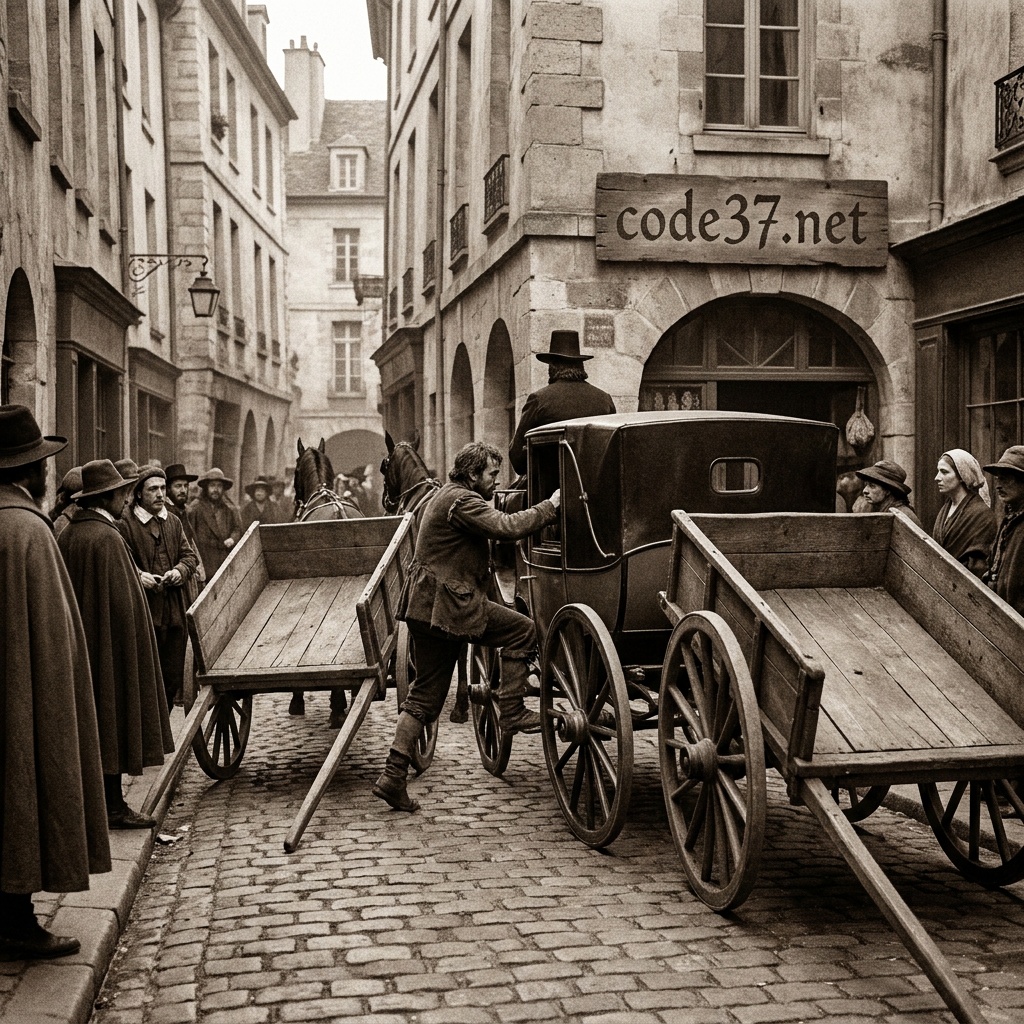
One of the greatest criminals in French history was François Ravaillac, who treacherously murdered King Henry IV. But why? François Ravaillac was born in 1578 in Touvre, near Angoulême. He grew up in modest circumstances with his mother, a devout Catholic. For a time, Ravaillac worked as a legal representative, assisting his employers in conducting legal proceedings in Paris, which is why he often stayed there. However, due to debts, he was no longer permitted to carry out this work. From then on, he earned his living as a teacher, giving religious instruction. The Catholic faith was the sole anchor in the life of this tall, red-haired man, who joined the Order of the Feuillants – a subsidiary order of the Benedictines – as a lay brother. He was, however, expelled from this order because of the visions he experienced during a prayer service. In 1609, he tried in vain to join the Jesuits. They rejected him, however, as he was already a member of another order. From then on, Ravaillac was repeatedly plagued by visions. His religious fanaticism went so far that he sought to persuade the French King Henry IV to compel the Huguenots to convert to Catholicism. Yet all his attempts to make contact with the king failed miserably. When the king ordered an attack on the Spanish-occupied Netherlands, Ravaillac saw this as an act of hostility towards the Pope. For this reason, King Henry IV of France had to be killed. To carry this out, Ravaillac planned an assassination attempt on the French monarch. On 14 May 1610, King Henry IV was on his way to meet his Minister of Finance without his bodyguards. However, in the narrow Rue de la Ferronerie 11 in Paris, two carts blocked the path of his carriage. At that very moment, Ravaillac leapt into the royal carriage and stabbed the king twice in the chest with a knife; the king died instantly. Ravaillac made no attempt to flee and allowed himself to be arrested without resistance. He was taken to the Hôtel de Retz, as the mob wanted to lynch him. Ravaillac, who was 32 years old at the time of the murder, was interrogated and tortured in an attempt to extract the names of alleged accomplices. Yet, despite the torture, Ravaillac swore that he had carried out the assassination of the King single-handedly. On 27 May 1610, the Grand’Chambre of the Paris Parliament, the highest court of justice, handed down the death sentence against Ravaillac. He deeply regretted the regicide. He apologised to God, to the king’s widow, to his son and his successor Louis XIII, and to the whole world. On the very same day that the death sentence was pronounced, Ravaillac was driven, naked in his nightshirt and holding a candle, on the penitent’s cart to the main gate of Notre-Dame Cathedral to do penance. He was then taken to the Place de Grève, the execution site in Paris, where he was placed on the scaffold. He asked the court clerk that the people should sing the Marian hymn ‘Salve Regina’ during his execution. The people complied with this request. On the scaffold, in full view of a thousand onlookers, the executioner used pincers to pinch his nipples, arms and legs. His right hand – the hand with which he had committed the crime – was then burnt with sulphur. Molten lead, boiling oil and burning pitch were dripped onto the wound before a horse was harnessed to each of his arms and legs to tear him to pieces. Quartering by horses was considered a common punishment for those who attempted to assassinate the king. After Ravaillac’s quartering, which is said to have taken an unusually long time, his corpse was burnt and his ashes scattered to the wind. Thus ended the life of the king’s murderer.