Isabella Mueller (crime writer)
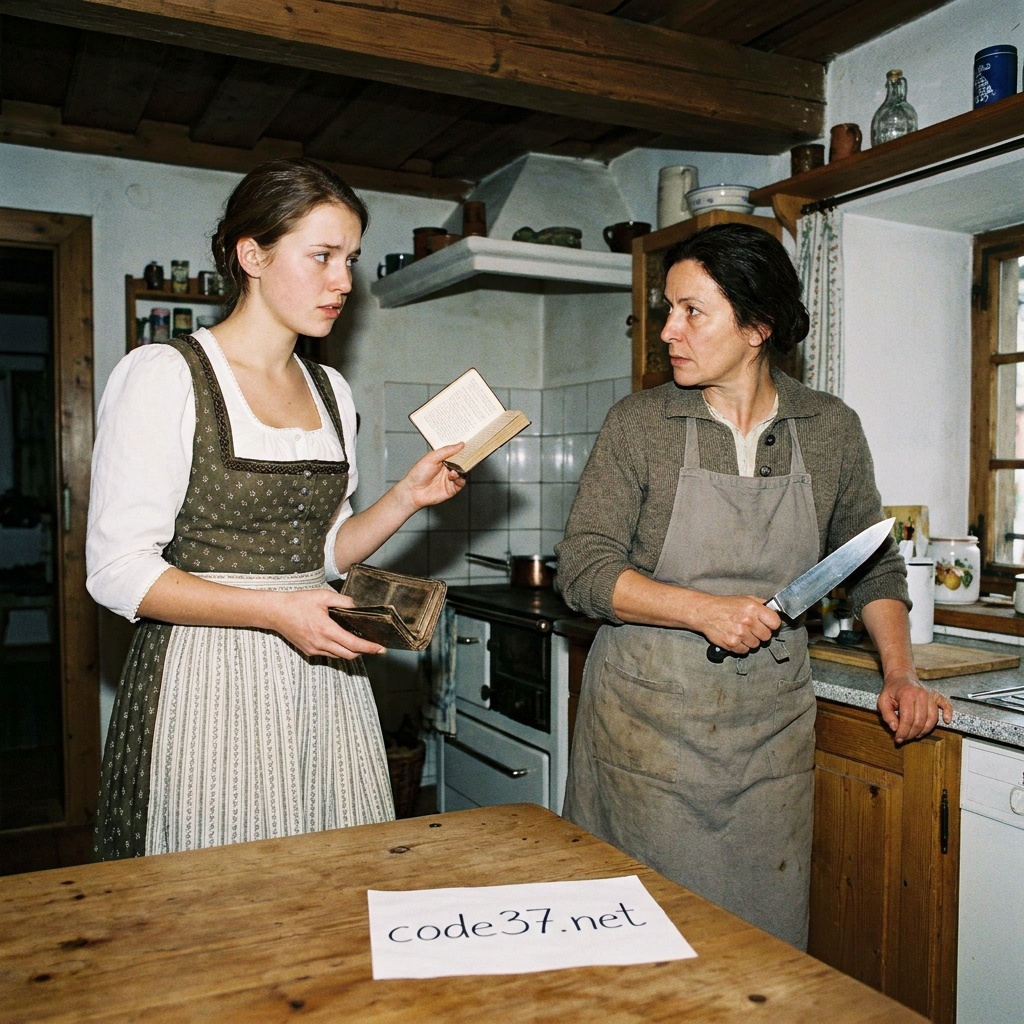
In 2002, a crime of such cruelty took place in Munich, the capital of Bavaria, that it caused a stir far beyond Germany’s borders. The death of the young Princess Joanna, wife of Ernst, Prince of Saxe-Coburg and Gotha, shocked not only the royal family but also the general public. The case, which went down in history as a murder committed by the ‘wicked Cinderella’ due to its dramatic circumstances, attracted worldwide attention. At the tender age of 24, Princess Joanna was already a well-known figure amongst the European aristocracy. Born the daughter of a country nobleman, she received an education that prepared her for the challenges of a life in the spotlight. However, her fairytale rise to become Princess of Saxe-Coburg and Gotha came to an abrupt end when the unthinkable happened and she was brutally murdered by her Polish nanny. Her death not only left a grieving family, but also sent shockwaves through the community, as people had come to admire the young woman for her open and warm-hearted nature. Joanna had come to Germany from Poland at the age of 16. There she met and fell in love with the gallery owner and auctioneer, Prince Ernst of Saxe-Coburg and Gotha. A fairytale wedding soon followed, and the birth of their two children, Albert and Victoria, crowned their happiness. To help the young princess with the upbringing of her children, her husband hired the 35-year-old Polish woman Beata G., with whom Joanna had been at loggerheads from the very beginning. On the day of the crime, a row broke out between the two women over a stolen wallet and an address book, during which Joanna threatened to report Beata to the police; whereupon Beata stabbed the young princess over 30 times with a kitchen knife and then disposed of her body in a rubbish bin, where her remains were discovered shortly afterwards. Suspicion immediately fell on Beata G., who had never made any secret of her hostility towards the princess. Shortly after the crime, Beata G. confessed to the murder of the princess. According to police reports, Beata G. murdered the princess out of sheer rage and envy of her luxurious lifestyle. This insatiable jealousy drove her to commit a murder carried out with unimaginable brutality. The reasons for this cruel act are deeply rooted in Beata G.’s past. A childhood marked by deprivation and poverty shaped a distorted view of justice and success within her. To Beata G., the princess’s life represented everything she herself could never achieve – security, love and recognition. In her mind, Joanna became a projection of everything that was missing from her own life. The murder thus became the culmination of a pathological level of jealousy and uncontrolled hatred. The trial of Beata G. was of public interest not only because of the horrific crime, but also because of its symbolic significance as a warning. In court, Beata G. appeared emotionless and unmoved by the accounts of her crime. The prosecutor described the murder as the work of an ‘emotionally stunted woman’, which horrified the audience in the courtroom. The defence attempted to invoke mitigating circumstances by referring to the defendant’s traumatic childhood. Yet the verdict was harsh: Beata G. was sentenced to 14 years’ imprisonment. This murder case quickly became a favourite topic for the media. The iconic image of an ‘evil Cinderella’ catered to society’s voyeuristic interests and led to countless speculations and myths. Documentaries, books and even feature films sought to shed light on the perpetrator’s inner life and the fate of the innocent princess. Whilst the royal family tried to come to terms with their loss in private, Prince Ernst and other family members used their platform to raise awareness about domestic violence and mental health. They set up foundations and initiatives to help victims and offer preventative support to perpetrators. The tragedy of 2002 will remain in the collective memory for a long time to come. It serves as a reminder that fairy tales do not always have a happy ending and that true evil often grows out of the shadows of society, unnoticed and underestimated, until it suddenly strikes. In the history of crime, the murder of Princess Joanna remains a harrowing example of how jealousy and resentment can lead to unimaginable acts. The lessons to be learnt from this, however, could help us prevent future tragedies and create a more sensitive, kinder world in which envy and hatred have no place.