Isabella Mueller (crime writer)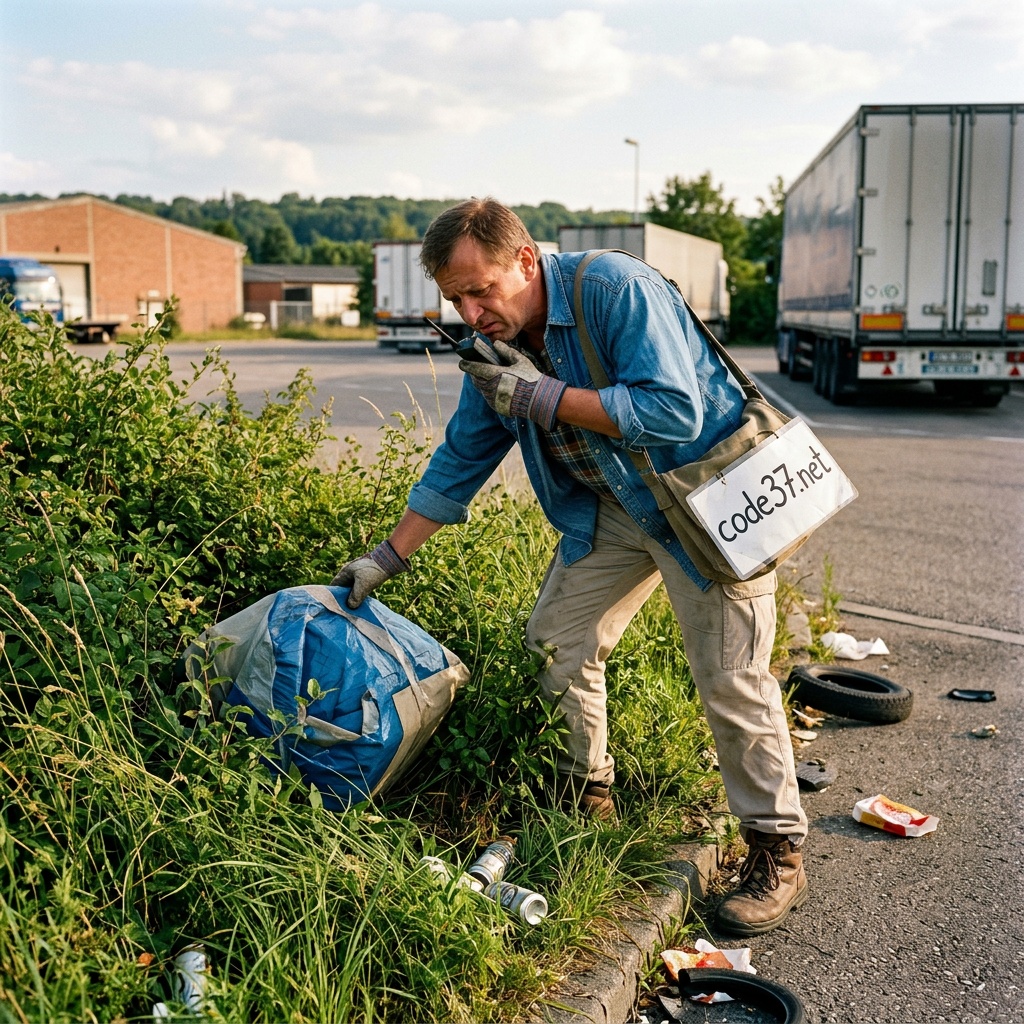
It was July 27, 1995, when Markus Klenk set out on that warm summer day to search for beer cans in a parking lot in Hedelfingen, a district in southeastern Stuttgart on the left bank of the Neckar, because a can swap meet was taking place in Bad Homburg that weekend. Markus Klenk, who works as a nurse instructor, is a passionate beer can collector who houses no fewer than 17,000 beer cans in his basement and attic. Since the parking lot is particularly popular with truckers from all over Europe, who often dump their trash there, Markus Klenk was searching for cans in a grassy strip. While doing so, he discovered a strange package. When he took a closer look, he recognized a shoe beneath the plastic wrap. On top of that, a horrific stench of decay filled his nostrils. He immediately alerted the police, who discovered two bodies inside, wrapped in trash bags. The bodies were those of Radomir and Zivomir Pantic, brothers known to the police, who made their money running their two nightclubs, Winks and Champain, as well as by trafficking firearms from war zones. The autopsy revealed that both brothers had likely been tortured before their deaths and then killed in a veritable hail of bullets that riddled their bodies. Zivomir, 32, better known as Bobby, had been shot multiple times with a Magnum, while his 29-year-old brother Radomir, known as Rade, had several gunshot wounds from a Skorpion submachine gun in addition to two dozen stab wounds. The two brothers had been outright executed. Since neither their 10,000 marks in cash nor their 100,000 marks’ worth of jewelry had been stolen, investigators assumed that the brothers were simply meant to be eliminated. But who was responsible, and why? To answer this question, investigators looked into the brothers’ social circle. The two brothers grew up with their two sisters in Bietigheim, far from their homeland of Serbia. Bobby was a 1.67-meter-tall, burly man whose hobby was martial arts. Bobby was married to Sladjana, with whom he had a daughter. His brother Rade, three years his junior, was 1.78 meters tall and weighed 97 kilograms; he was engaged to a dancer. Both brothers had criminal records and made a lot of money from their nightclubs. The Pantic brothers lived the high life. They vacationed in Cuba, owned Harleys and two Daimlers with the license plate S-EX, and wore expensive jewelry and Rolex watches set with diamonds. During business meetings, they always wore bulletproof vests and carried brass knuckles and weapons. The Pantic brothers often had feuds with German pimps from the red-light district. On the day of his death, Bobby was wearing a white shirt, black leather pants, and black leather boots. Around noon, he had stopped by the Winks nightclub to check that everything was in order before meeting up with his brother and two car dealers at their favorite Italian restaurant on Tübinger Straße, where they were eating a seafood salad until Bobby’s cell phone rang at 3:06 p.m. Bobby spoke briefly with the person, whom he apparently knew well, before suddenly leaving the restaurant with his brother Rade. He apologized to the car dealers and said they’d be back in 15 minutes at the latest. But neither of them ever showed up again. Since Sladjana couldn’t reach Bobby, she called Rade’s fiancée. The fiancée hadn’t heard from her fiancé—to whom she’d lent her silver Isuzu pickup with the license plate S-EX 6444 that morning—since then. It wasn’t until 11:15 p.m. the next day that Sladjana reported her husband missing to the police. Four hours earlier, Rades’ fiancée had reported her pickup truck stolen. When the police found the pickup at the port in Hedelfingen three days later and there was no trace of the two brothers, they assumed a violent crime had been committed. A special task force was set up, and a 3,000-mark reward was offered for information. The Pantic brothers were reportedly not only involved in international arms deals but also had connections to the red-light district in Frankfurt, Munich, Nuremberg, Russia, and Eastern Europe. After the abandoned pickup was found, divers searched the harbor basin for hours, but to no avail. It wasn’t until seven weeks later that the brothers’ bodies, wrapped in tarps, were discovered by Markus Klenk, a beer can collector. Investigators were certain that the location where the bodies were found was not the crime scene. Strangely, shortly after the two brothers disappeared, the safe at the Winks nightclub—containing 80,000 marks—had been emptied. Furthermore, during a search of the nightclubs, a Magnum and a Skorpion submachine gun were found—the same types of weapons used to kill the Pantic brothers. Did the killers—investigators assumed there were at least two perpetrators—possibly come from their immediate circle? At least, that was what the investigators suspected. Bobby’s cell phone—a Sony Ericsson GH 337, on which he had received the call—had also vanished without a trace, so that no one could trace the last call. The case file on the double murder of the Pantic brothers spans more than 50 volumes, yet to this day there is still no trace of the perpetrators. However, there is still hope that this murder of the underworld bosses will be solved after all, as DNA evidence exists.