Isabella Mueller (crime writer)
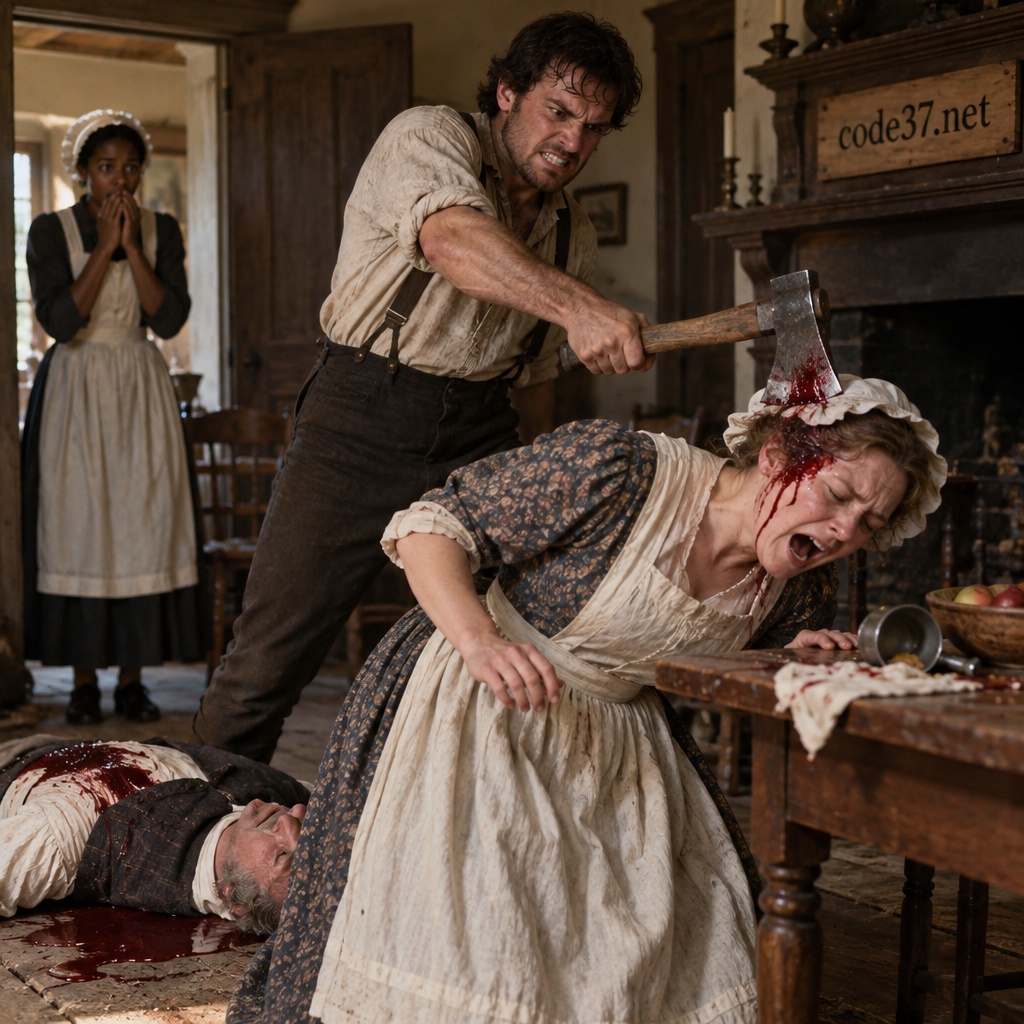
The story of Grace Marks, a young Irish immigrant who, in the 19th century, became embroiled in a sensational murder case involving her employer and his domestic staff – a case that shook colonial Canada – continues to fascinate people to this day. This is because dark secrets and controversial truths still lie hidden behind her story. But who was the then 16-year-old Grace Marks, who allegedly committed two murders with her 20-year-old accomplice, James McDermott? Grace Marks was born around 1828 in the Irish town of Ulster. Her father, John Marks, was an alcoholic stonemason whose brutality shaped the childhood of Grace and her eight siblings. Amidst this family turmoil, the family ventured to Canada in 1840 in the hope of a better life. But fate struck again when Grace’s mother died during the crossing and was buried at sea. This loss, and arriving in a foreign country without her mother, shaped the young Grace, who from then on had to survive in a hostile environment. To support her family financially, she took a job as a housemaid shortly after arriving in Canada. After a total of five jobs, she was employed in 1843 as a maid by Thomas Kinnear, a wealthy farmer in Richmond Hill. Her role was to assist the pregnant domestic servant and Kinnear’s mistress, Nancy Montgomery, for 3 dollars a month. A week earlier, Thomas Kinnear had taken on 20-year-old James McDermott as a stable boy. McDermott had arrived in Canada in 1837, having previously served in the Glengarry Light Infantry until the regiment was disbanded and he was discharged. James got on splendidly with Grace straight away, though she harboured a grudge against Nancy Montgomery from the very beginning. In July 1843, the peaceful life on the Kinnear estate was shattered by a horrific act of violence. Thomas Kinnear and his housekeeper, Nancy Montgomery, were brutally murdered by James McDermott. Whilst Nancy Montgomery was initially incapacitated by a blow from James’s axe, he strangled her after dragging her into the cellar. He then dismembered her body and hid the remains under a large bath. That evening, he shot Thomas Kinnear in the kitchen. Grace was always by James’s side; after James shot Kinnear in the left chest, she fled the house, prompting James to fire a shot at Grace as well. The circumstances of the murders remain unclear, but what followed was a flight to New York, where Grace Marks and James McDermott intended to marry and start a new life. However, they were apprehended in Lewiston and eventually brought back to Toronto. To this day, it remains unclear what role Grace Marks actually played in these crimes. Was she an accomplice or simply a victim who was drawn into a web of lies and violence? In Toronto, Grace Marks stood trial alongside James McDermott. During the trial, the two accused each other. During the trial, James McDermott claimed that Grace Marks was the real mastermind behind the murders and had displayed “a diabolical genius” in planning the horrific acts, later feigning mental illness to escape execution. Ultimately, both were sentenced to death. However, only James was hanged on 21 November 1843; on his way to the scaffold, he insisted that Grace had strangled Nancy with a white handkerchief. Grace was fortunate: her sentence was commuted to life imprisonment due to her young age. The verdict and the circumstances of the trial sparked major controversy and preoccupied the public for years to come. Initially, however, Grace was not sent to prison but admitted to the Toronto Mental Asylum. There were several theories as to why she had been admitted there. One was that her mind had been possessed by her deceased friend Mary Whitney. Another was that she had a personality disorder, and a further theory was that Grace Marks was already dead and Mary Whitney had assumed her identity. As, after several years, the director of the asylum was not convinced that Grace was mentally ill, she was transferred to Kingston Penitentiary in 1952. She spent almost 30 years there following her conviction, until she was finally pardoned in 1872. Afterwards, Grace reportedly moved to New York. She subsequently disappeared from the historical records. There are no further accounts of her later life. The story of Grace Marks has inspired numerous works of art, most notably Margaret Atwood’s novel Alias Grace, published in 1996. Atwood’s book sheds light on the complex psychological and social web surrounding Marks’ life and the murders. In 2017, the novel was adapted into a miniseries, in which Sarah Gadon played the role of Grace Marks. The series was directed by Mary Harron and received positive reviews for its gripping portrayal of the historical crime case. The dramatic story also found its way onto the stage. Jennifer Blackmer’s theatre adaptation premiered in Chicago in 2017 and brought this dark chapter of Canadian history to a new audience. Historians and authors such as Susanna Moodie and George Walton also contributed to the documentation and interpretation of the events. Moodie’s work Life in the Clearings Versus the Bush offers insights into life and conditions in Canada at that time. Walton’s account of the trials of James McDermott and Grace Marks contains detailed confessions and portraits of those involved, which significantly shape the historical perspective. Another significant work is Gina Wiskers’ guide to Atwood’s Alias Grace, which analyses the literary and thematic aspects of the novel and links the true story with fiction. The story of Grace Marks remains a mystery to this day. Was she an innocent domestic servant who was in the wrong place at the wrong time? Or was Grace Marks in fact the mastermind behind the murders, as McDermott claimed? Despite the many investigations and accounts, the true extent of her involvement in the murders remains unclear. What is clear, however, is the undeniable fascination that her story continues to exert even after almost two centuries. This dark episode in the history of colonial Canada continues to raise questions about guilt, innocence and the complex facets of human nature. Grace Marks may have vanished from the official records, but her name remains synonymous with mystery, horror and the eternal quest for truth.